3,434 words, 18 minutes read time.
Foreword
On the boundary of the Nara Basin (奈良盆地) and the mountain ranges of Kasagisanchi (笠置山地), lies Tenri-shi (天理市), the town founded by and headquarters one of the oldest and most prominent New Religions: Tenrikyo (天理教, Official Website), drawing influences from the traditional Japanese Shinto and Buddhism. With a claimed three million domestic believers, it ranks among the largest New Religions in Japan. It was founded by Nakayama Miki (中山みき) in 1838. Tenri-shi is home to the Jiba (ぢば), which is believed to be the original site of human creation according to Tenrikyo’s doctrine (人間創造の元の地点), and as an evidence of this creation, the Kanrodai (かんろだい), a stand consisting of thirteen hexagonal stone layers, serves as the focal point of worship. Driven by sheer curiosity of what it would feel to set foot in this religious town, I set off on my journey.
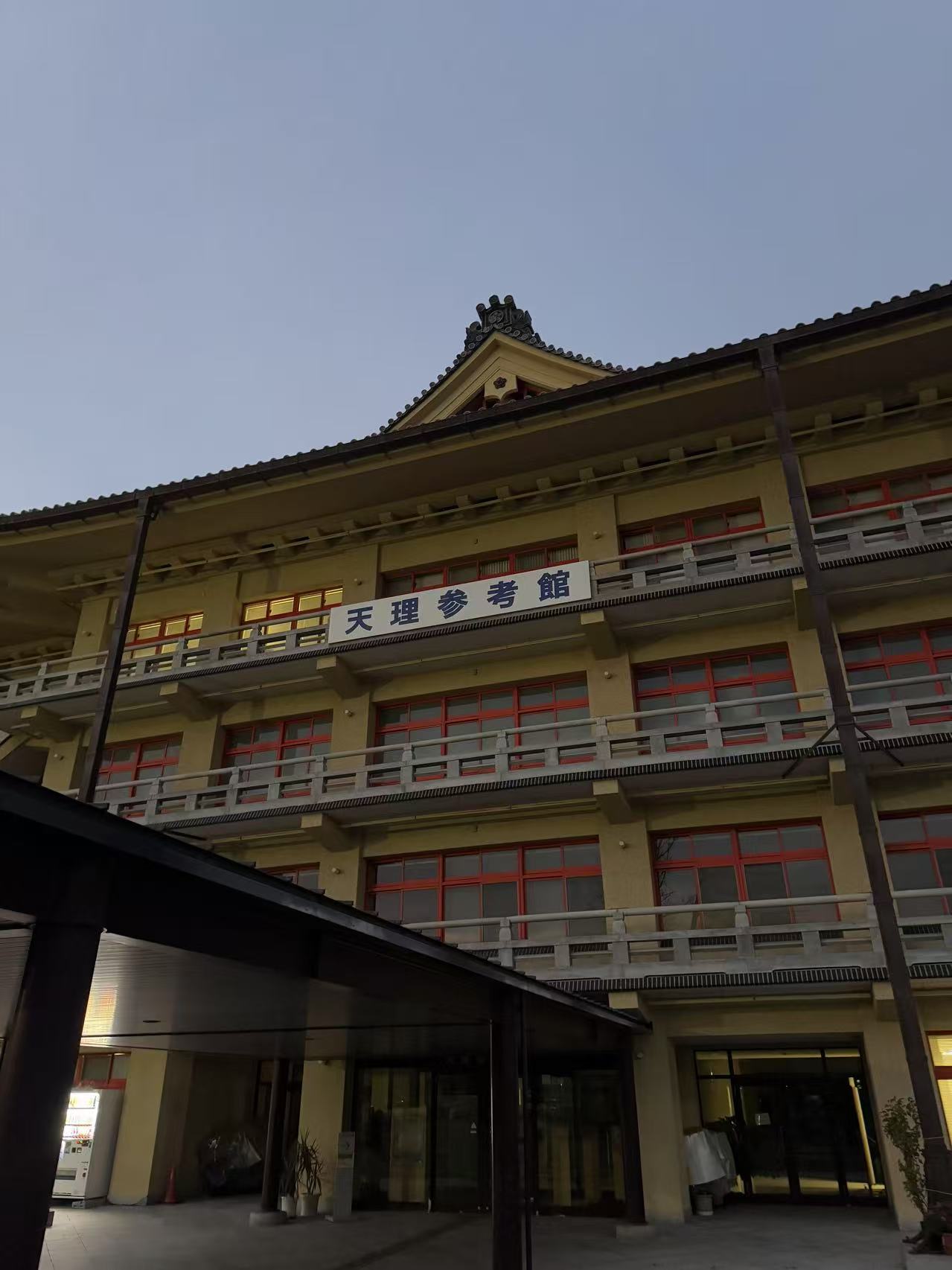
Into the Dojo
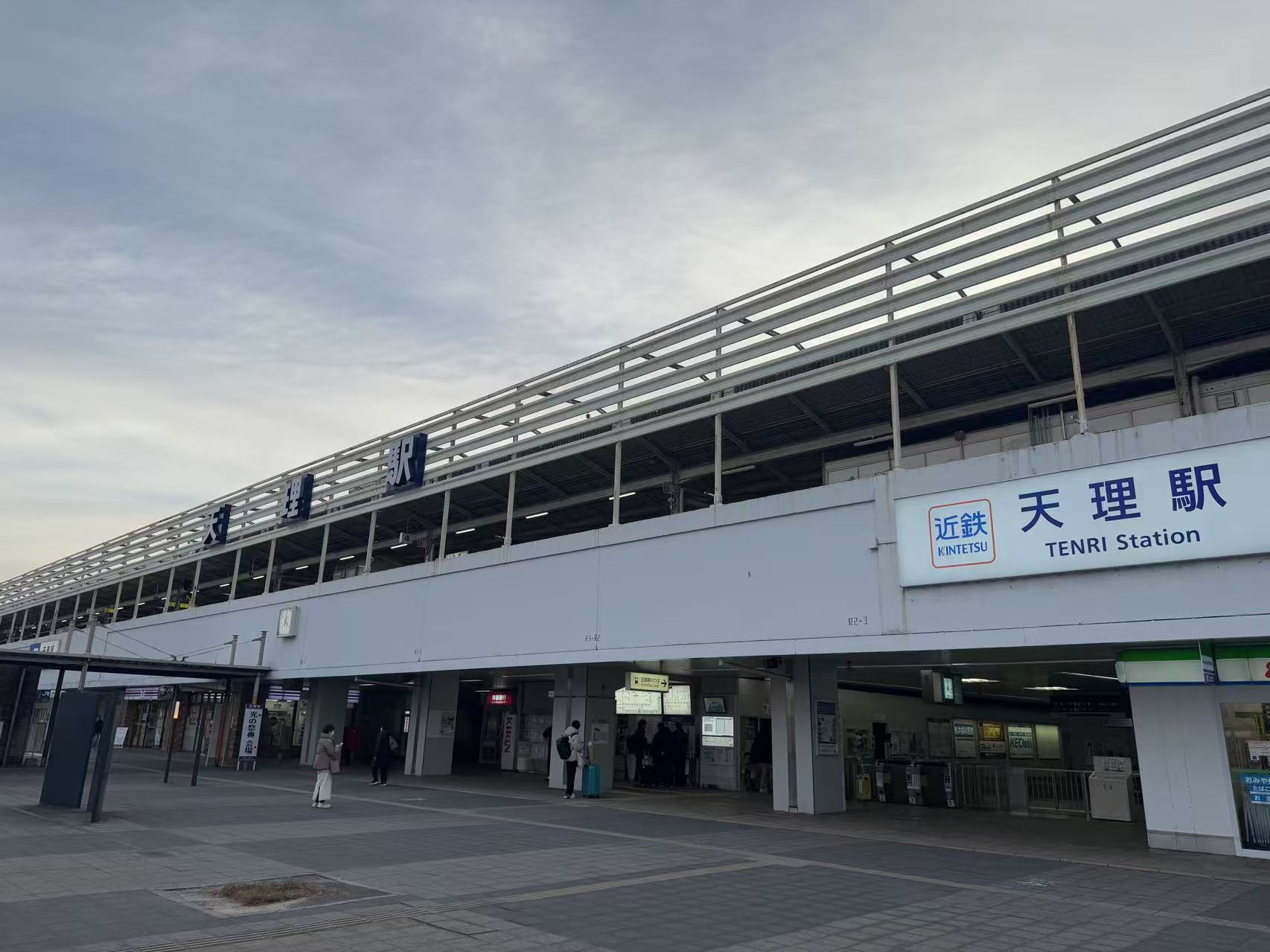
After a huge detour on the Kashihara Line (近鉄橿原線), I arrived at the only train station in Japan named after a religion, in the only town in Japan named after a religion: Tenri Station (天理駅) of Tenri-shi (天理市). It gave out the Inaka‘s (田舎) atmosphere, being a small town of 60,000 surrounded by farmlands.
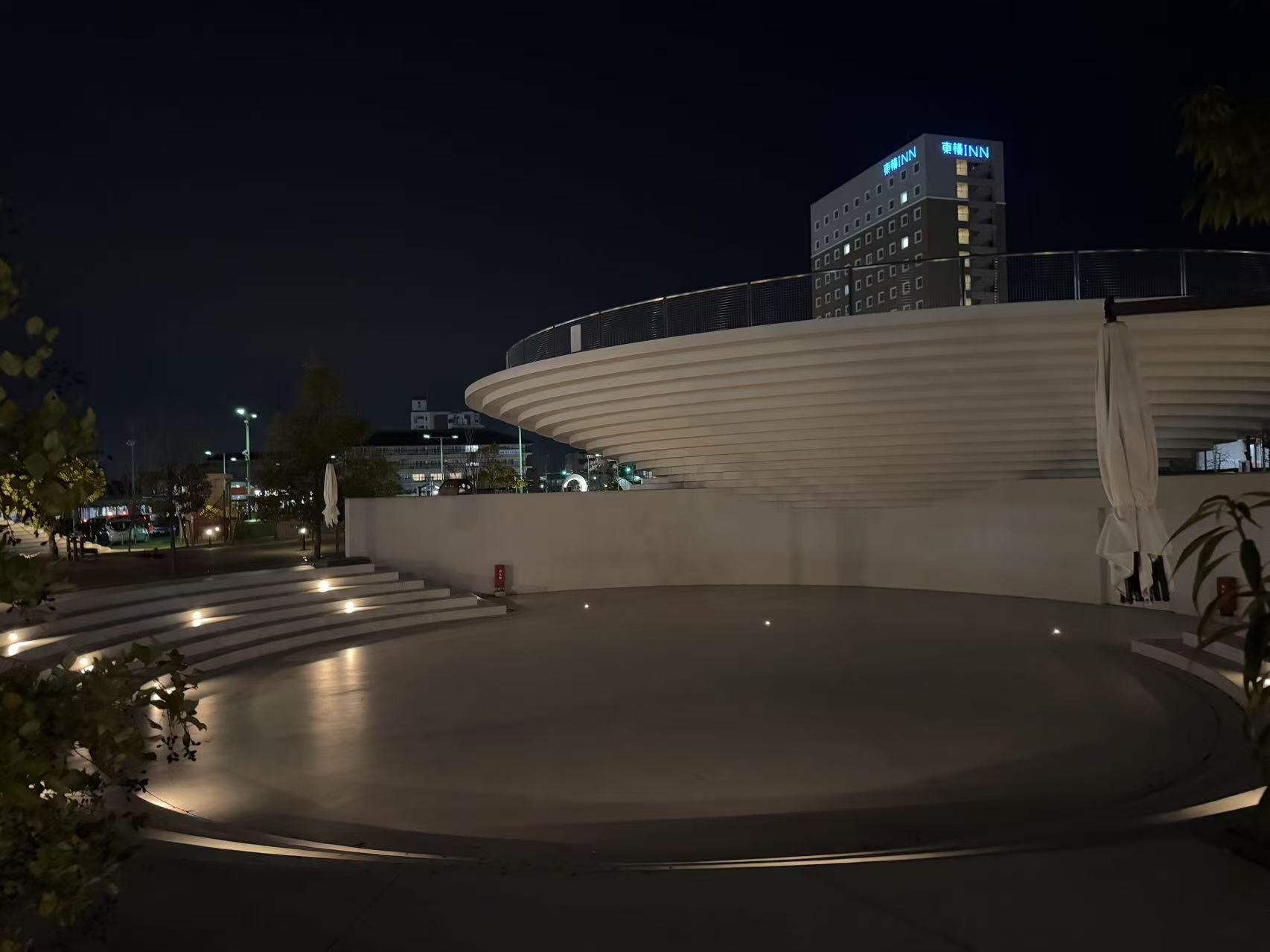
It was not yet 4 P.M., but the sun already hung low in the sky, and in two hours it will get dark. Right outside the station was an artistic and modern playground, featuring several large and white circular concrete platforms, with many exuberant children running around and playing. This square looked very new compared to the surrounding buildings, a recent instalment.
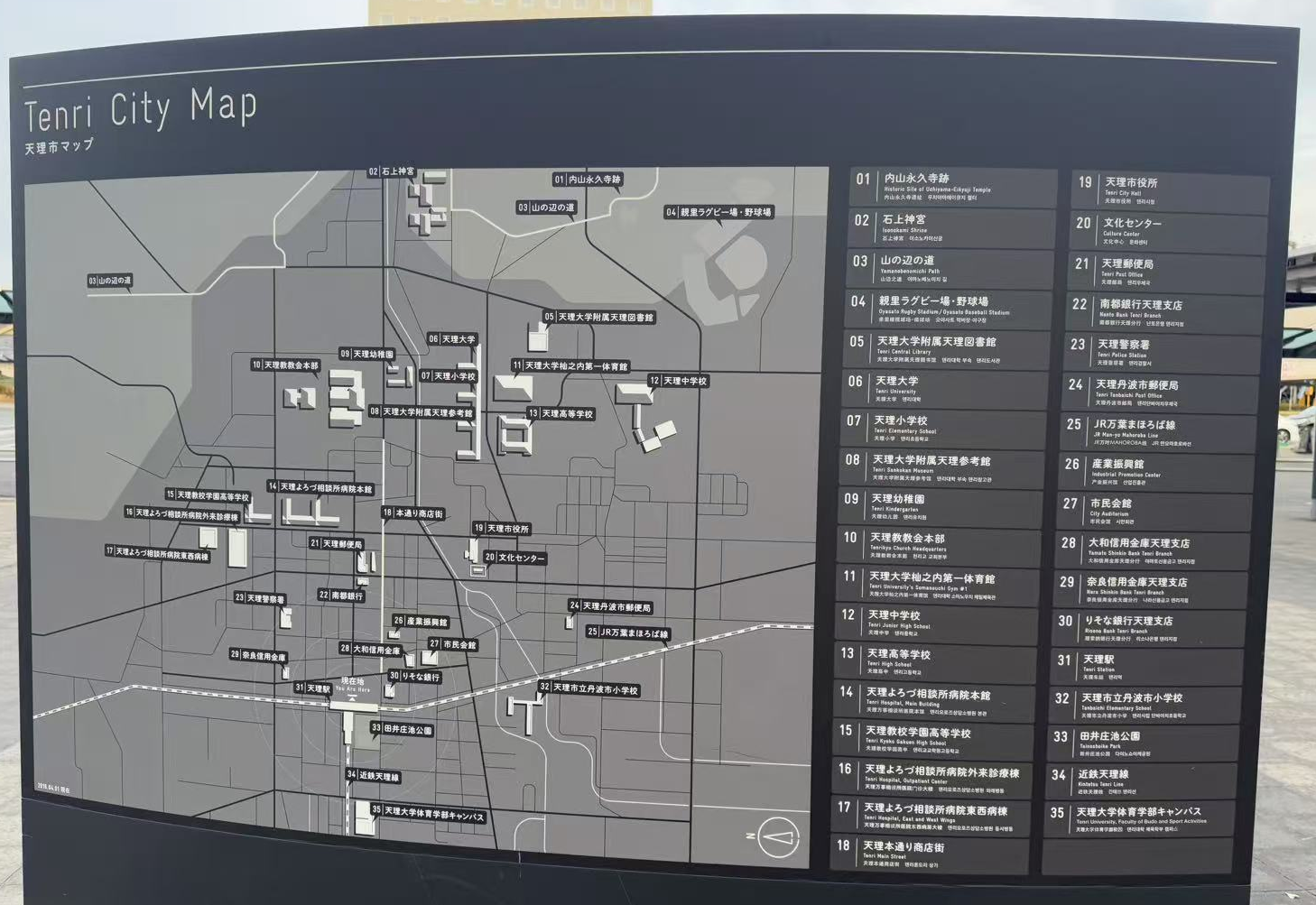
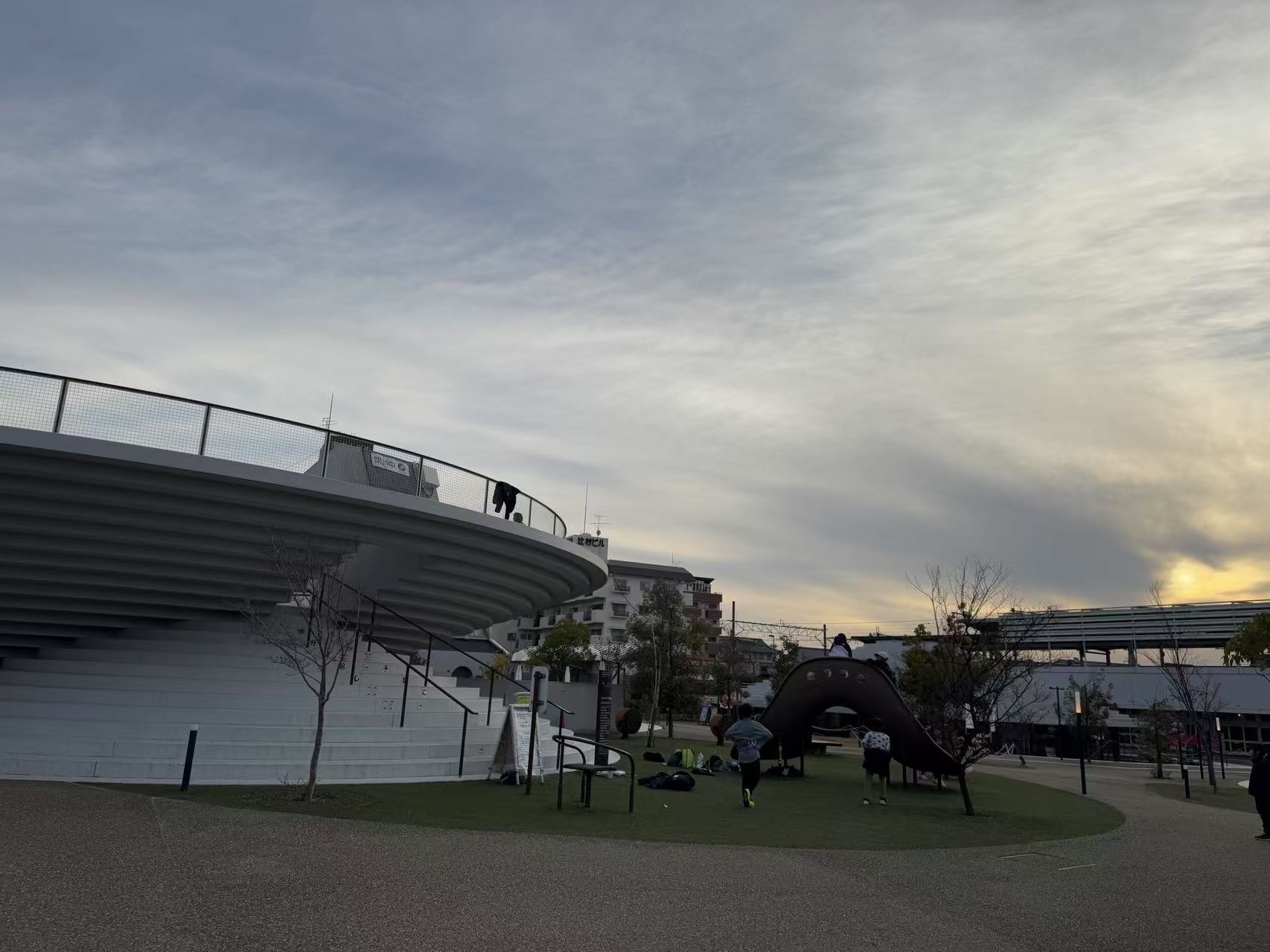
Some of the large concrete circular structures hosted fashionable cafes and shops. I cut through the square and found myself at the entrance of the Tenri Main Street (天理本通), a rather long shopping street and perhaps the only one in Tenri-shi.
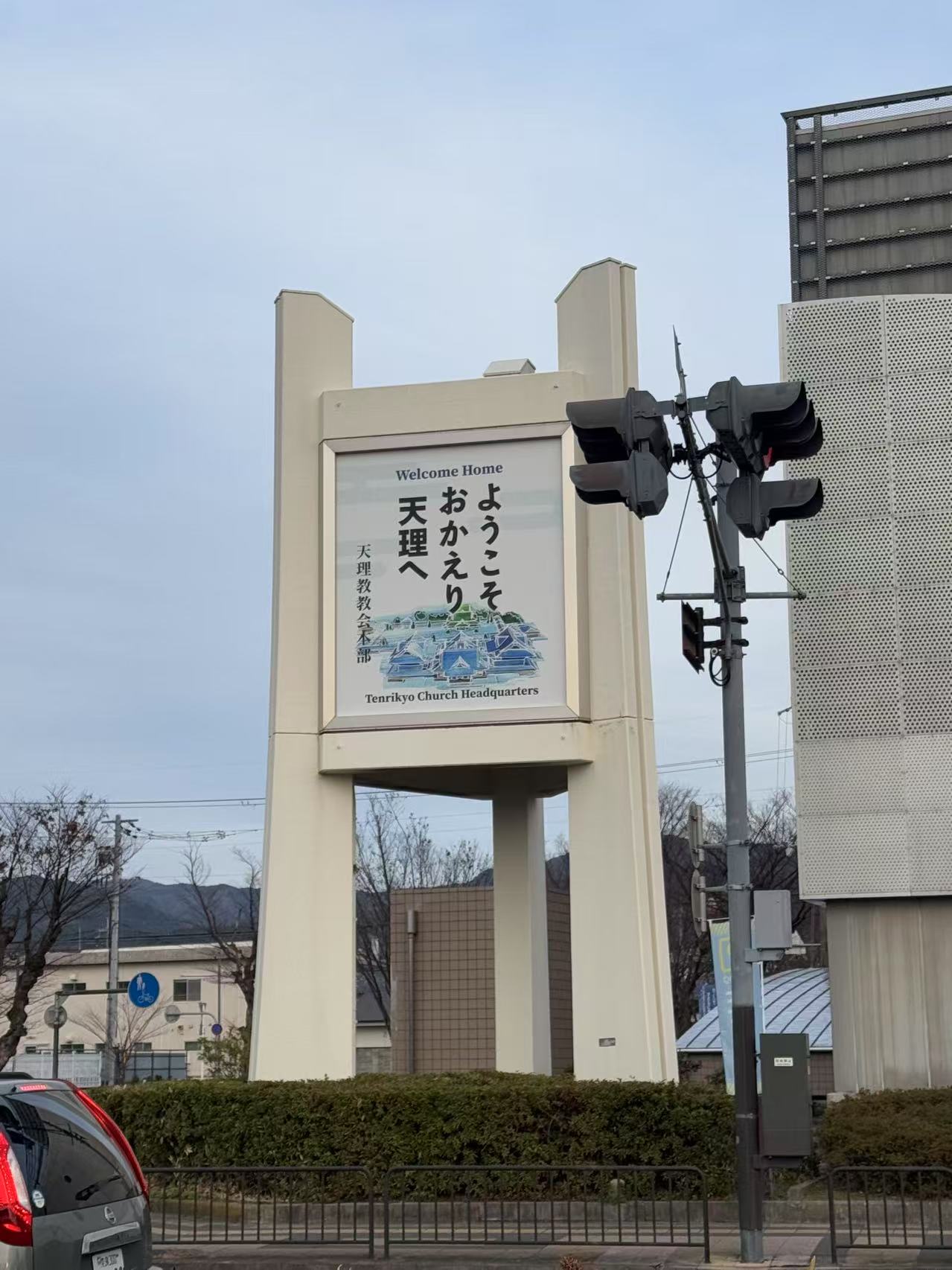
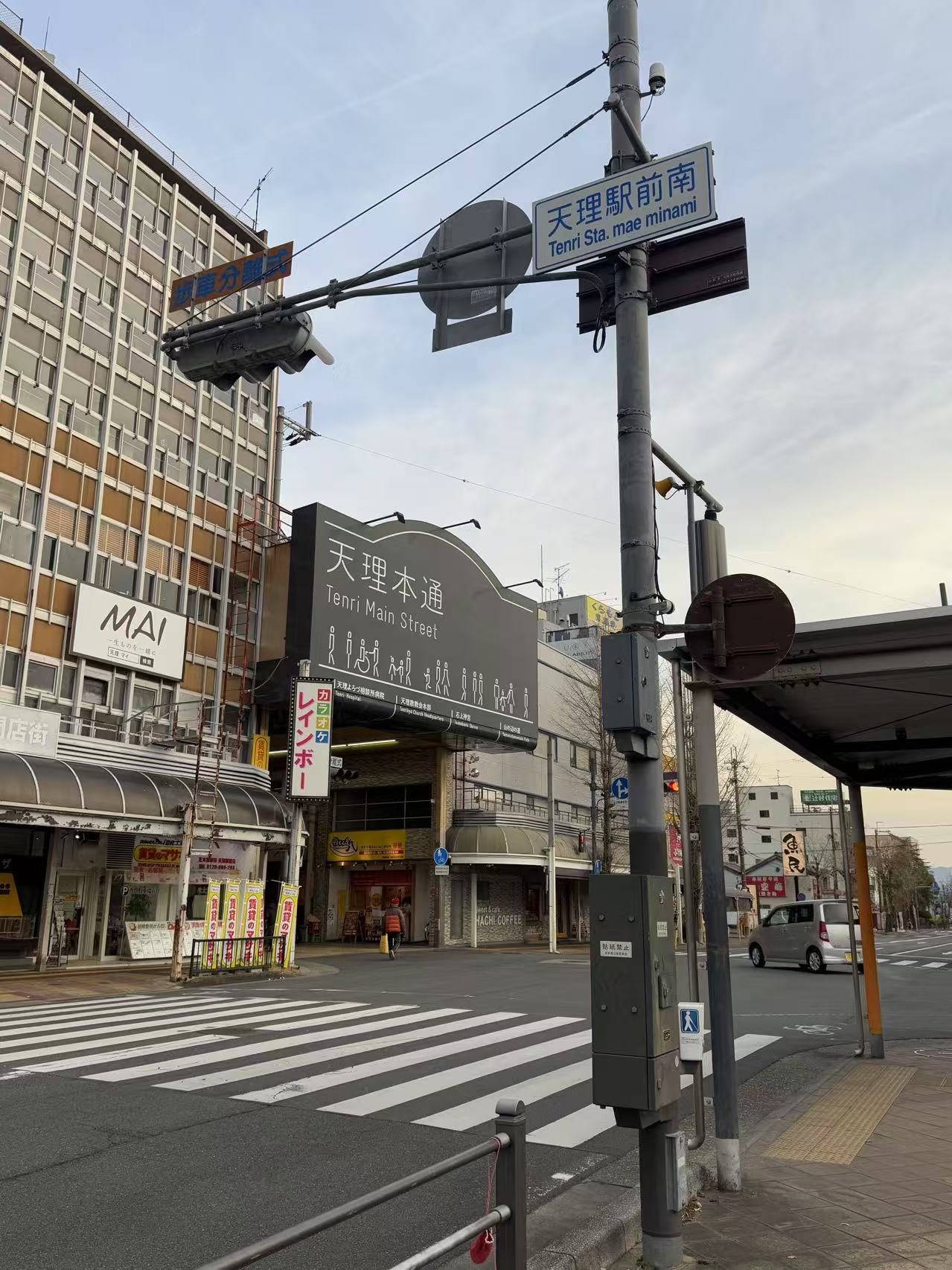
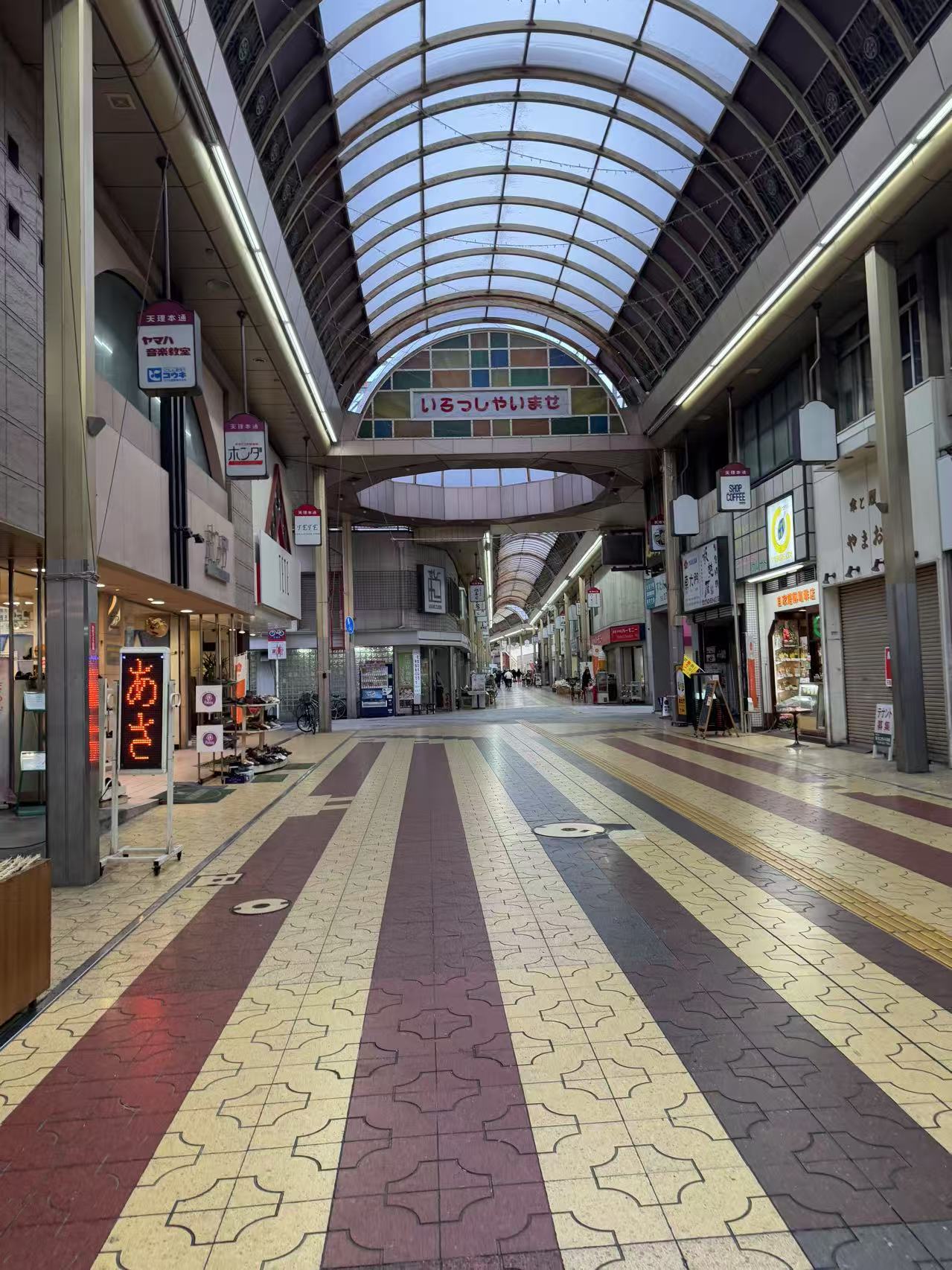
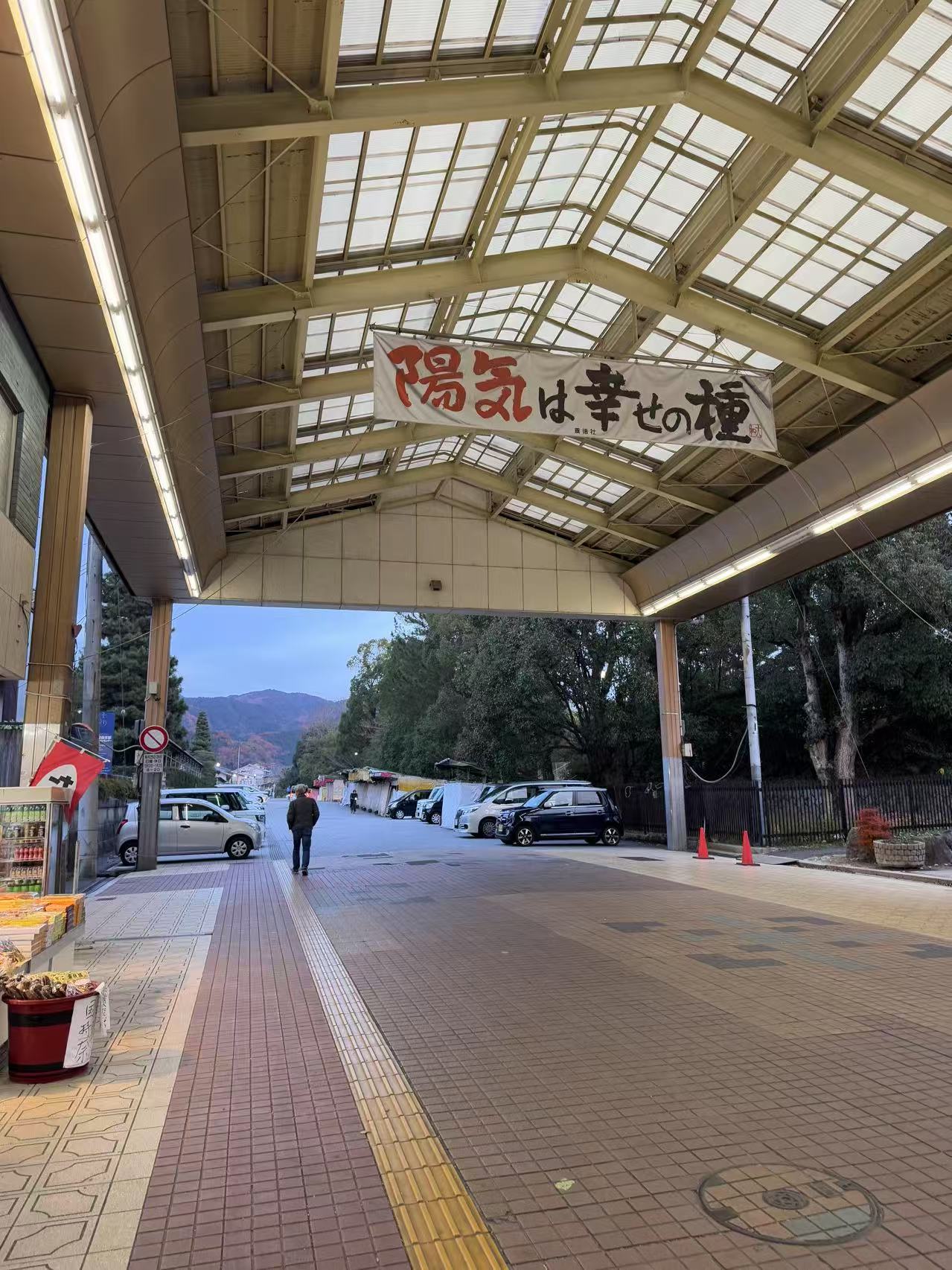
It was supposedly getting off work/ school hour, but most of the storefronts were closed, and looked like they had been in this state for awhile, abandoned. It felt less like a shopping street but more a pedestrian tunnel, with adults and students on their way home, many on bicycles. Since only a few stores were open, I took special notice of each of them. They were mostly locally businesses selling local products.
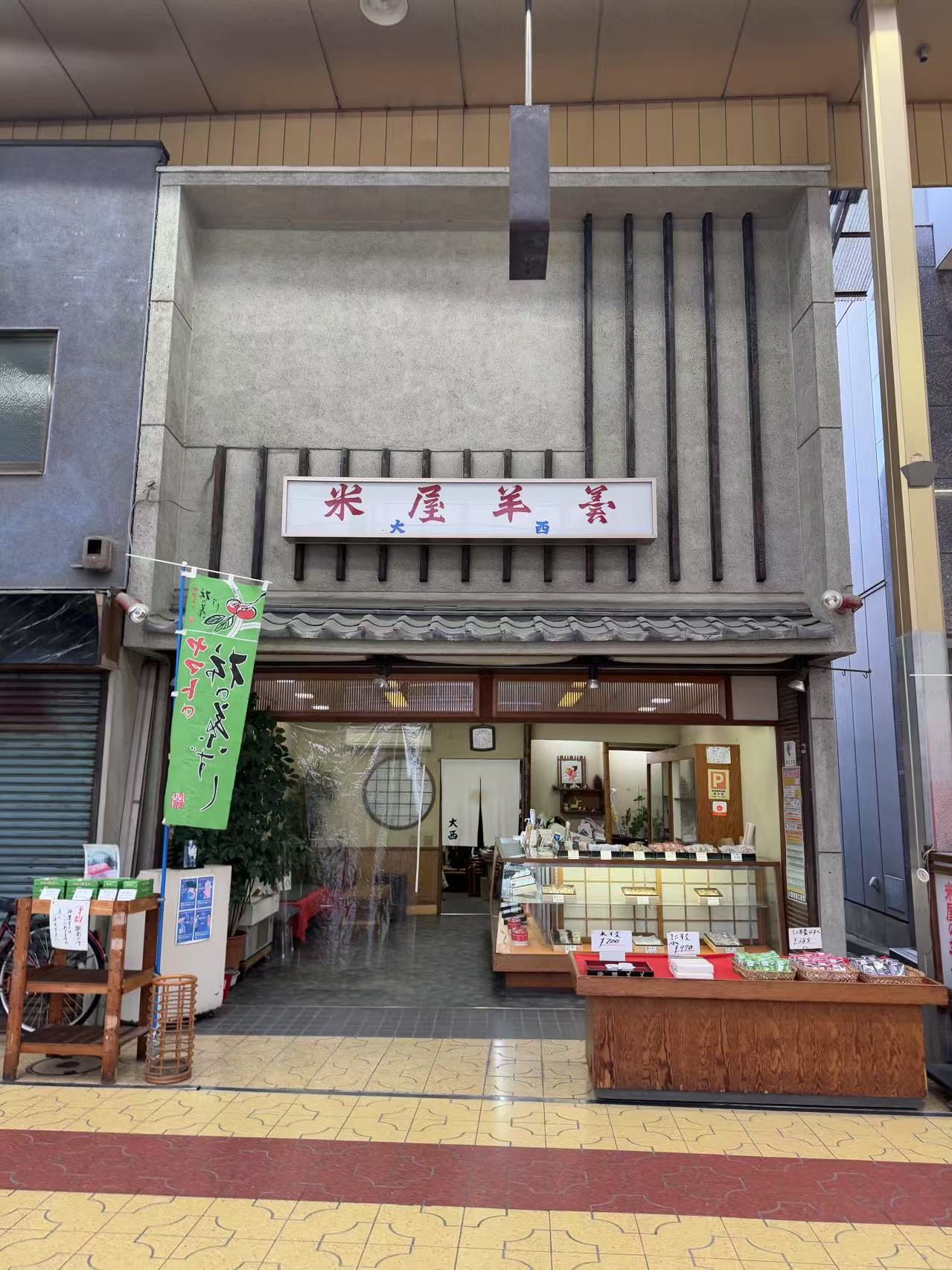
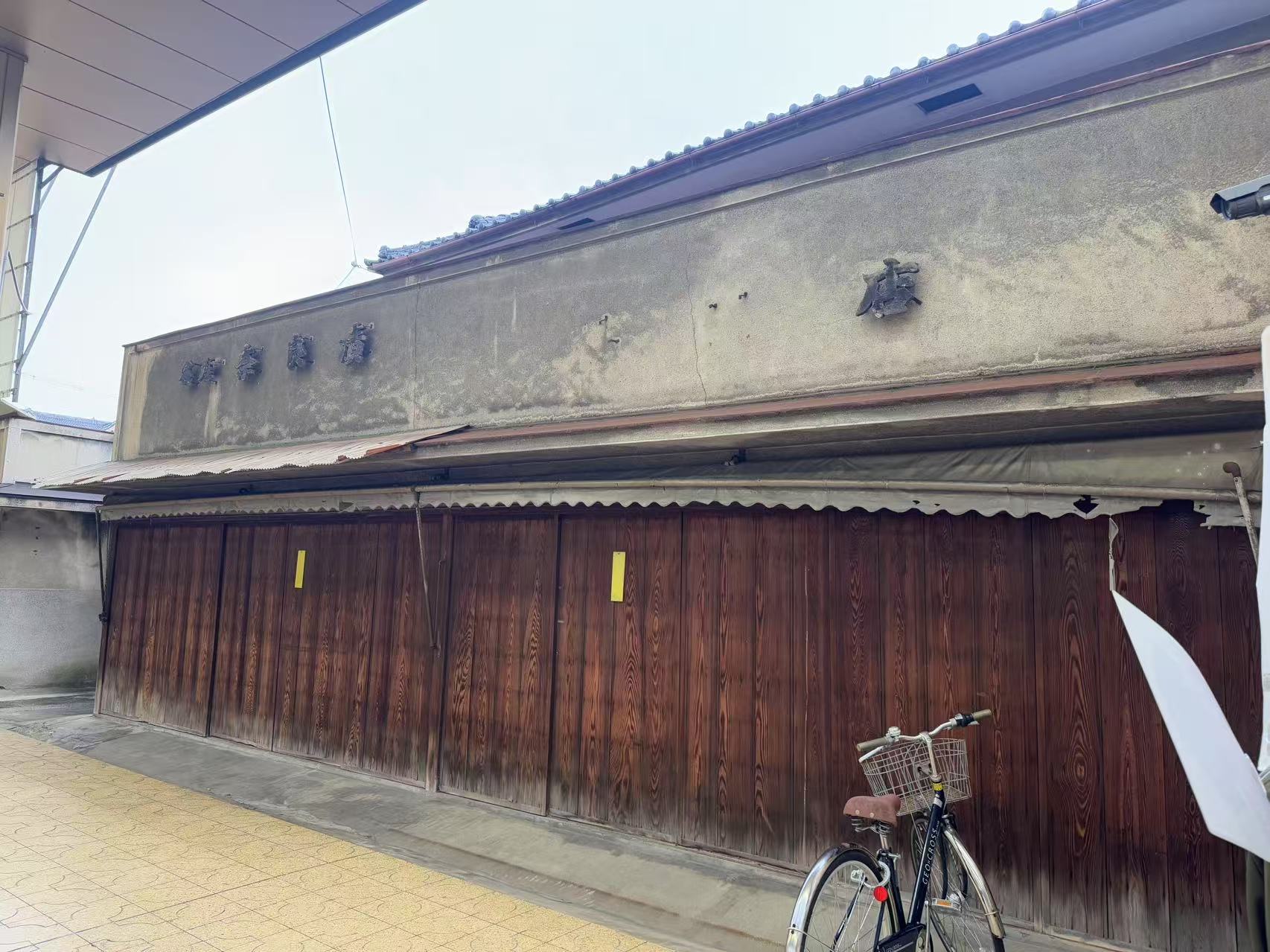
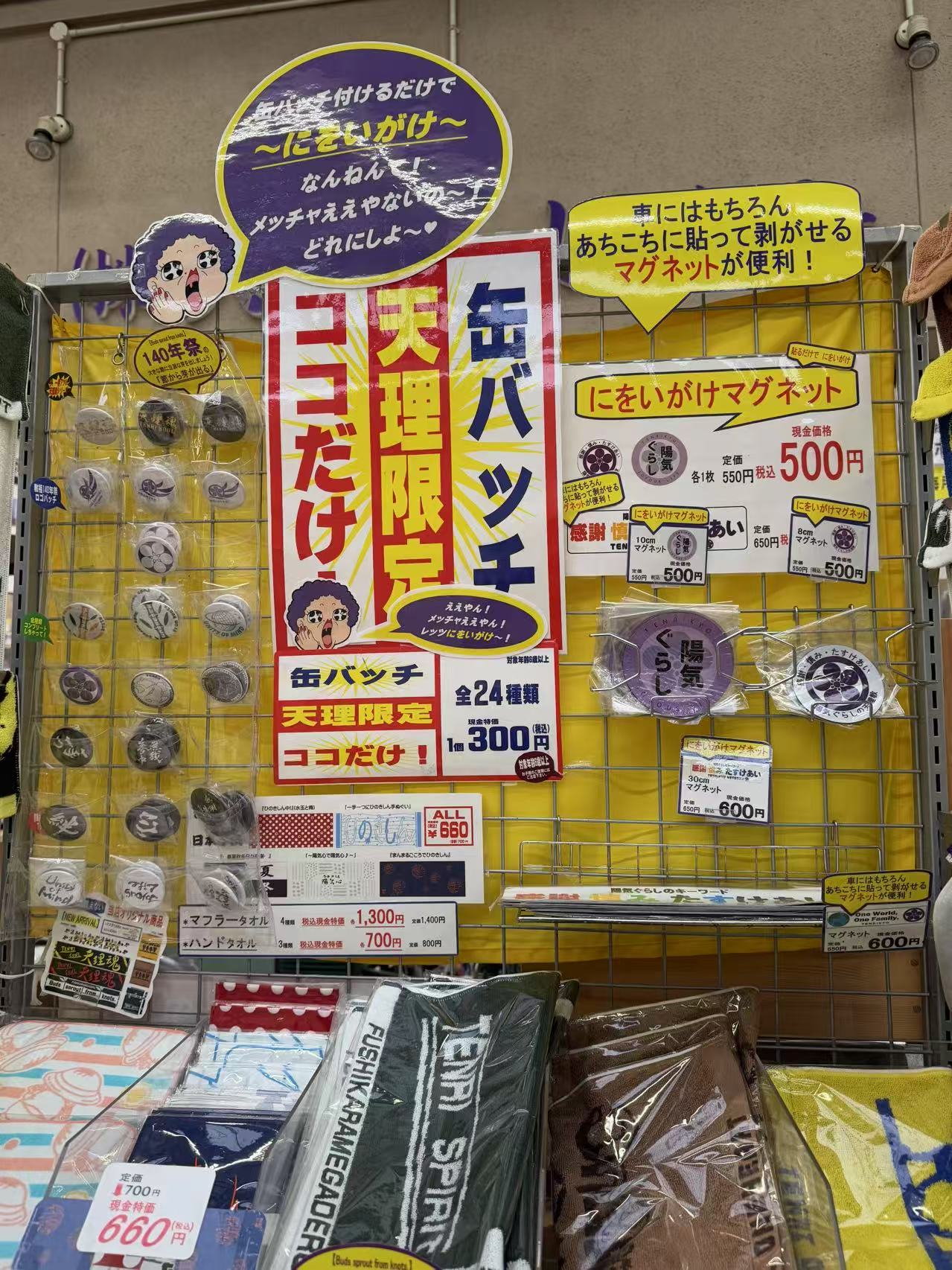
There were also drug stores, a spacious manga store with no one but the cashier, and stationery shops here and there. Some Tenrikyo related merchandises were displayed on shelfs and racks outside the stores.
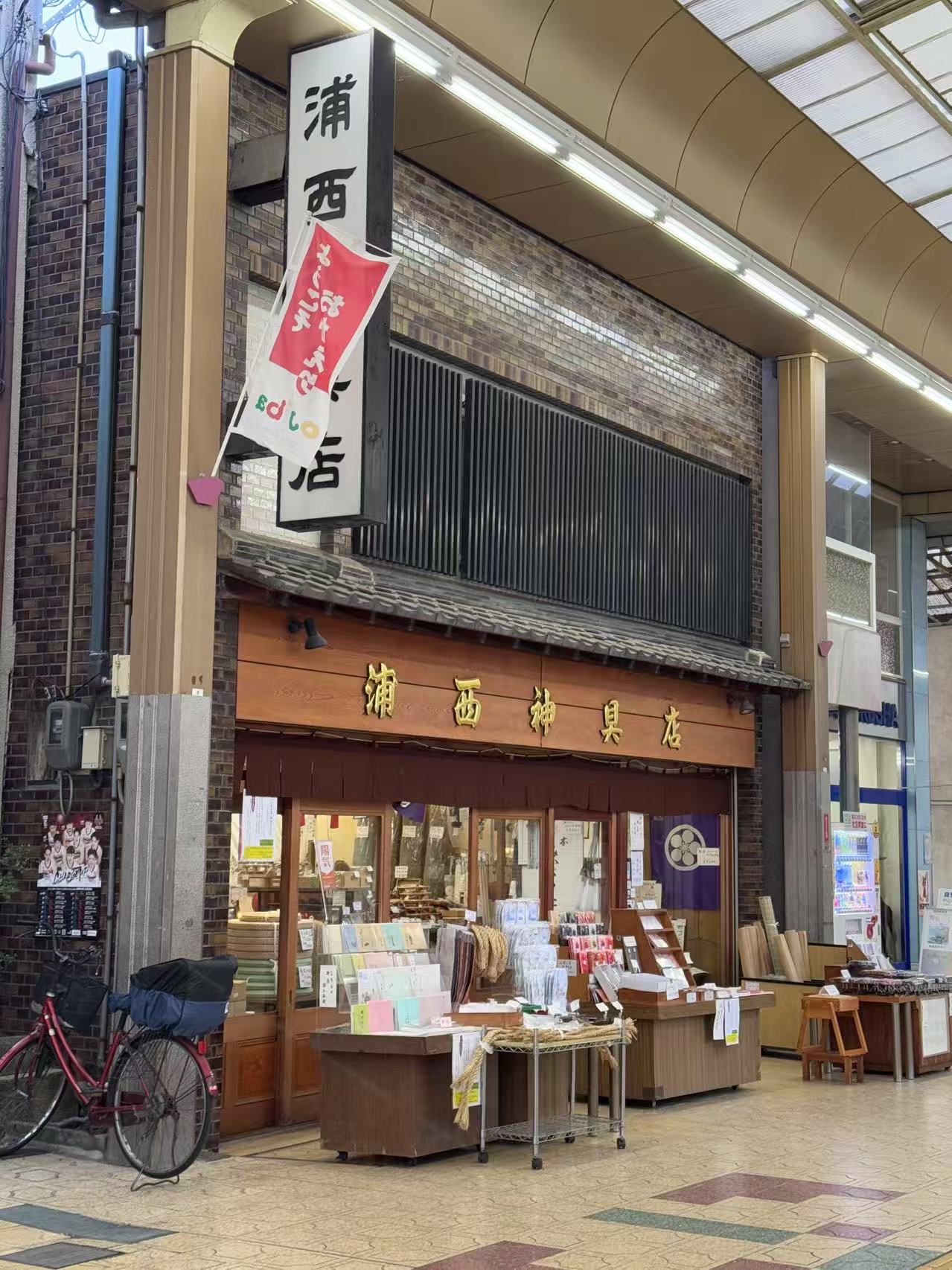
A recurring appearance in the shopping street were the Jingu stores (神具店), selling Shindo-like ritual implements or sacred tools used in worship and ceremonies at the Tenrikyo Church Headquarters located after this street. The shopping street was peaceful and tidy. It was cut open in between by a road, and I had to wait painfully long for the traiff light alongside a number of bicycle riders, some moms with groceries and students off school. The sky had began to grow dimmer.
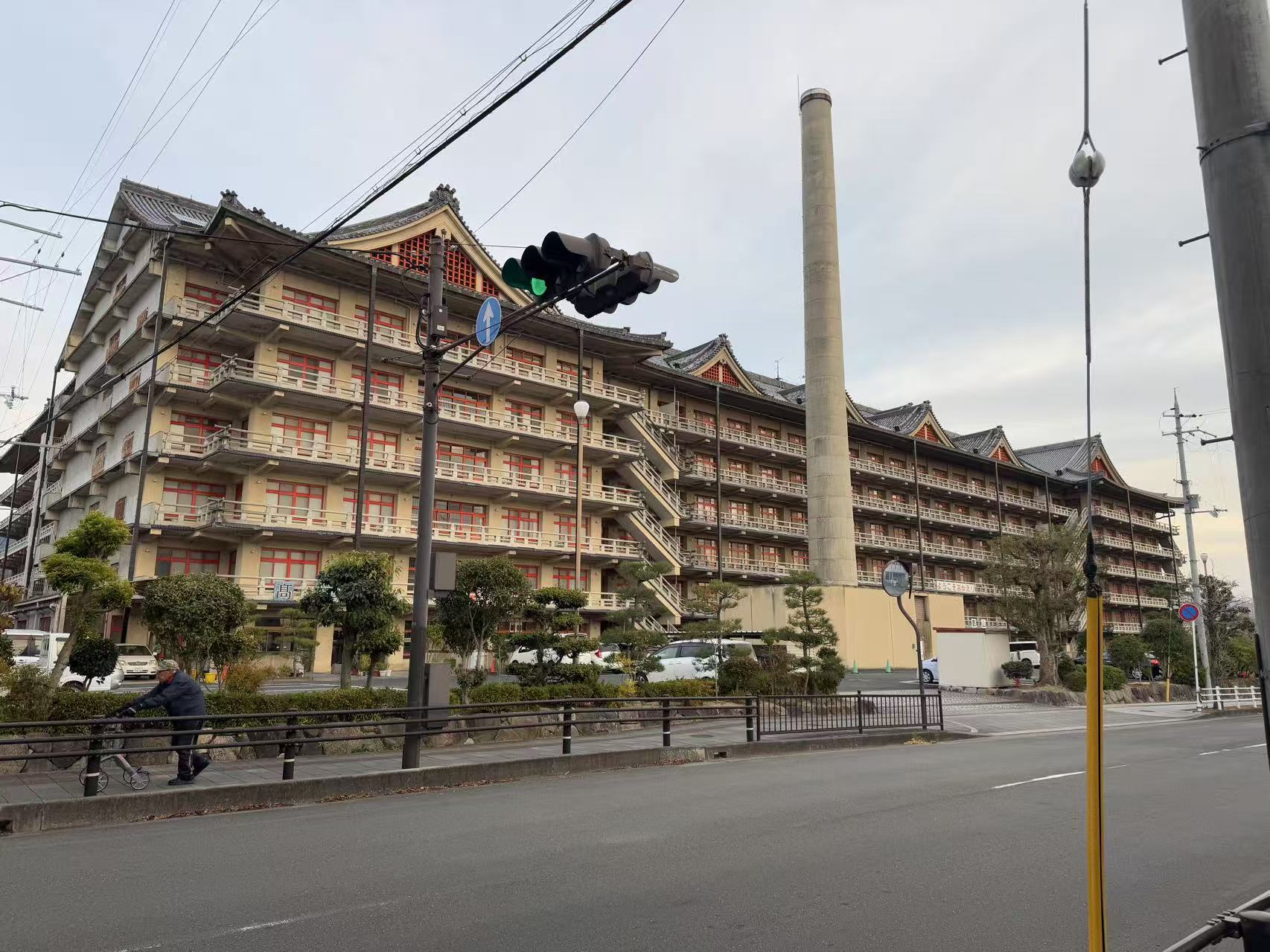
The opening revealed a complex with tiled roofs, like a school building in the style of a buddhism temple, with a huge chimney erected in front. This turned out to be one of the believer lodgings. Finally the pedestrian light turned green. I continued down the street, bicycles rushing by.
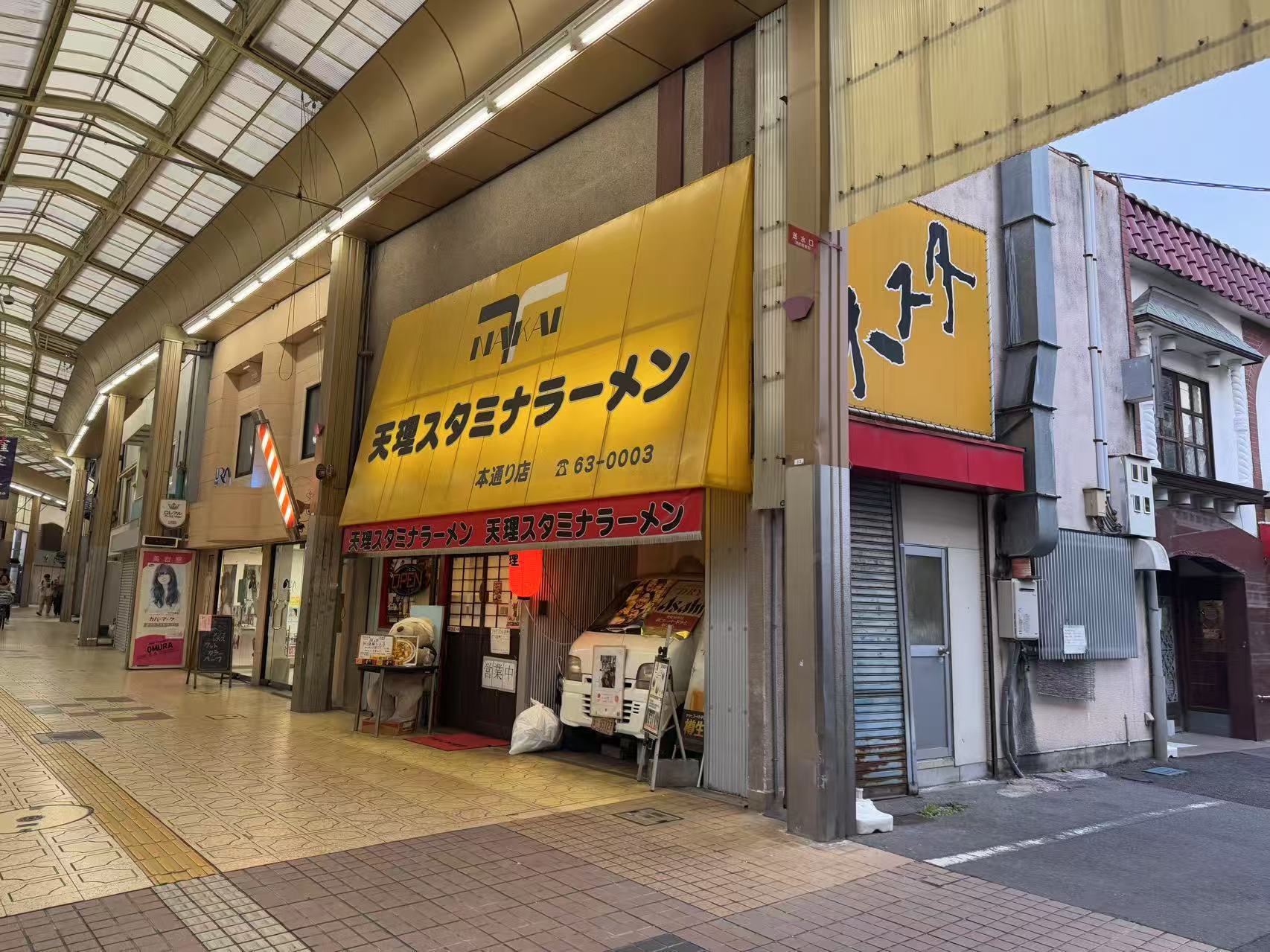
I walked pass the Tenri Stamina Ramen shop (天理スタミナラーメン). It had a retro storefront and was open for business. I wanted to try it but decided against it, since it was quite an awkward time for a meal.
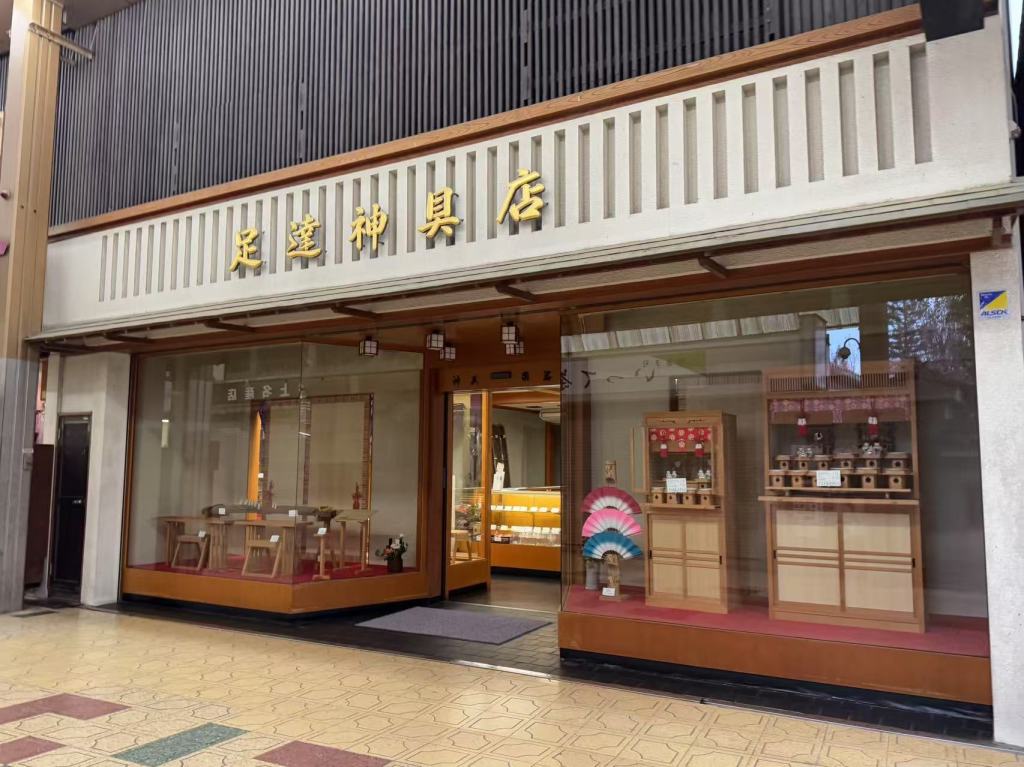
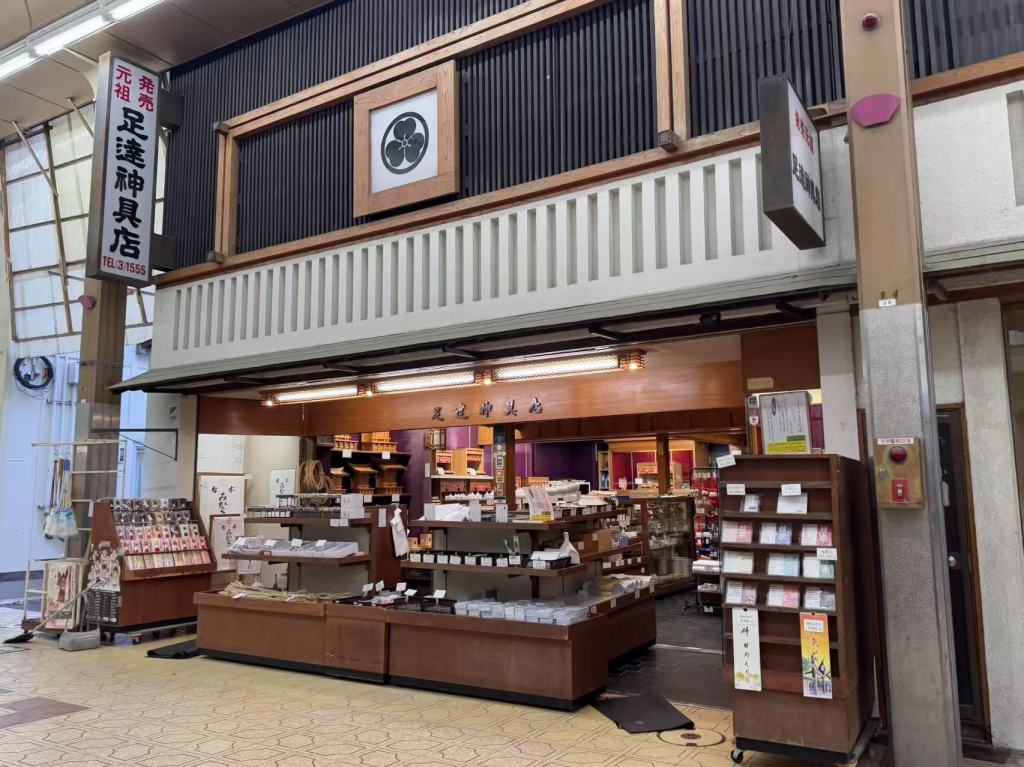
After a good thirty minutes traversing the sheltered tunnel, the end was near. I could see the hills of Kasagisanchi covered in green and brownish-red leaves of the late Autumn. On the left a bookstore with an unusual name caught my attention: Oyasato Bookstore (おやさと書店).
In Tenrikyo, the main church is also the site of human creation. Its surrounding area, aka Tenri-shi, is the the residence of the God, who is the parent of all mankind. Therefore, here is also known as Oyasato (おやさと), aka hometown of our parent. I could tell that this was a Tenrikyo specialty book store, and did not hestitate to go inside.
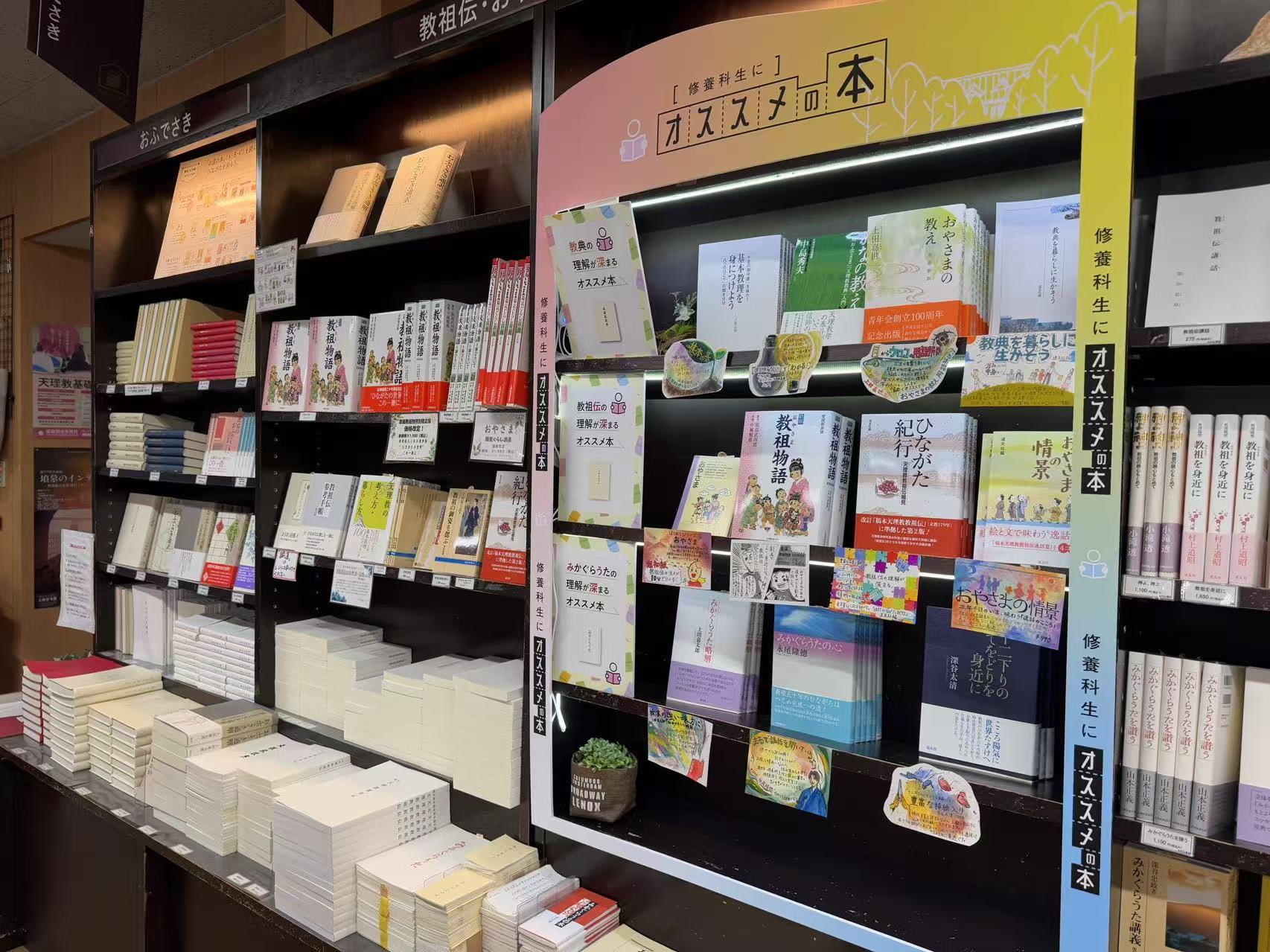
Not far from the entrance on one side was the recommended section, more specifically, recommended books for “training course students” (修養科生, link is an informative website in Japanese). The “training course” (修養科) is a 3-month onsite Tenrikyo programme for anybody regardless of background and age to, according to Tenrikyo, change your entire life and your destiny. Honestly, from the website it looks pretty enticing and like a good way to recruit new and strong believers. Perhaps I would have joined if I had the time and freedom, I’d probably made some friends there too. Well, I guess to change my life and destiny all I need is that extra bit of time and freedom.
On the website it especially mentions that this course takes foreign students and are offered in other languages such as English, Chinese and Thai. There seems to be students from as far as Africa. It is truely marvellous in this era to see people of all origins to join together in pure and self-driven initiatives with the sole motive to better our lives. This is, regardless of history and space, the good of religions.
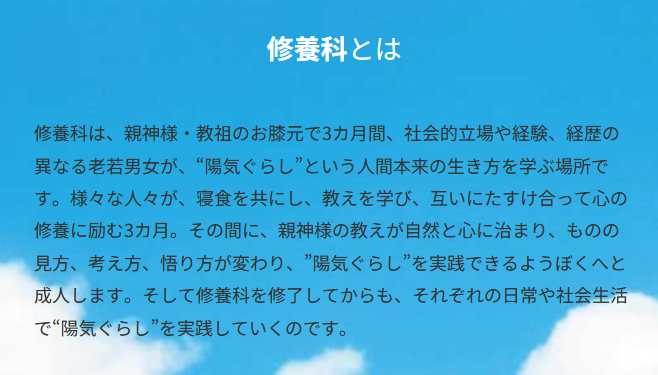
“What is the Shuyoka (Training Course)?
The Shuyoka is a place where men and women of all ages and backgrounds spend three months at the feet of the Oyagamisama (親神様天理王命, God the Parent) and Oyasama (教祖, the Founder), learning the original way of human life called “Yoki-gurashi” (陽気ぐらし, a life full of joy and brightness, the motif of Tenrikyo), regardless of their social status or life experience.
During these three months of training, people live together, share meals, study teachings, and help one another. Over time, the teachings of God the Parent naturally settle into their hearts and minds, changing their perspectives, ways of thinking, and understanding. They grow into individuals who can practice “Yoki-gurashi” in their lives.
Then, after completing the Shuyoka, they continue to practice “Yoki-gurashi” in their daily lives and in society.”
Besides, the entire 3-month course is only 13,000 Yen (less than 100 USD) not inclusive of accomodation and meals. Accomodation is probably at one of the believer lodgings (信者詰所) which are as low as 1,000 Yen (less than 7 USD) a night, and which are spacious, clean and even have free Wi-Fi. Each meal is 250 Yen (less than 2 USD). In addition, all of these are famous for being open to anybody who just wants a place to stay. I have seen YouTubers’ vlogs of staying in these and they were on par with the uni dormitory in which I used to live, somewhere in Yokohama.
I’m sure devoting one’s entire life to religion is one peaceful and meaningful way to spend it, void of most concerns in life. So, why aren’t more people living this way? Instead, what are people chasing for? Is it worth sacrificing our scarce time of being?
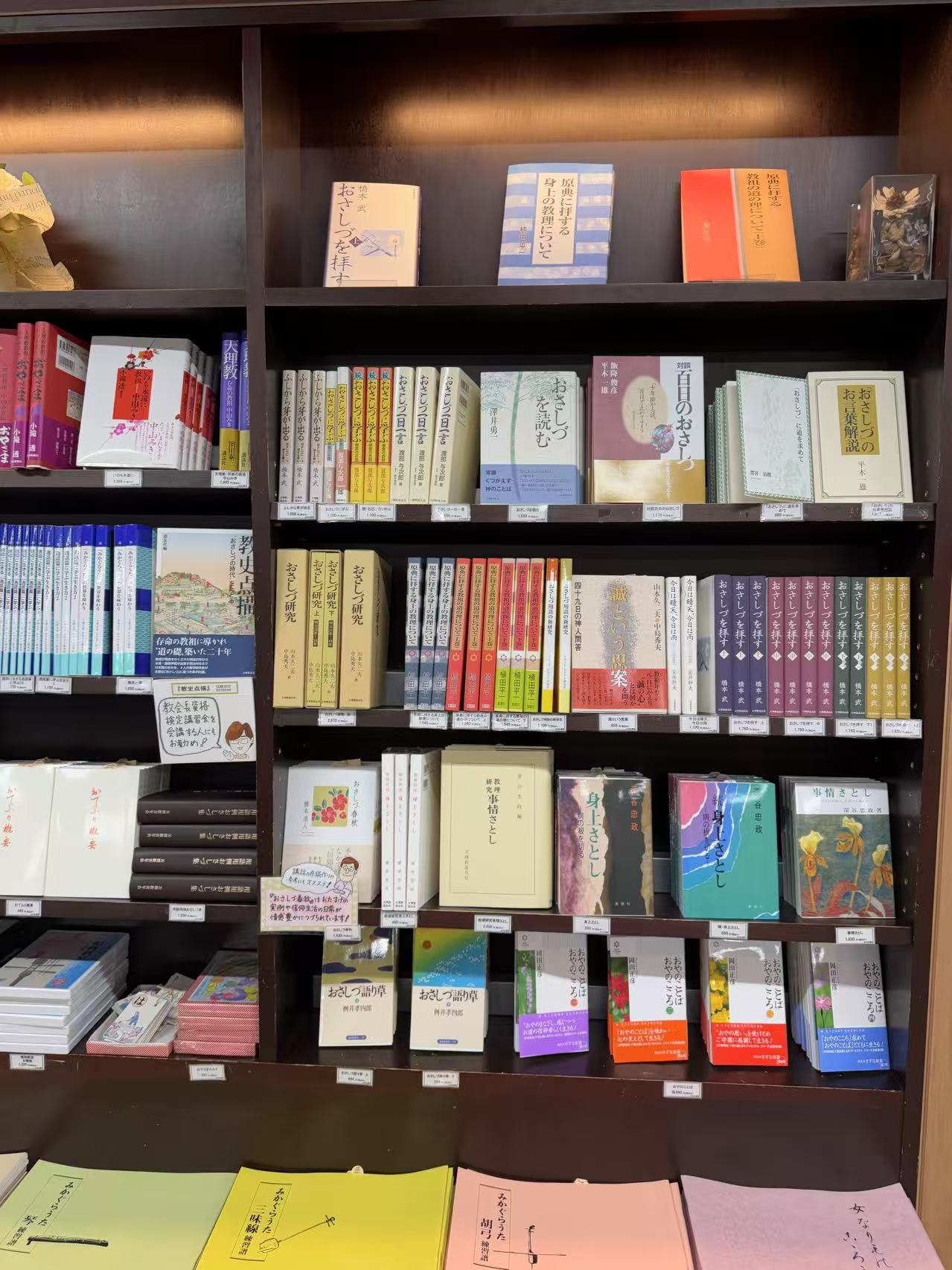
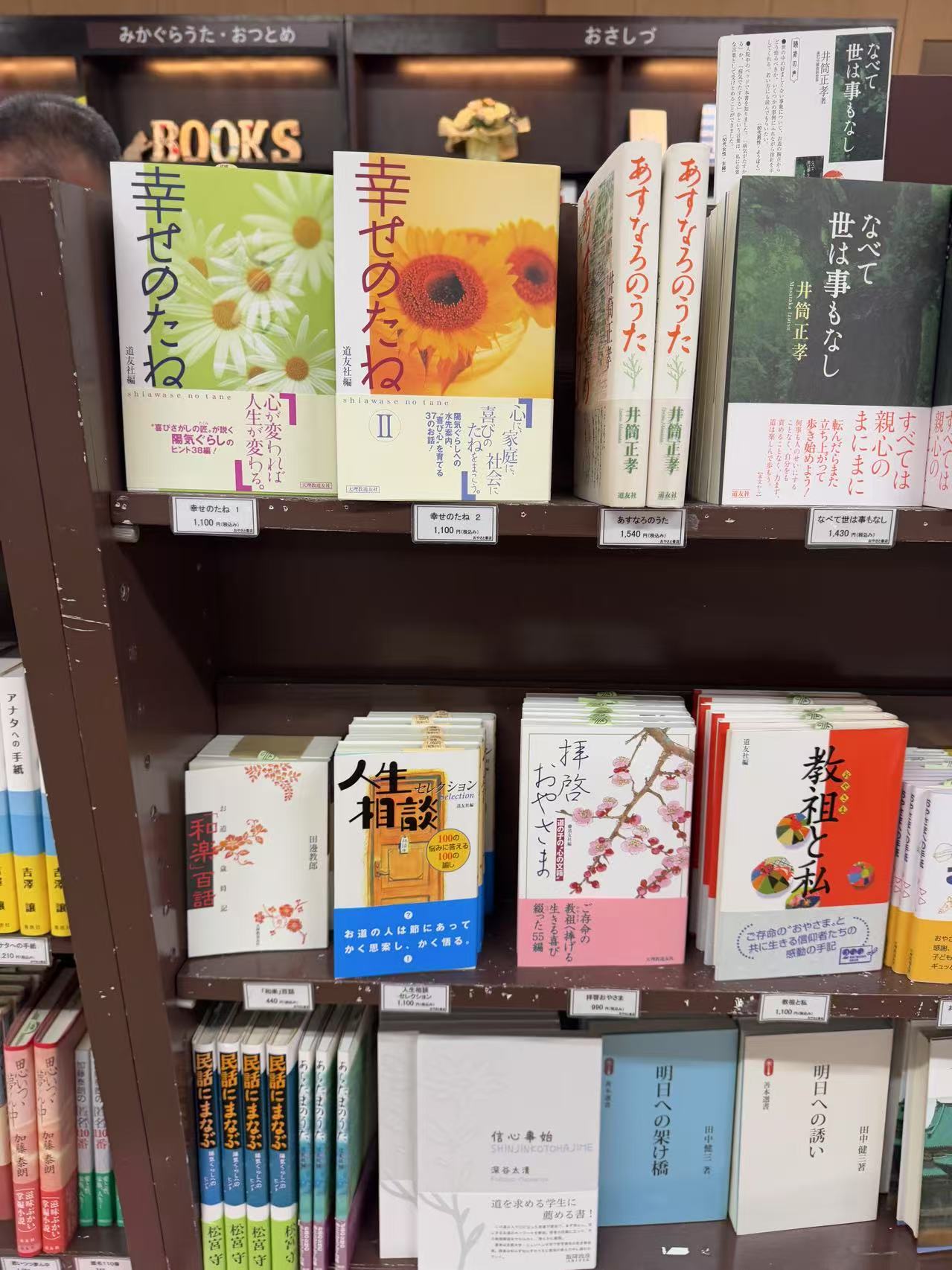
I was not attracted by most of what the books had to say instead wanted to know more about the history and structure of Tenrikyo. So I picked up a book which looked easy and fun to read, as well as a few postcards. It was a Tenrikyo history book for the younger audience.
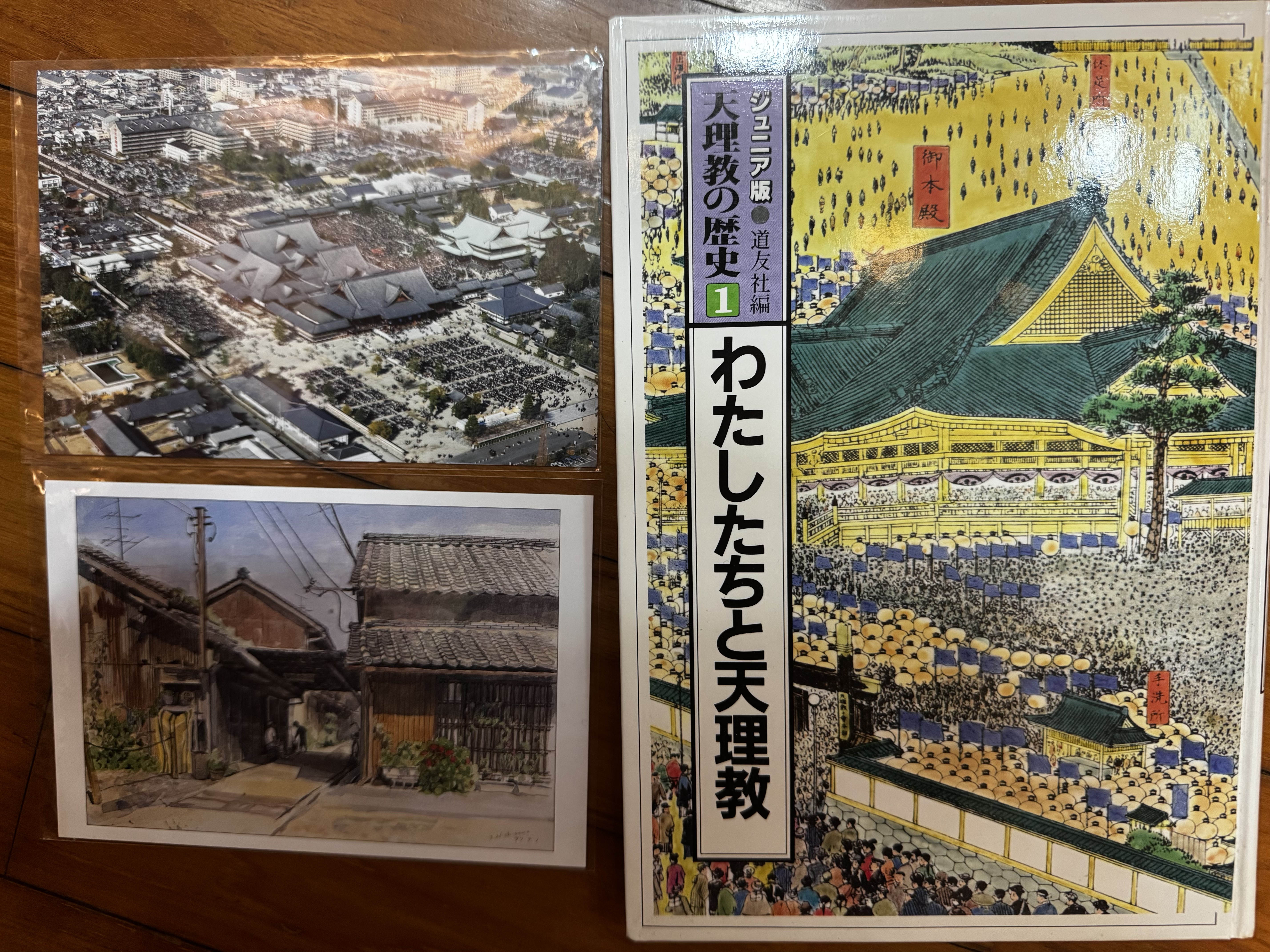
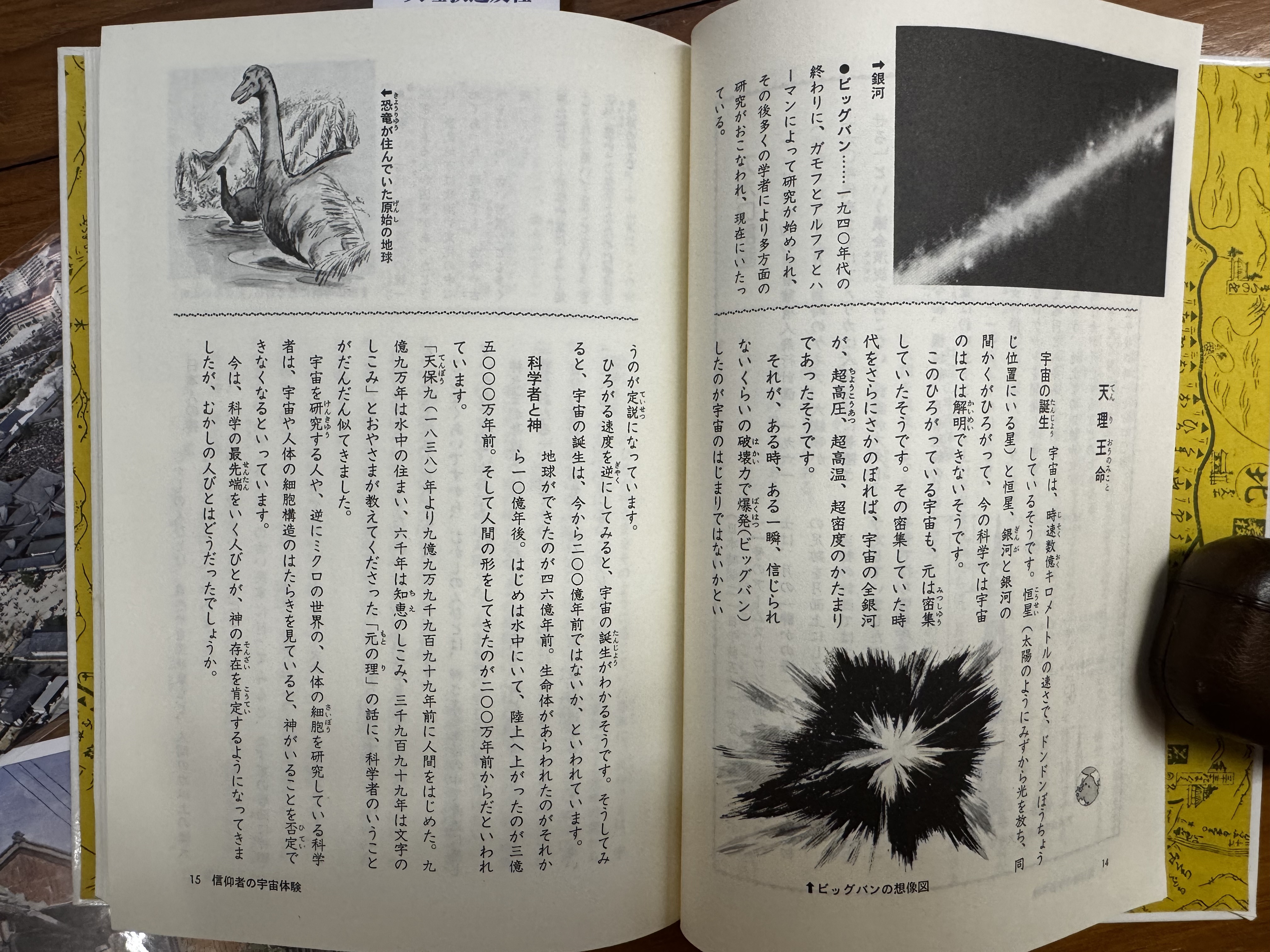
The book interestingly started with the history of the universe, i.e. the big bang, and introduced the points of time lifeforms and human-like species appeared on earth. You would think these are contradictory to the creation theory, but no, Oyasama had already taught us that in Motonori (元の理, the story of the beginning). By discovering more and more about space and the intricacies of the microscopic world, it became impossible for the scientists to deny god’s existence.
I cared less about whether anything written here were logical at all, but more about the fact that almost all New Religions were willing to address how modern day science may (but does not) contradict with their theory of creation and existence of god, much unlike fundamentalist Christians, who were reluctant to go into these discussions and more in denial of modern science. Surely, this was thanks to the fact that New Religions are new. The explanations that Tenrikyo provided were also never confrontational, and for the most part conformed with the common knowledges of science.
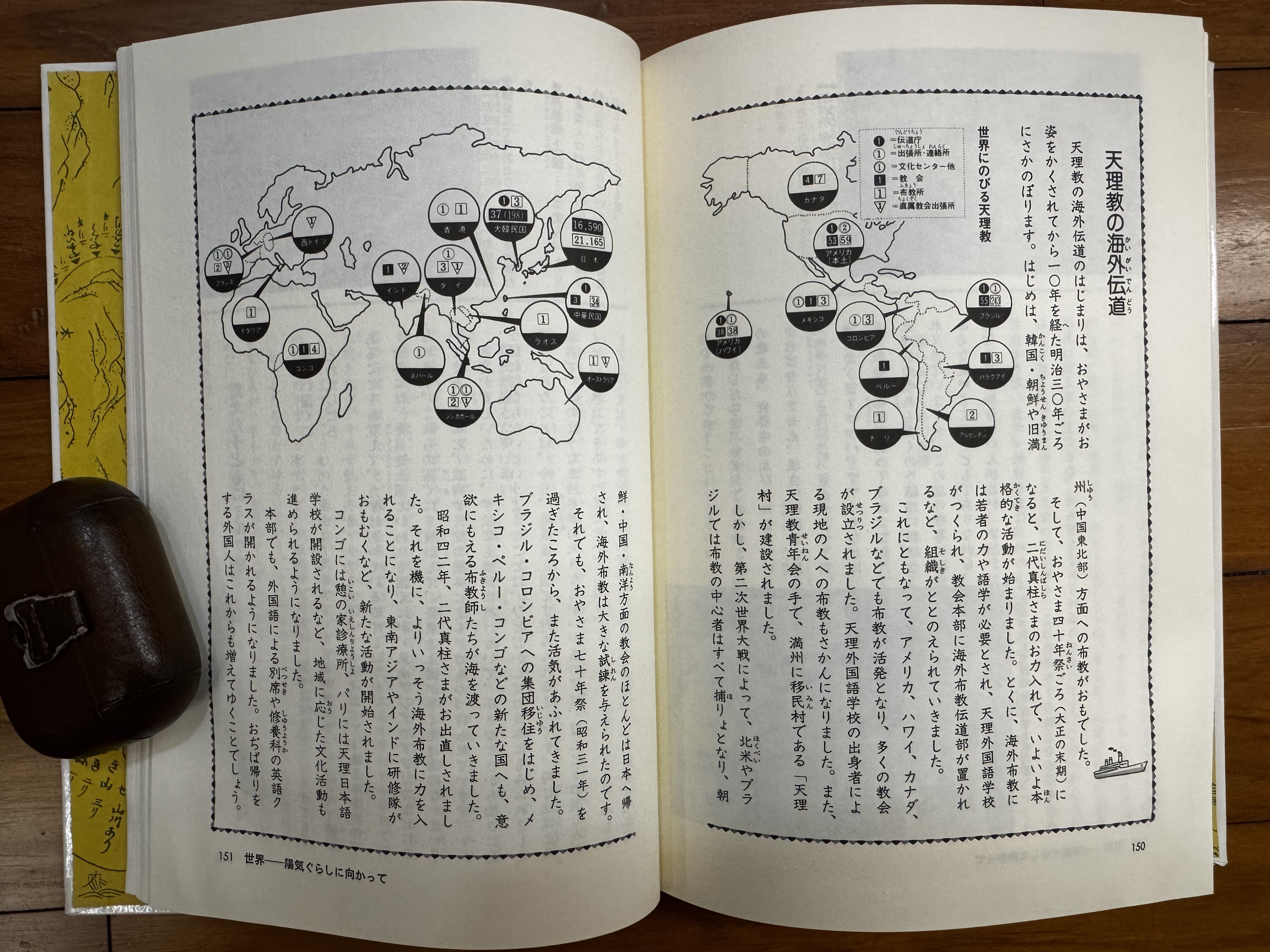
There was a map in the book about the preaching of Tenrikyo around the world. I had to flip to the back of the book to check the publication date and only then I realized that this book was published in 1984, more than 40 years ago. Tenrikyo was considerably more domestically prominent back then, but for the international scene it’s more of a mystery now. Nonetheless, it shows that Tenrikyo was present on every continent in the 80s, and Hawaii seemed to be a hotspot in the pacific, having more than half the number of churches in the US mainland. Notably, the now multidisplinary Tenri University (天理大学, many non-Tenrikyo affiliated local students also go to school there) has as the predecessor Tenri Foreigner Language School (天理外国語学校), founded in 1925, whose sole purpose was to train its students for Tenrikyo missionary works around the globe and was the only foreigne language school in Japan at that time. Besides, Tenrikyo had set up Japanese language schools in various countries and they are still actively recruiting, with one even in the place I currently in live.
Tenrikyo Church Headquarters
I got out of the bookstore and out of the shopping street. There was a long string of food stalls on the right side of the road but all of them seemed to have been closed for awhile and covered up by worn canvas. The sun had just set behind the skyline, and I had arrived at the Tenrikyo church.
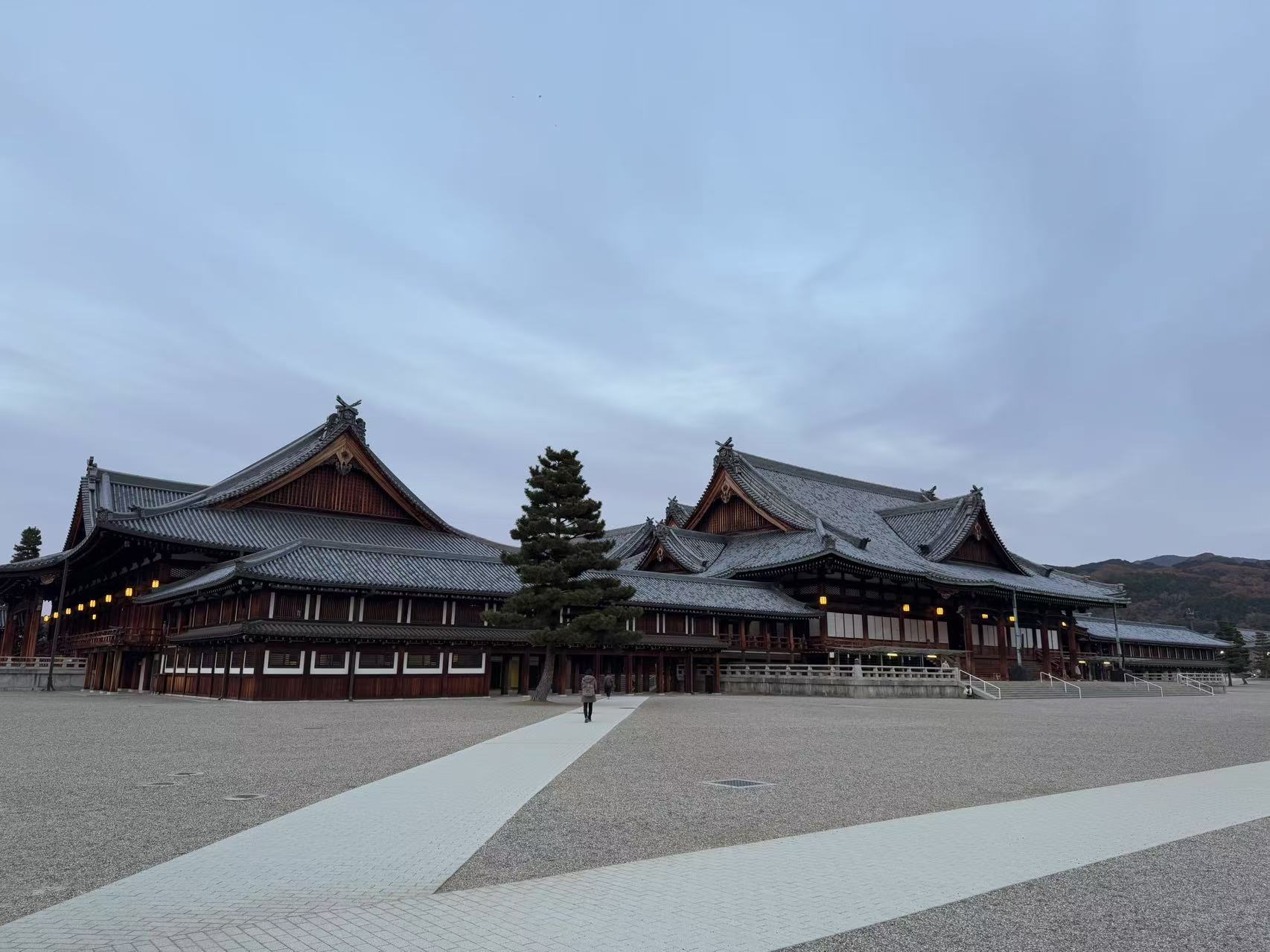
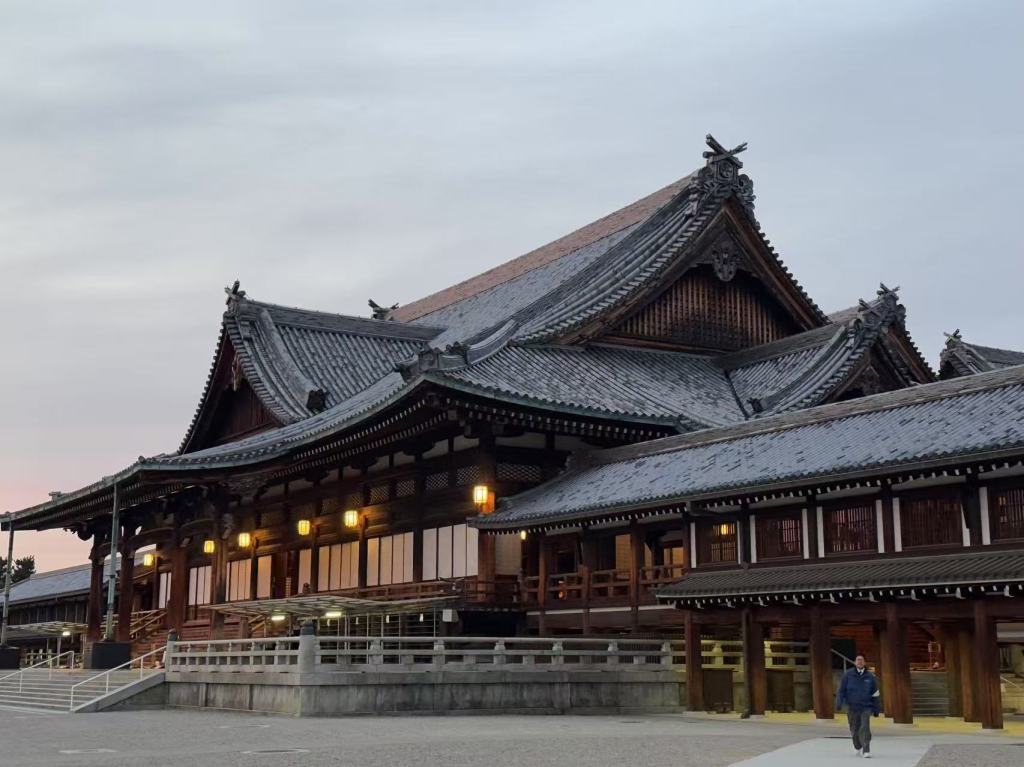
Rather than a “church”, it was in the scale of a grand palace, a tremendous Shinden-zukuri (寝殿造). I loved the aesthetics of the palace, whose colors were enhanced in the twilight. Dark grey tiled irimoya-zukuri (入母屋造) with stylish shibi (鴟尾), matched with the deep brown/red lacquered wood of the walls, decorated by lanterns evenly spaced along the eaves of the building, glowing ever so softly. The gentle lighting added a sense of calm, dignity, and quiet reverence, especially under the fading evening sky. A few neatly trimmed pine trees flanked the building, marking each path into the complex. I was pulled in by its mystic attraction.
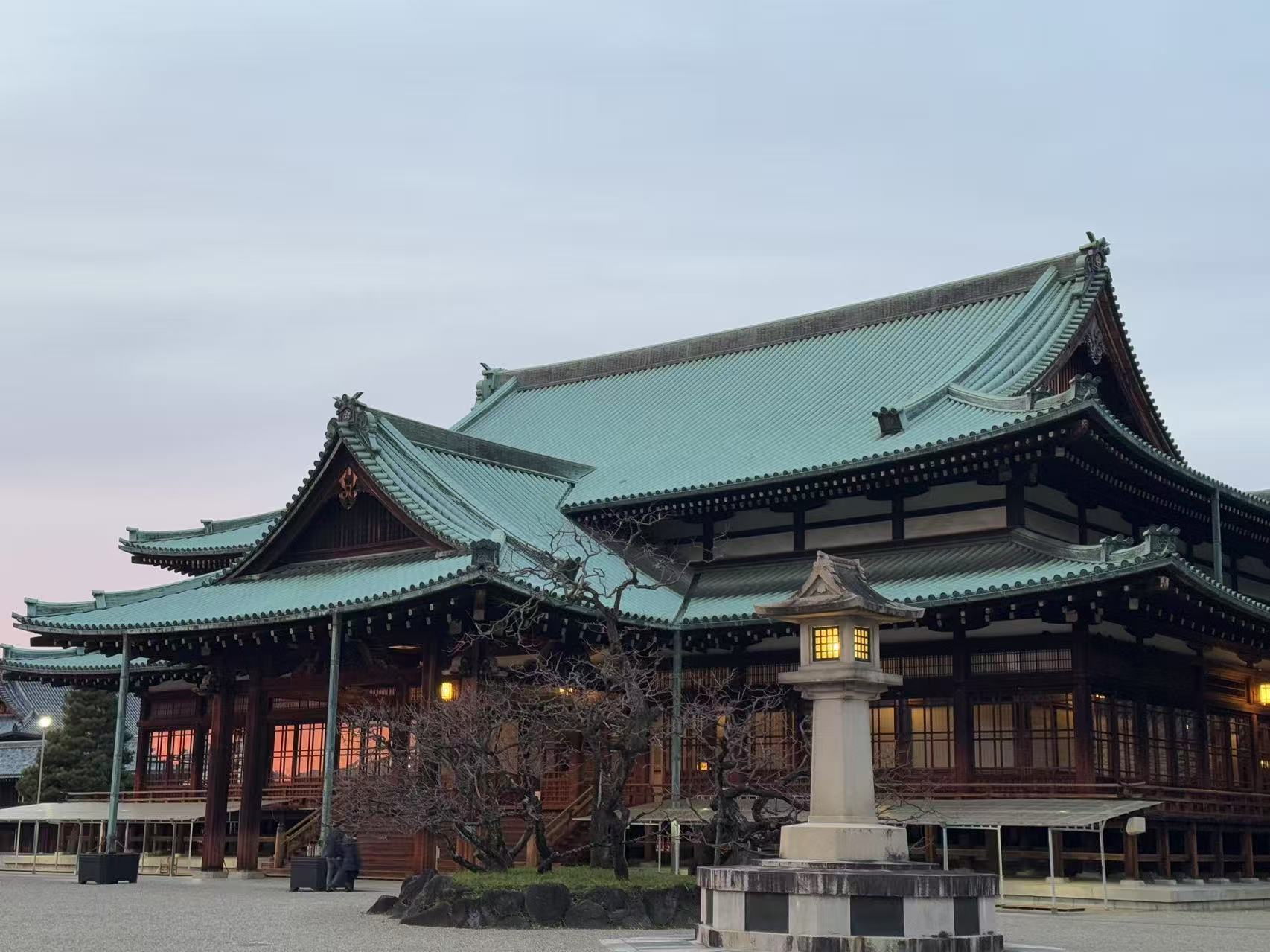
Through the elevated corridors of the outer layer (渡り廊下) was the Kyosoden (教祖殿), the hall built in the name of the Kyoso, i.e. the Oyasama. The roofing was made of greenish copper tiles, with prominent stone lanterns on either side of the building. The glass windows on the wooden facade of the building were reflecting the warm hues of the sunset, casting a gentle amber and pinkish-orange glow across the panes.
Walking on the path meant crossing path with numerous Tenrikyo people, so I opted to walk on the gravel ground, which I soon regretted. The gravel made particularly unpleasant sounds under my feet, and despite that, I still crossed path with them. In particular, a family of three, both parents wearing the Tenrikyo black robe. They were coming in from behind, and greeted me warmly as they walked by. I greeted back, puzzled. It should have been clear to them that I wasn’t from there, carrying a conspicuous hiking bag and all. Then I noticed more and more people walking by, some appeared from other sides of the inner courts, but all hurrying towards a same direction in the main church, as if an event was about to take place there. I got out under the corridors and back to the main court again. I turned and saw a dreamy pink sky.
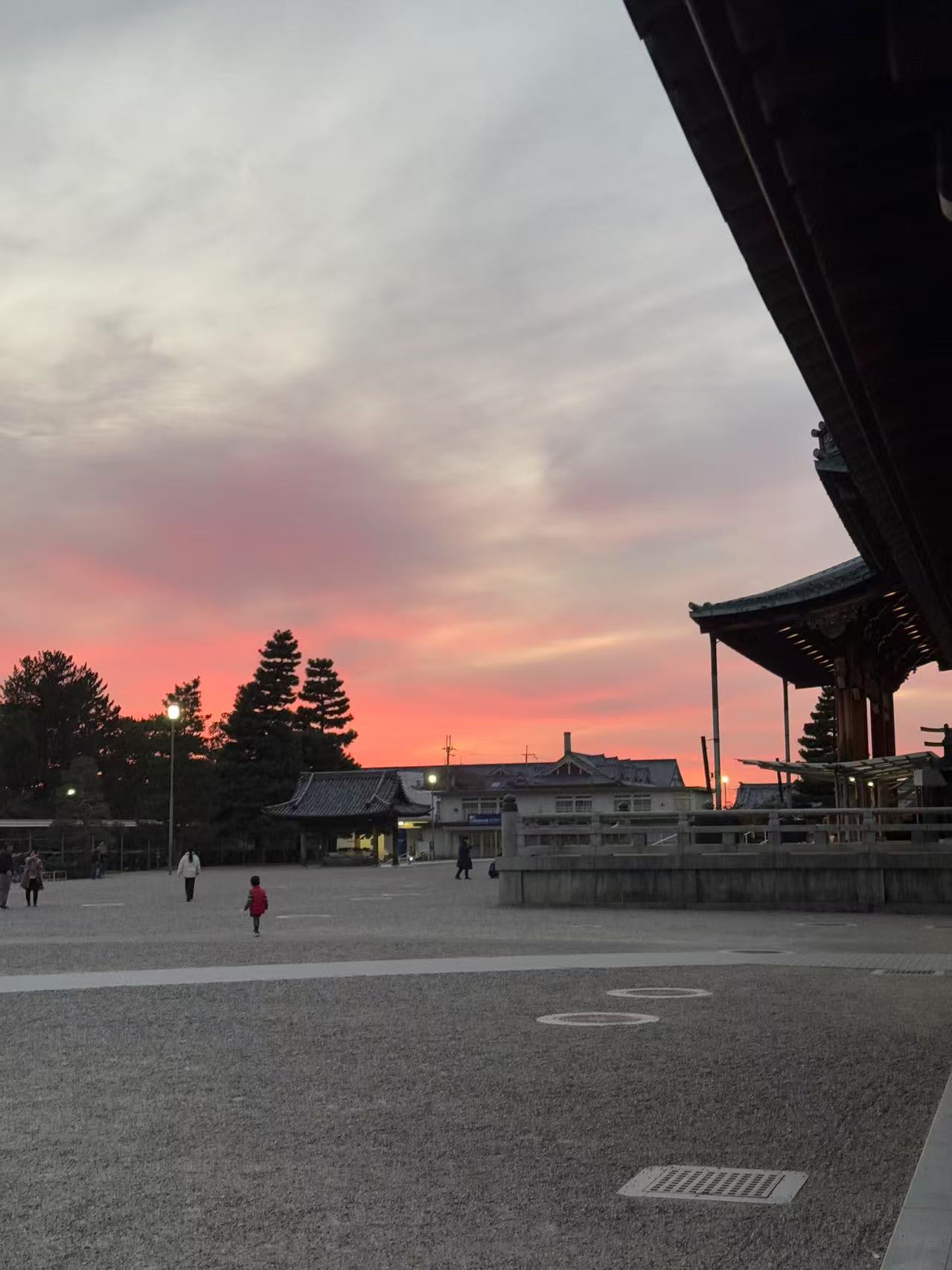
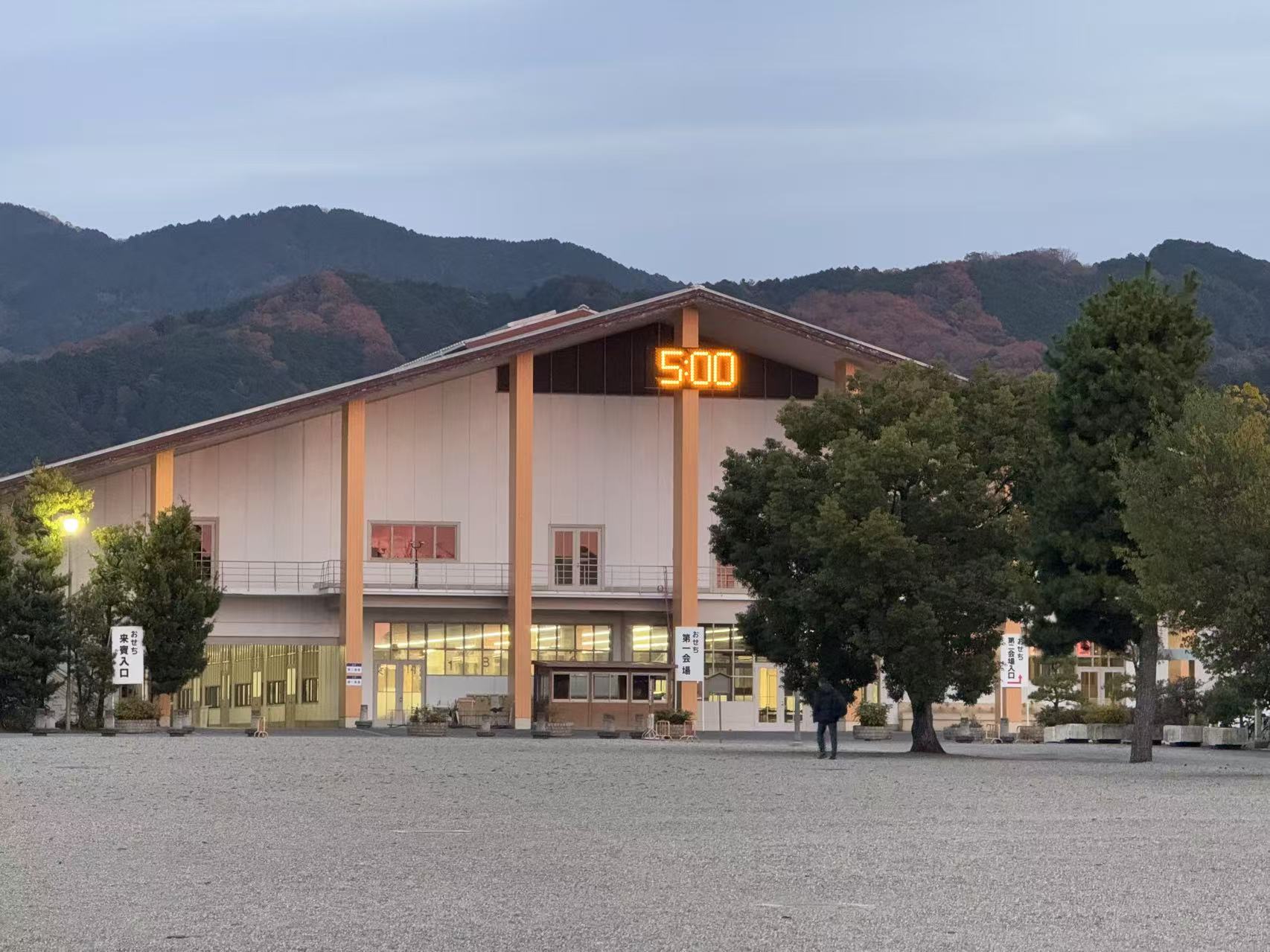
As I got out to the front of the Tenrikyo Church, I saw a warehouse looking building against the Kasagisanchi hills. Hung on top was a giant digital clock, reading the time “5:00”. Then, I heard the sound of music.
It was the sound of percussions and bells, as if slipping out of somewhere serene and sacred, and slowly spread around the court. Then followed the sound of people chanting in unification, like a song, sang softly and in dignity. A young man, possibly a highschooler, carrying a suitcase, stopped before the gravel court a few steps before he could directly face the main church from afar, and bowed deeply to the church. This led me to notice that this chanting and music was from inside the main church, as some kind of a daily ritual. I watched him for awhile and there was no sign of him getting up, his upper body tilted an unwavering 45 degrees. I stood beside him, silently observing the scene and wondering if he was heading to the Shuyoka, then figured that I should record the music.
Standing aside was another man, in black jacket and pants, with black mask on, also recording in silence. His fidgeting movements after seeing me and outfit led me to believe that he was not from here either. Perhaps a tourist of similar nature to what I was. I could faintly see people in Tenri black robes sitting inside the church. I recorded the scene for a while and reckoned it was time to head out.
I planned to go back the same way, but as my head turned to the sunset, an omnious shape emerged. It was a building in the form of a spaceship commanded by a school of villains as seen in many SciFi films, or a secret base housing an army of mutants, its long antenna communicating an impending doom for the mankind. Excited, I had to find out what it really was.
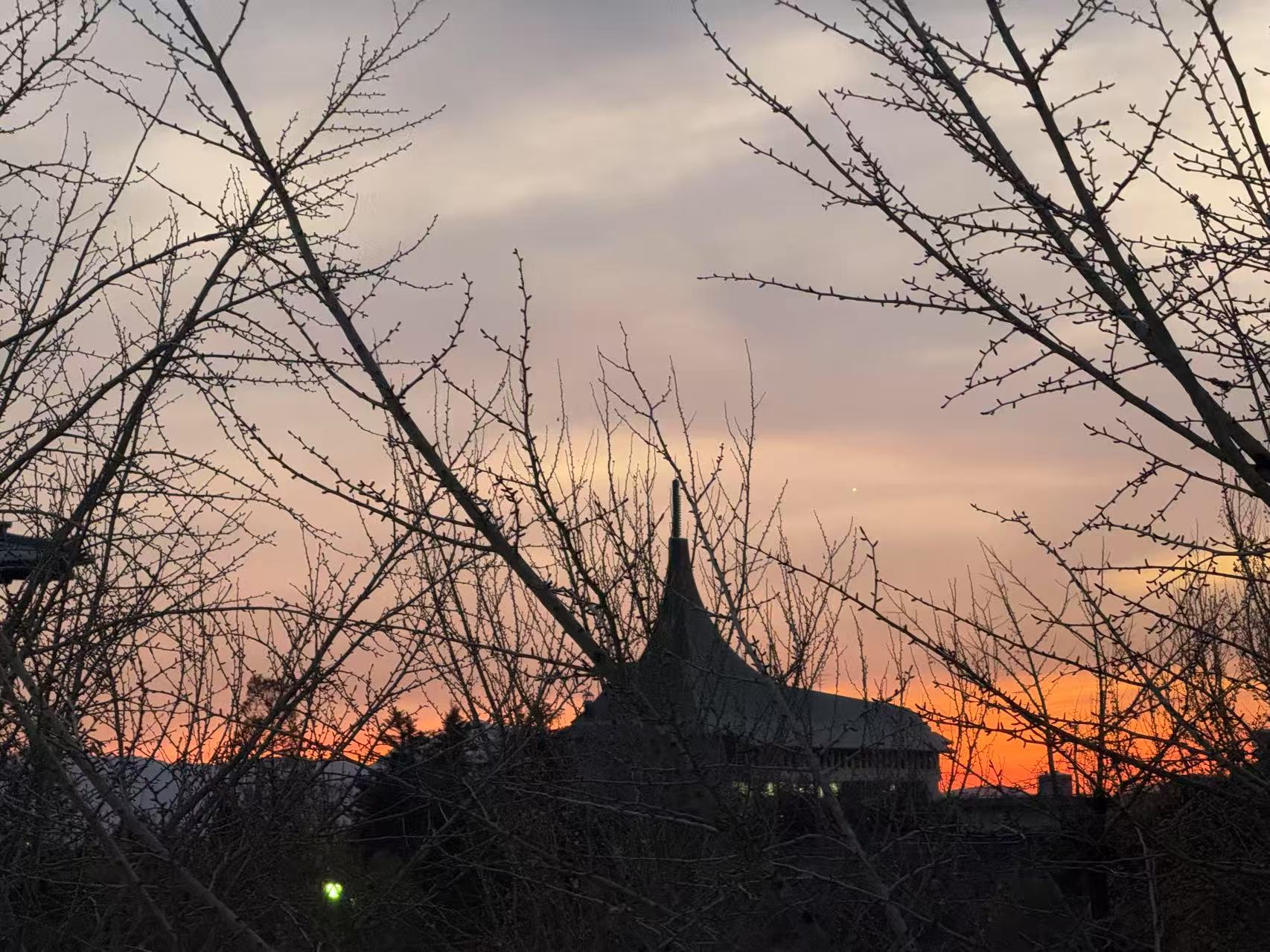
The Dark Way Back
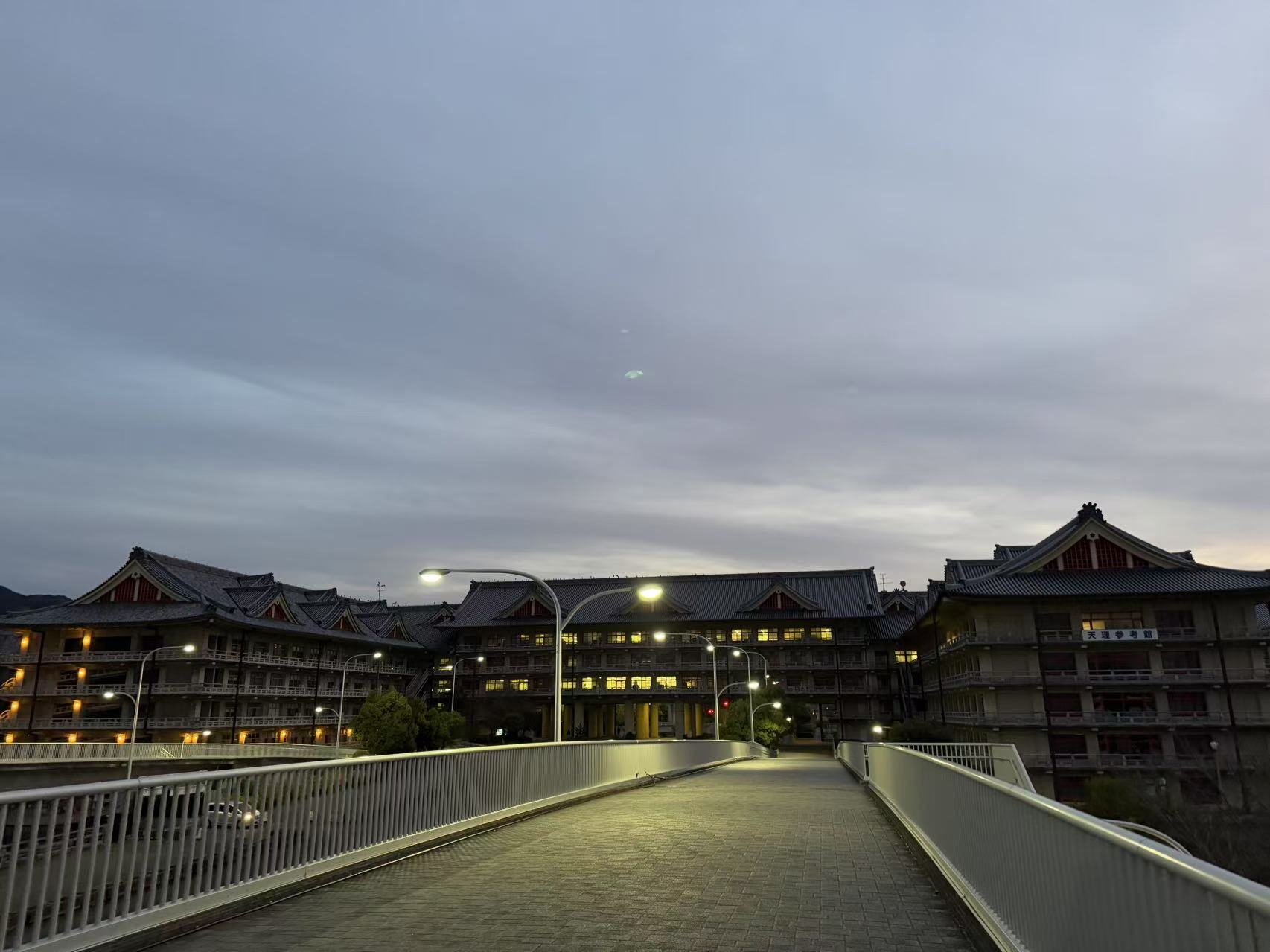
The new route was void of any other soul. I walked the overhead bridge connecting the main church grounds to the Tenri University. Most of the lights in the building were off. The design of it was pretty much the same as the lodge that I saw on the way to the church, in the middle of the shopping street.
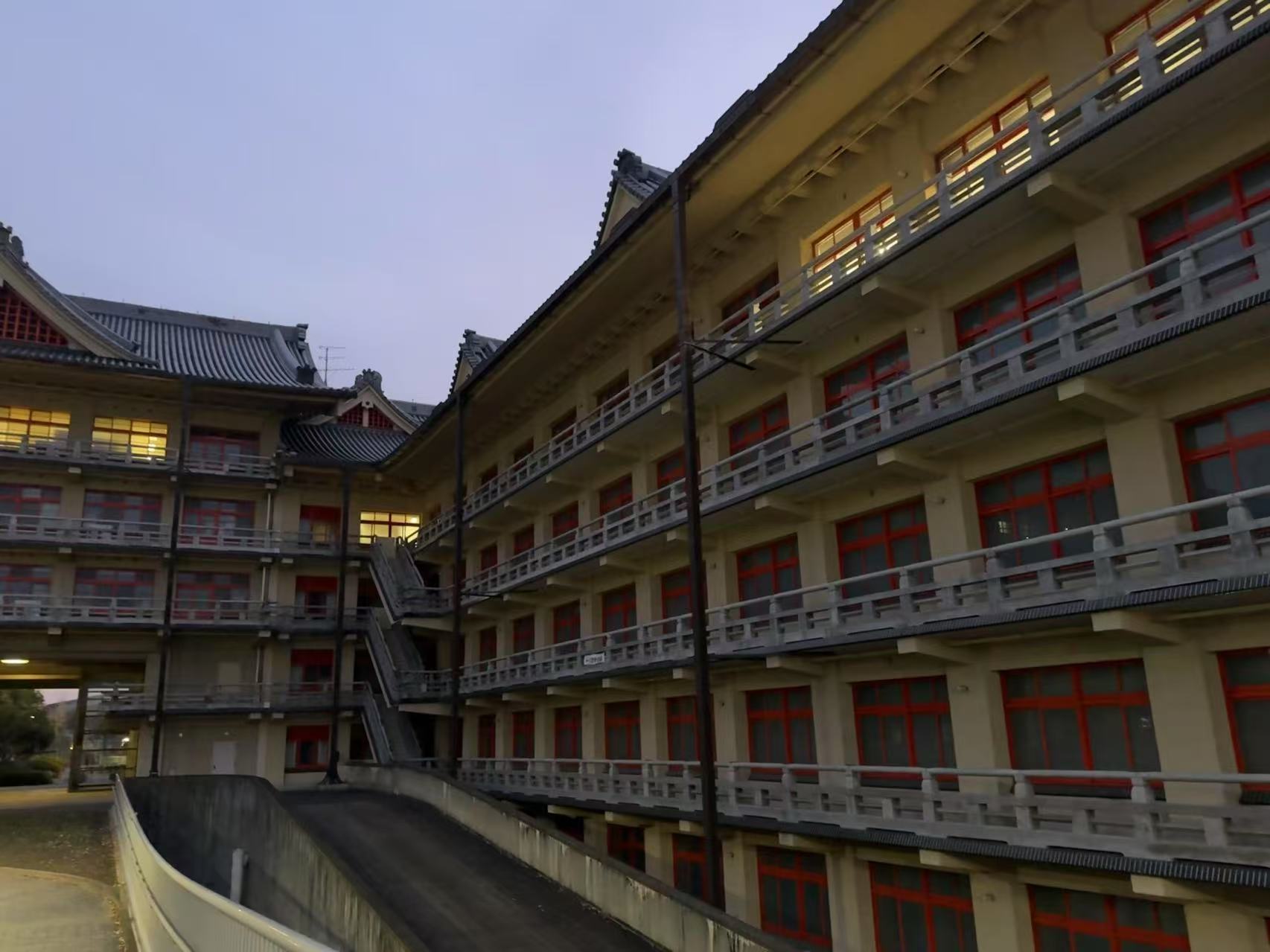
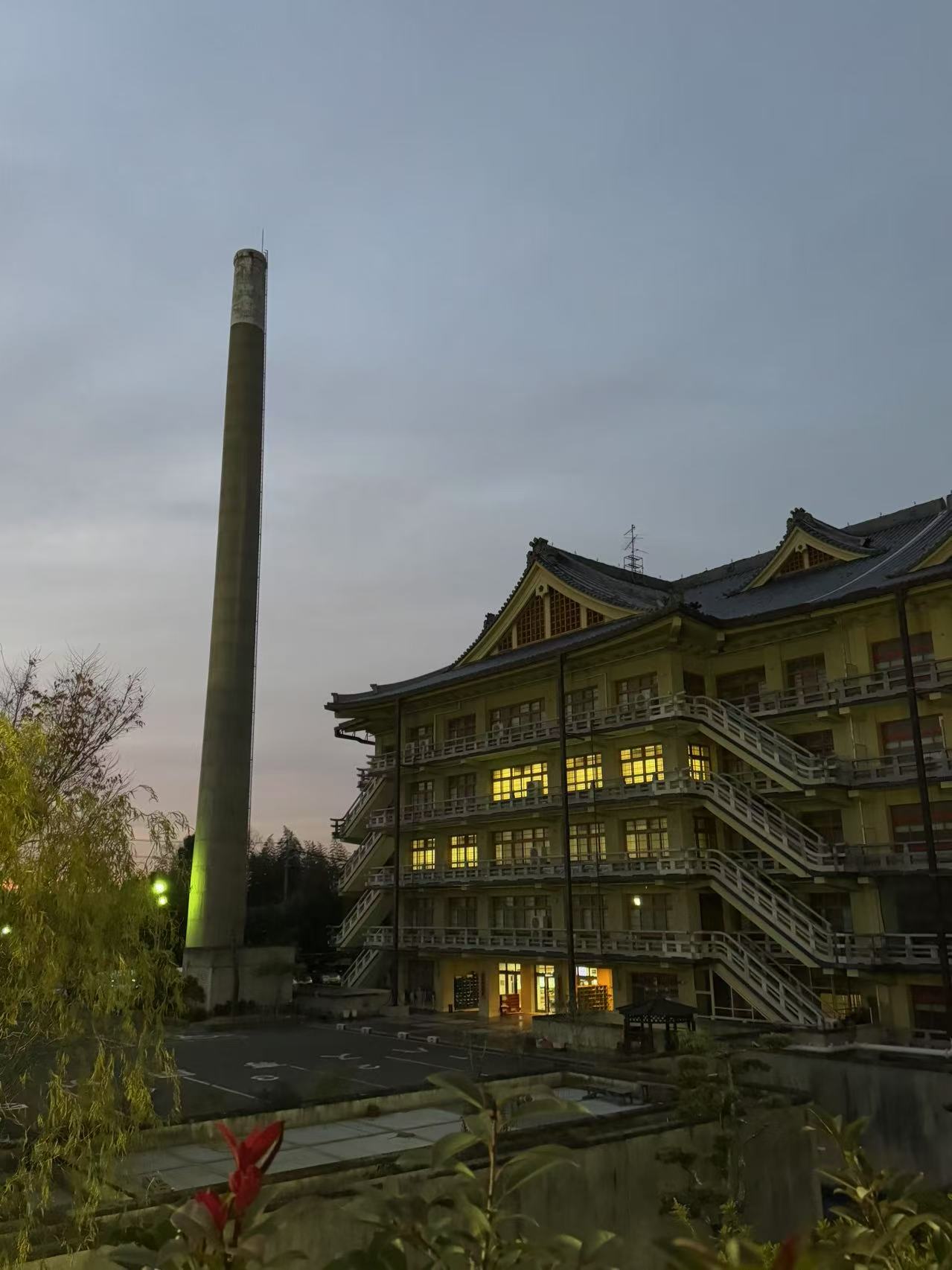
Naturally, this pattern of building complexes was no coincidence. In fact, each of these buildings was a part of the grand construction scheme of Oyasato-yakata (おやさとやかた) proposed in the year 1955, by Nakayama Shozen (中山 正善), the grandson of Nakayama Miki and the second generation leader of Tenrikyo. It was conceived to be a huge inter-connecting square complex of above buildings surrounding Jiba, with sides of approximately 900 meters. Built parts include quite a number of lodgings, Tenri University with the museum, Yoki Hall (陽気ホール), Youth Organization (天理教少年会) and Tenrikyo Office, Tenri Hospital, Tenri Seminary (天理教校) with the Besseki Lecture Hall, as well as the Shuyoka.
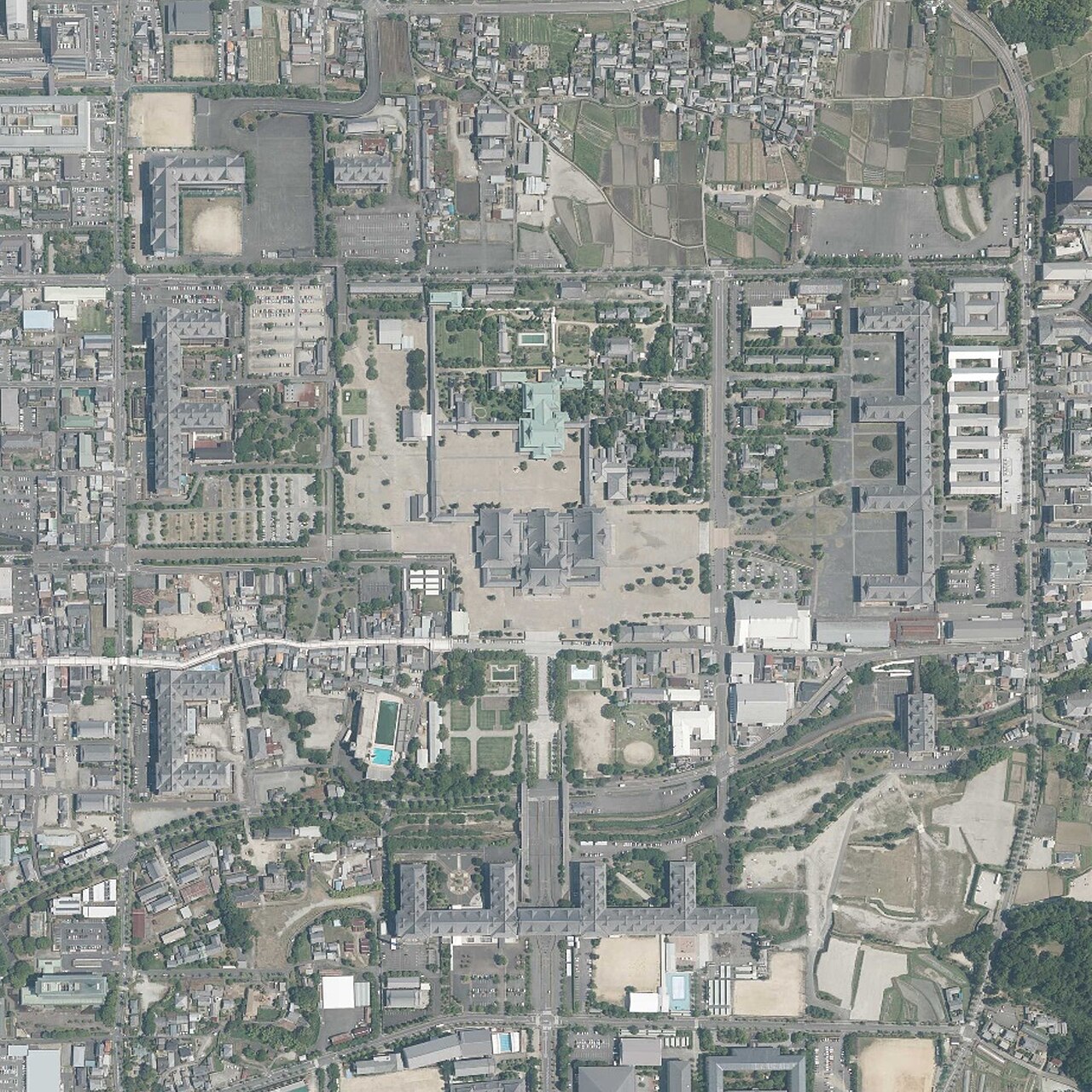
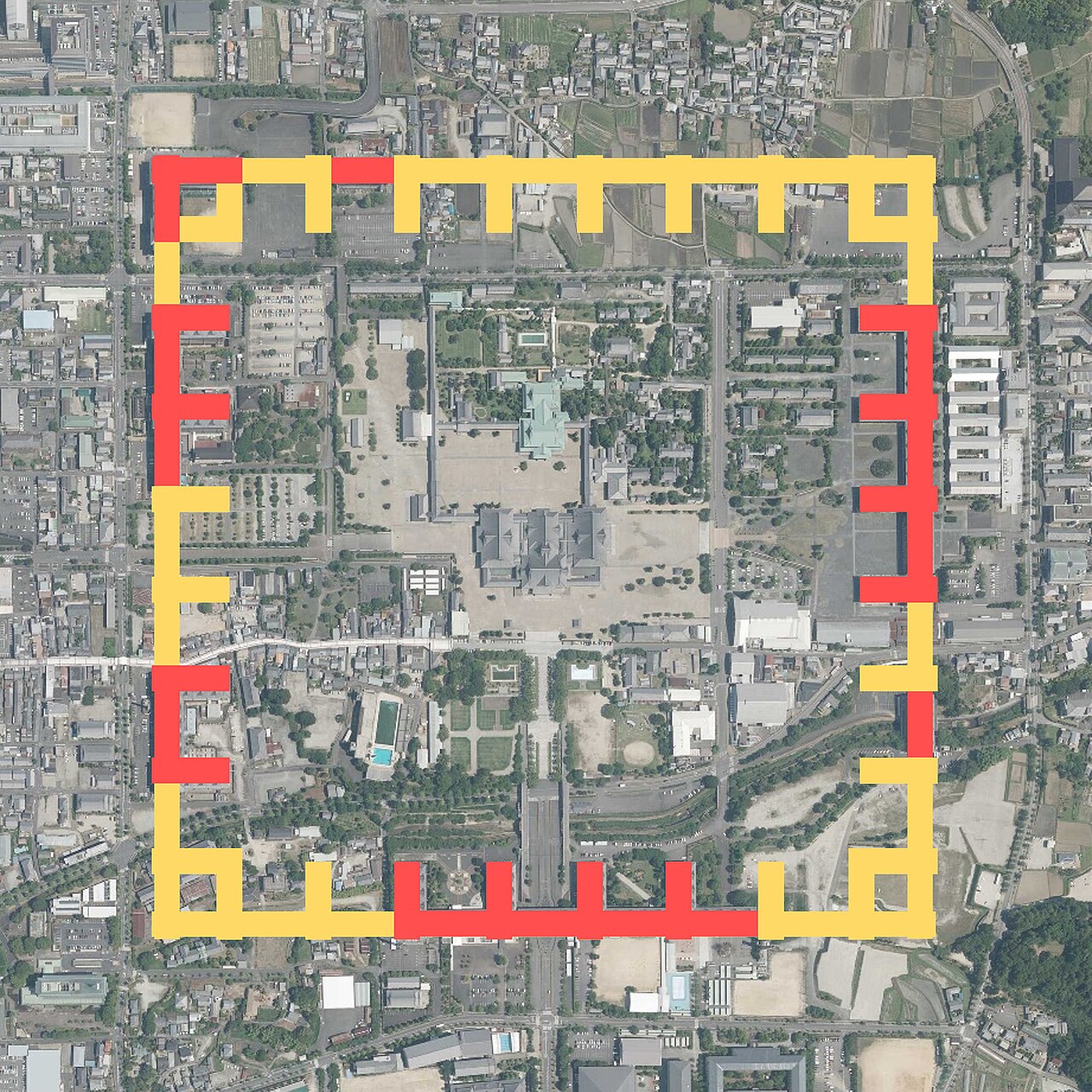
Despite construction started in 1955 and a considerable amount of buildings have been completed (26 out of 68, or 38%), no new building has been completed since 2005, and the construction progress has been stagnant. Sources have quoted financial issues within Tenrikyo as well as land disputes.
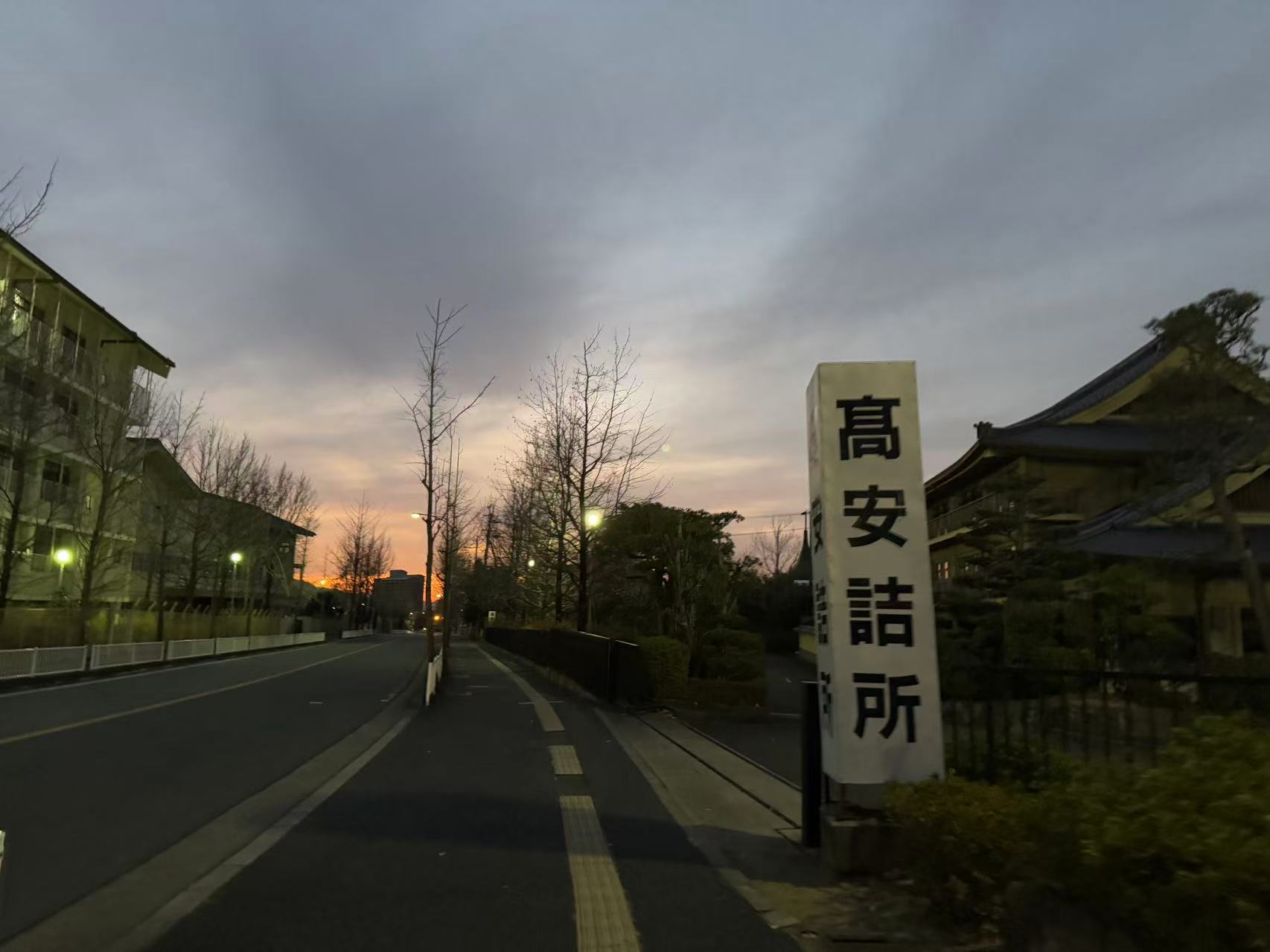
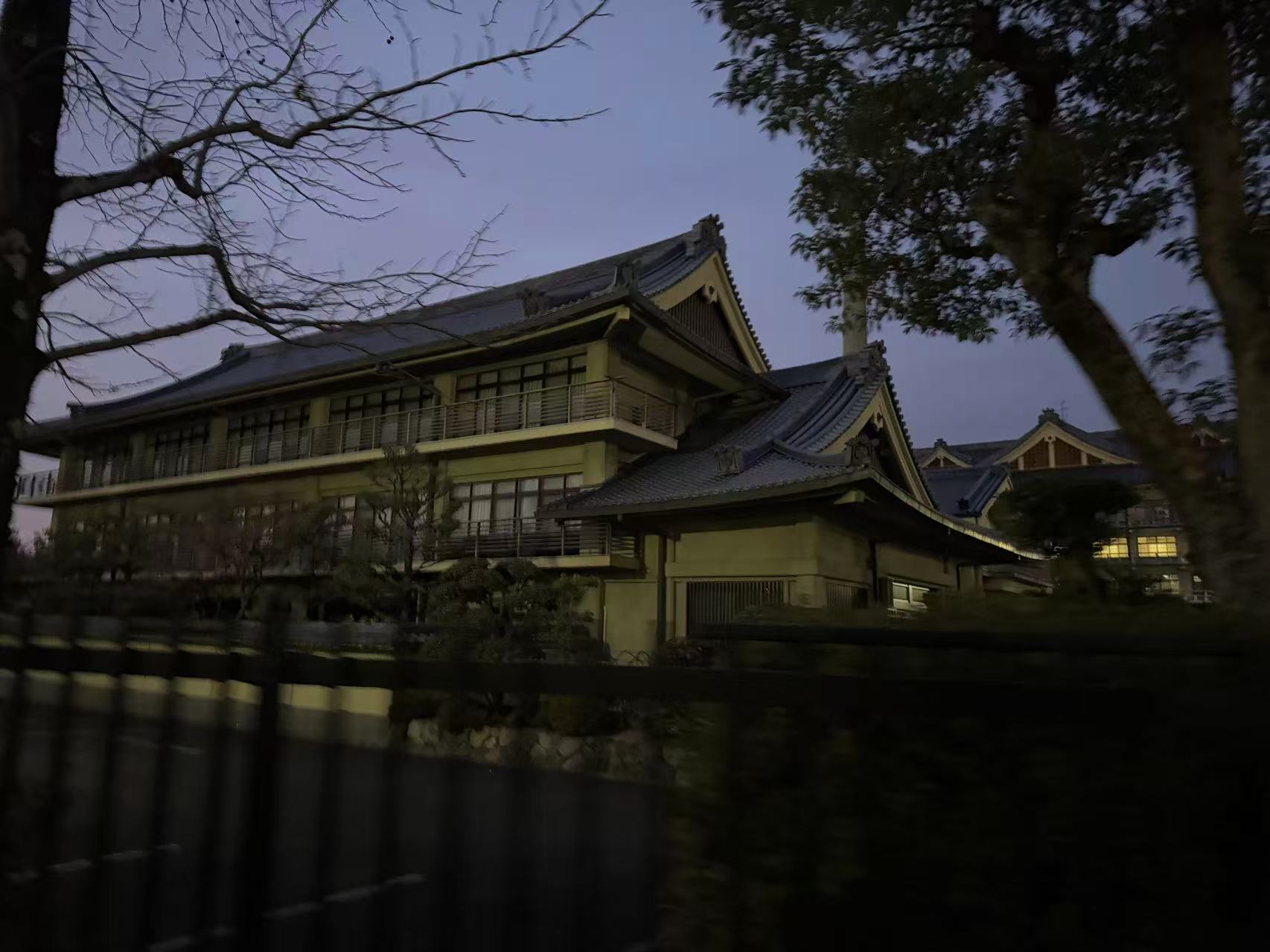
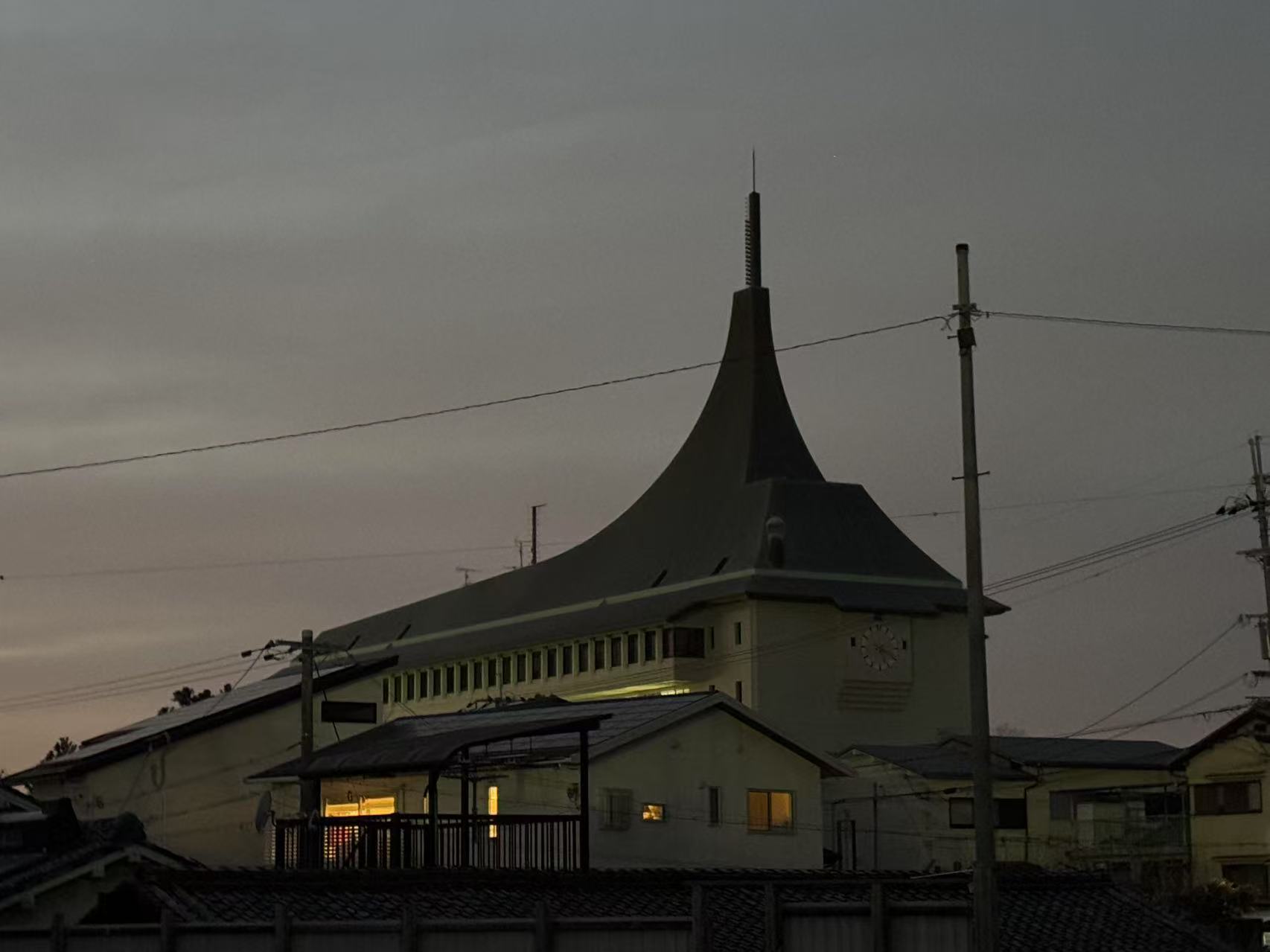
I walked down a narrow road and passed by a hunching young man walking towards me, he seemed to be talking to himself. I intended to make a right turn on a crossing, and found the road getting even narrower. Just as I was about to make the turn, the sound of wheels approached—a rush of students swept past me on their bicycles, laughing and shouting. It was rather annoying how they made the sounds. They seemed to belong to some kind of atheletic club, and just got off their practice. The big word of “天理”(Tenri) was printed on each of their backpacks in black and white. In spite of the frantic pedaling, they did not beat the blinking traffic light, then the shouting and nudging grow louder as they rushed across the road, disappearing into the darkness.
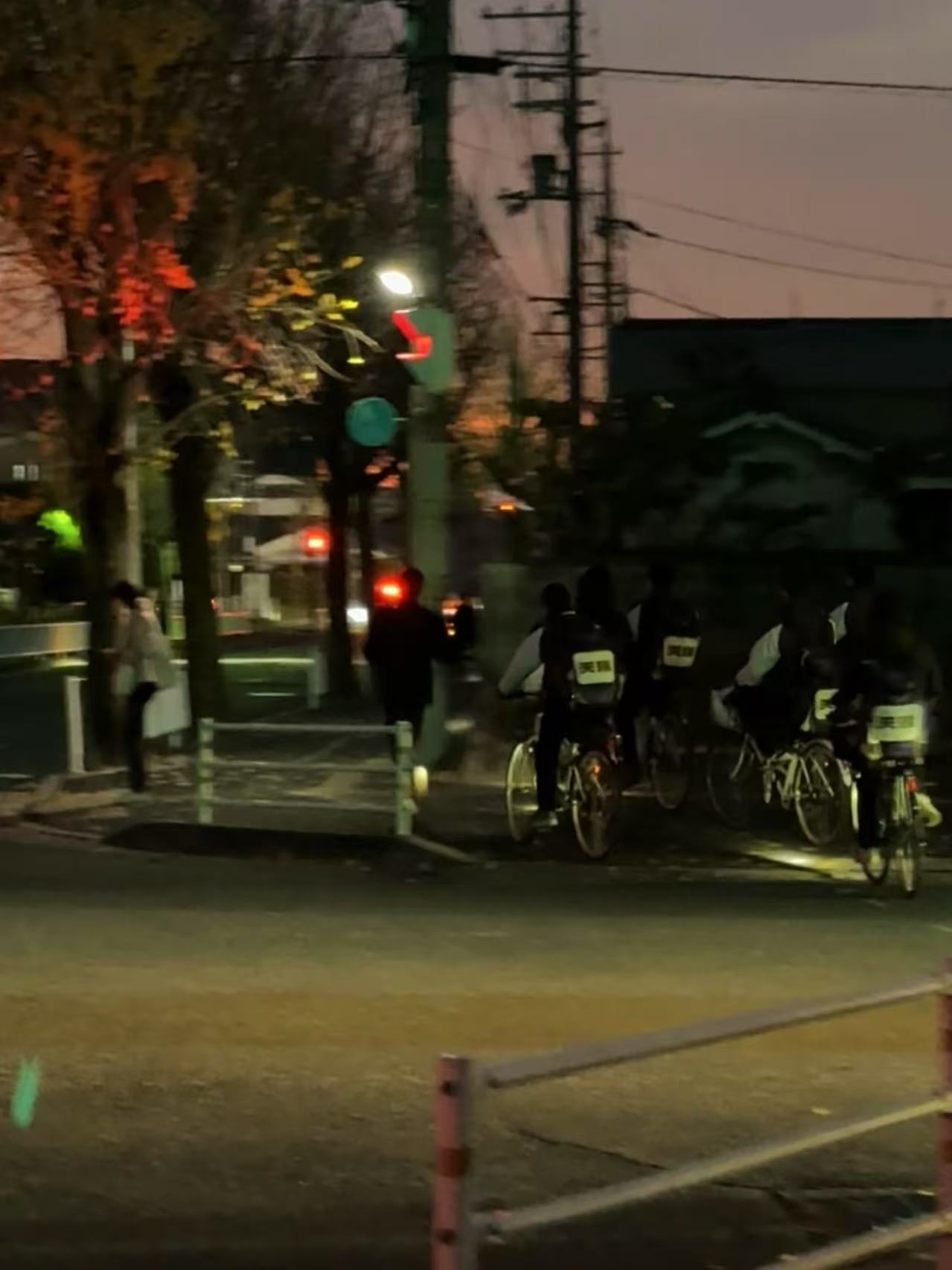
At this point my iPhone was really struggling in dark lighting — one of the many reasons, along the abysmal image quality, that convinced me to finally get a real camera. The boys were distracting my mind so much so that even for awhile after the turn, I did not pay any attention to the monstrous thing standing right in front of me across the road, the Star Destroyer, not until I came literally to its feet.
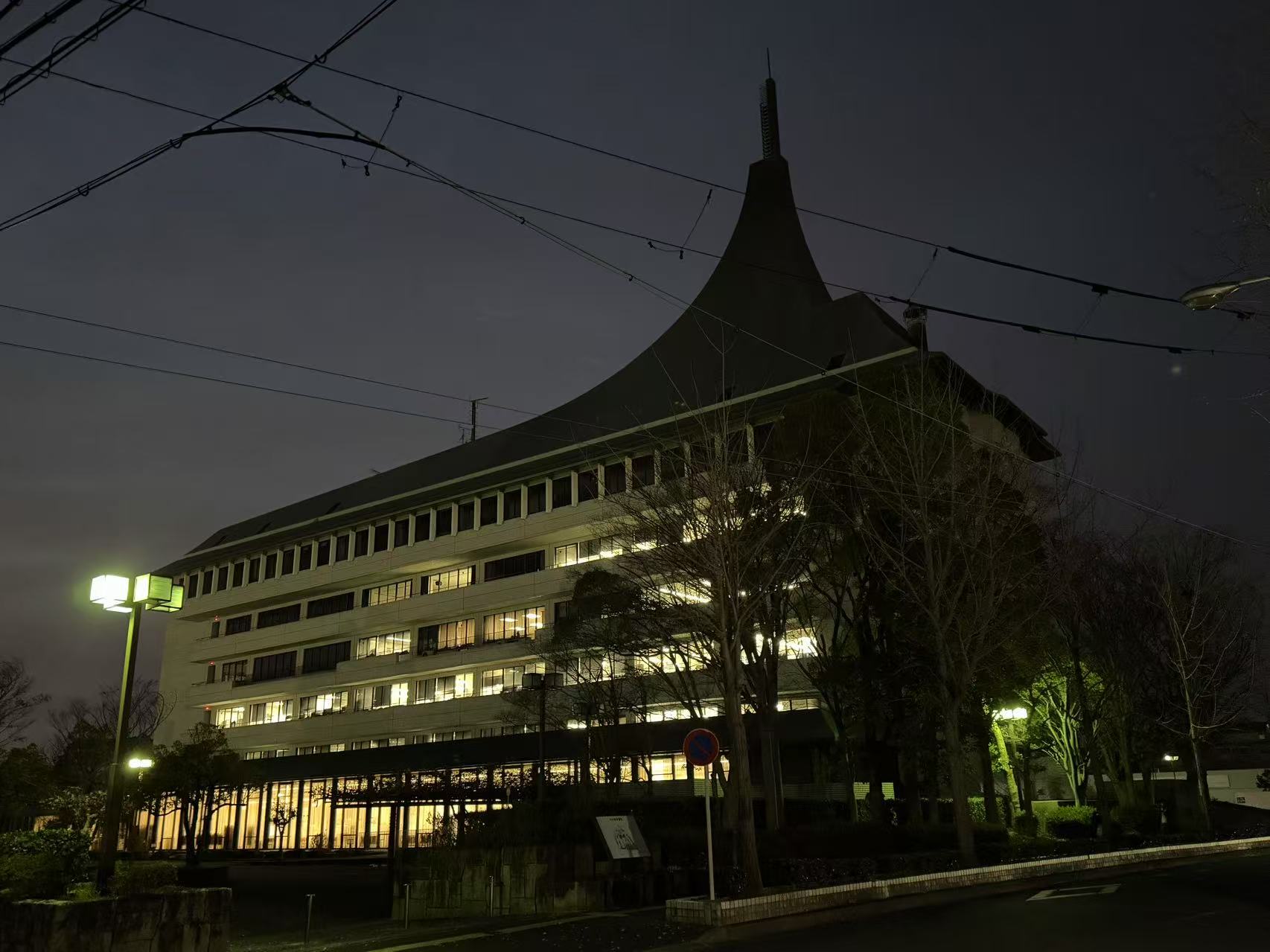
I gulped. Although the lower part of the thing was more like a “building” built by man, which gave me the other persepctive, the entire structure, especially its pitch black helmet was still murmuring dark words to me. I clenched both fists and went across the road.
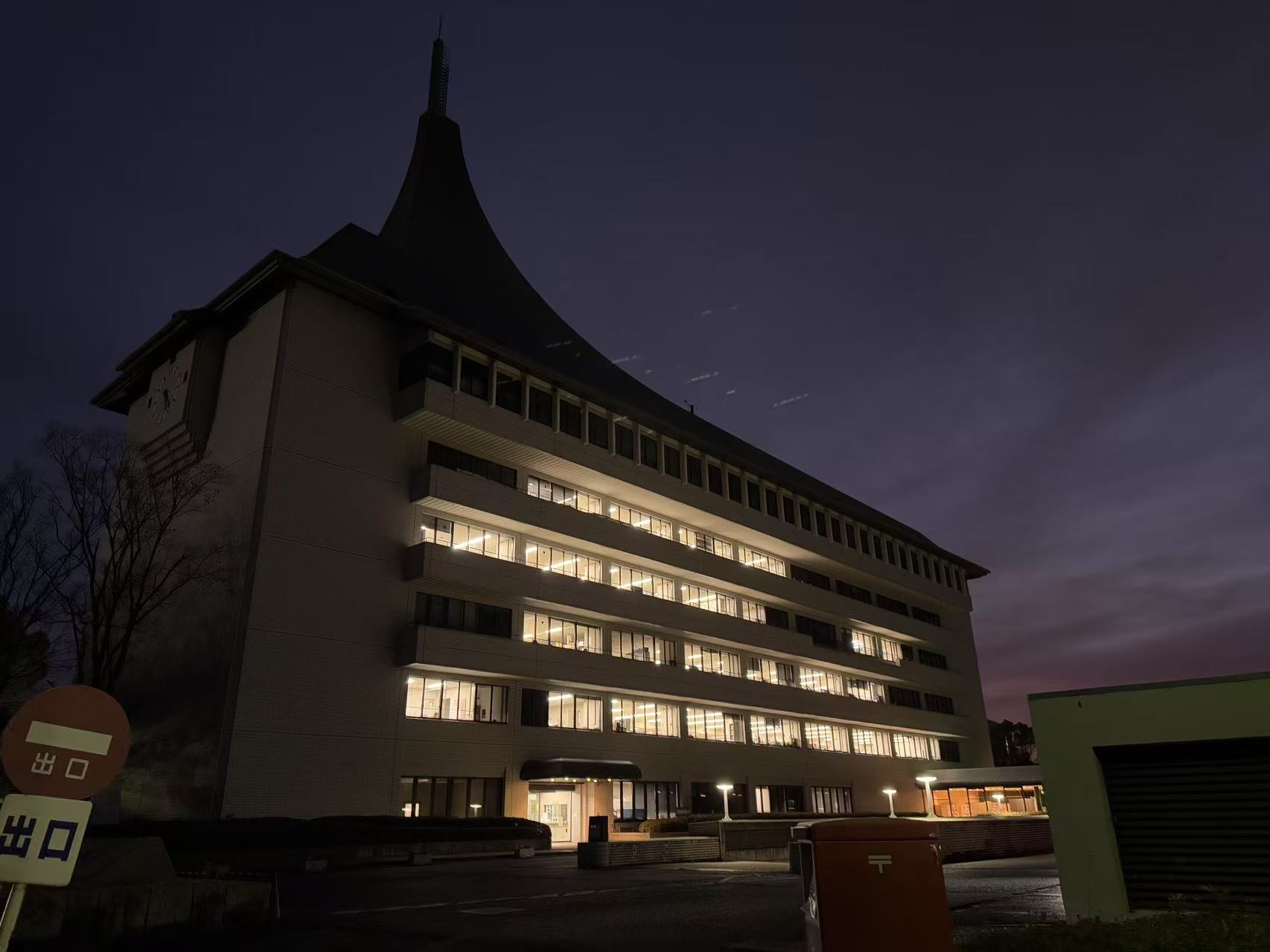
I searched frantically for the evidence that this thing was indeed built by man, and thankfully it didn’t take too long. Hidden near the parking lot to the right of it was a stone slab, and carved on it were the words — 天理市庁(TENRI CITY HALL). I was both relieved and disappointed, another day without extraterrestrial discovery.
After all, this turned out to be the local government building. What a badass town hall building to have, I thought to myself, while its riduculously shaped roof sat on top the man-made part in the fading twilight like a crooked witch’s hat. Many lights were still on, casting silhouttes of hardworking public servants on overtime or night shift.
Eventually, I figured that nothing was quite out of the ordinary here at Tenri, unless all you did was looking from afar. Like most places on the planet, living here were the normal people with normal lives, studying, working hard, providing for their families, in a especially closely-tied community. Humanity shines after all — I do love human. I turned away from the town hall with that resolution.
Then I remembered something — an urgent, private need of mine, accompanied by great emotions, yearning an immediate vent. I soon remembered, in a faint and distant memory, about a sanctuary clad in and brimming with white porcelain, somewhere down the road ahead, in a land of mystic circular platfroms made of concrete…
Finally, I rushed to the sumptuous bathroom in the square outside the train station, released gallons of what I had been holding for hours, and fled the scene.
Camera: iPhone.

You must be logged in to post a comment.