- Foreword
- Phnom Penh
- Crash Landing on… China?
- Night Ventures
- Into the Casino
- In the Hood
- The Genocide
- All Walks of Life
2,781 words, 15 minutes read time.
Foreword
Cambodia, a country which lies in the Indochinese peninsula, ranks 151 out of 193 in the Human Development Index, and is known to the better part of the world as one of the major hubs of scam compounds. Human trafficking, forced labour, “pig-butchering”, drug trafficking, corruption, money laundering, you name it. Basically, a living encyclopedia of crimes. It is one of those countries in the world that rarely appears in the news for anything positive.
Generally, people are more attracted to the bad news. In other words, most people in the world don’t know or care to know about how life is actually like there in Cambodia. From a cruel communist regime to the modern Chinese gangsters’ paradise, what actually went on? Was it a country as grotesque and graphic as the news and reports made it out to be? I wanted to know more.
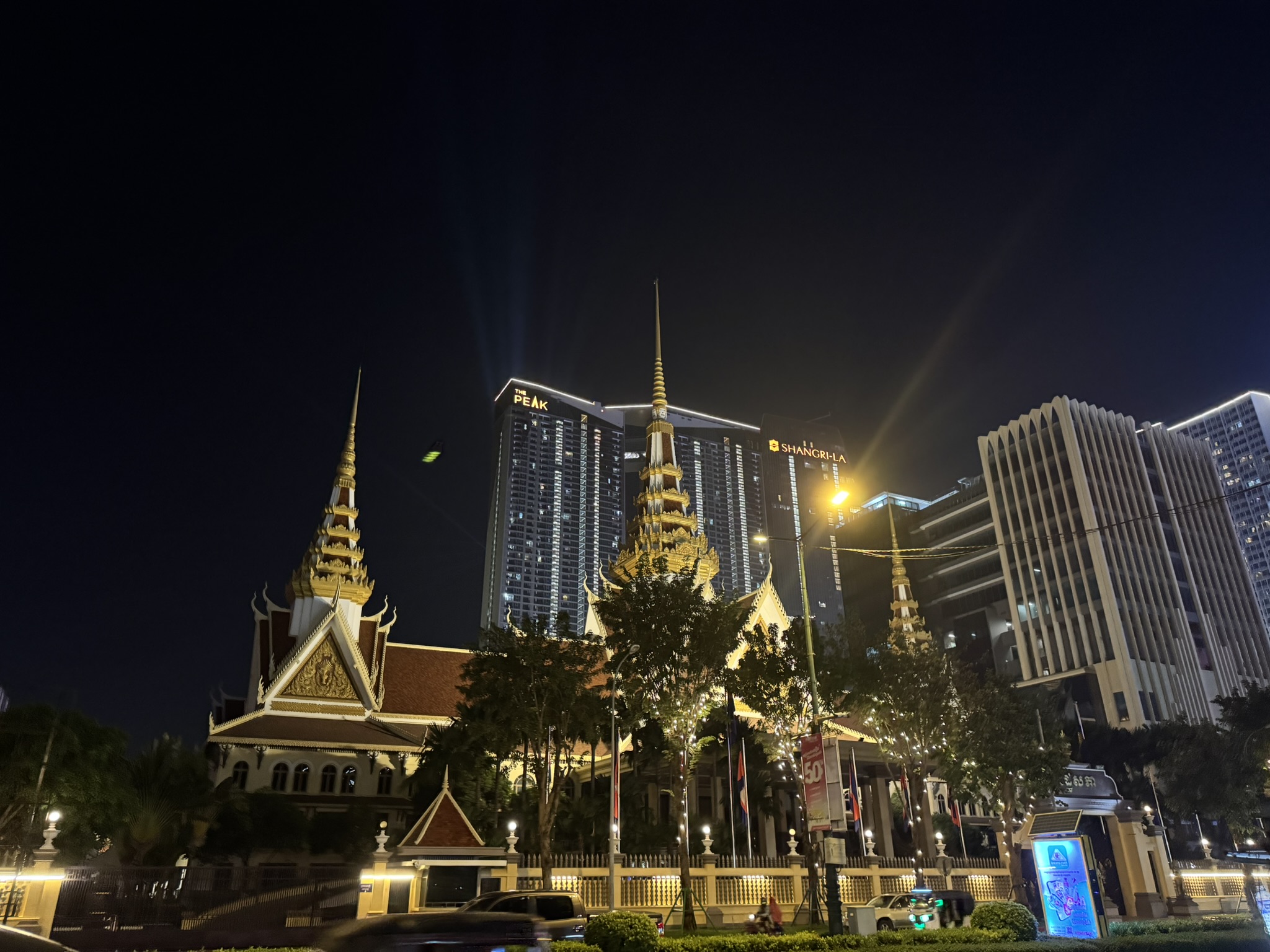
Phnom Penh
Phnom Penh was the capital of Cambodia and my sole destination for this short trip. Upon some research before departing, I found that many of the crime compunds in the recent years had shifted from here to the coastal city of Sihanoukville, with Phnom Penh supposedly rose up a bit on the safety scale. But only God knew how it would turn out for me.
The language spoken in Cambodia is Khmer, which uses a script similar (but not identical) to Thai, both writing systems ultimately trace back to Indian Brahmi scripts. Anyhow, I couldn’t read a word in it. I thought I may need to resort to sign language and facial expressions. The mere thought of that made me laugh on the inside—a great potential for impromptu comedy.

Cambodia’s communist history centres on Phnom Penh, where the Khmer Rouge, a radical Maoist movement, seized power on 17 April 1975, emptied the capital, and attempted to build an agrarian utopia that killed roughly 1.5–2 million people through executions, starvation and forced labour.
Overthrown when Vietnamese communist forces captured Phnom Penh in January 1979, the country became the pro-Vietnamese People’s Republic of Kampuchea, still formally socialist but focused on rebuilding a devastated society under one-party rule.
Through the late 1980s and early 1990s, peace talks, Vietnamese withdrawal, and the 1991 Paris Peace Accords ended the communist era, leading to a UN-supervised transition and restoration of a constitutional monarchy with multi-party politics, though many former communists retained significant power.
Nowadays, though, there is a strong anti-Vietnamese sentiment among many Cambodians, rooted in historical wars, border disputes and narratives of Vietnamese expansion. This is visible in periodic protests, nationalist rhetoric and conspiracy theories.
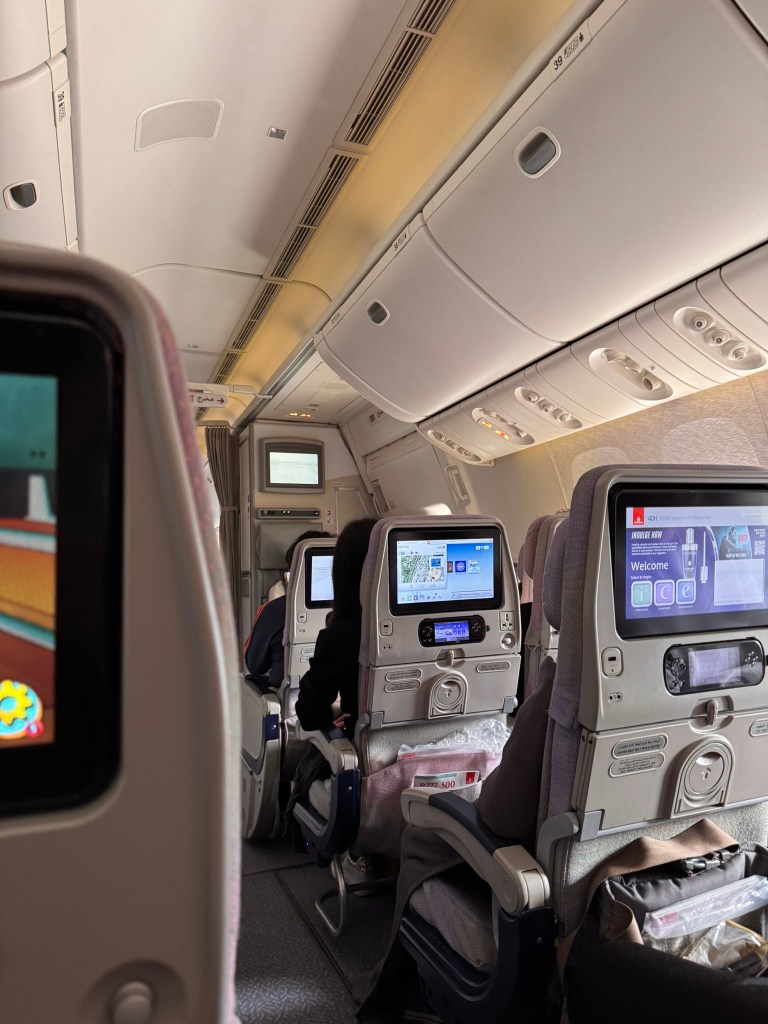
Crash Landing on… China?
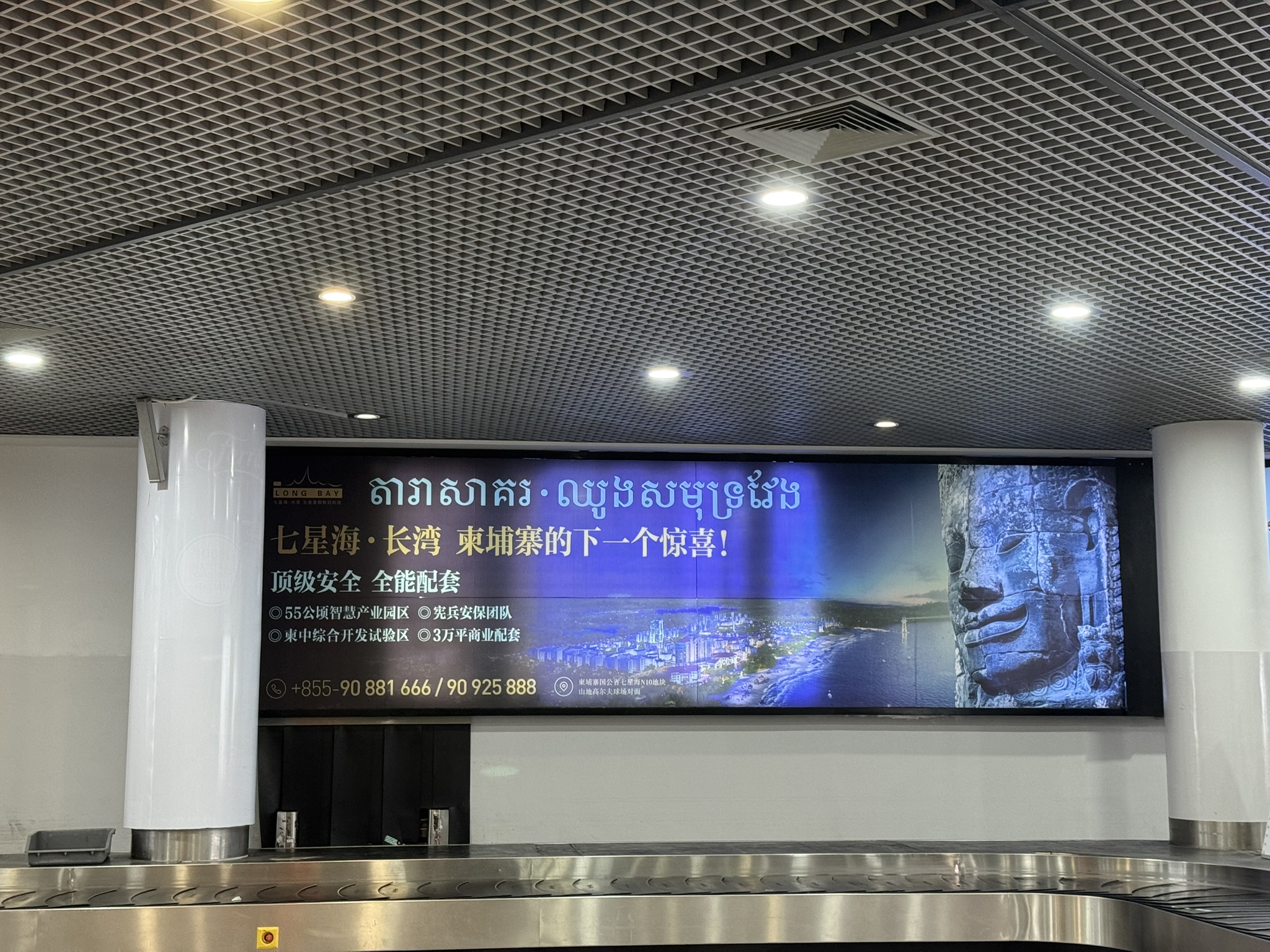
It was night when the plane landed in Phnom Penh. The air was musky and damp and it was hard to breathe. I queued for the VOA and got out to the conveyor belt area, and there it was, a giant bilingual billboard in both Khmer and Mandarin. Mandarin? I knew that there were some Chinese scam centers here but did they have so much influence that advertisements had to be in Mandarin? Perhaps these outlaws controlled the country to a greater extend than what was told on the news? I had to wipe my eyes and look again. Yet, there it was, seemingly an advertisment for a nearby condominium. Also notable on the ad was that the condo included 憲兵安保 (military police as security). I had only seen units like this in Africa (e.g. big cities in Nigeria or eastern DRC where the mines concentrate) vlogs on YouTube—they (non-African vloggers) gotta have a few armed military police bodyguards at all time or they risk serious chance of getting gunned down and robbed. I was getting ready to bail.
Nonetheless, I got out of the airport into the capital street, and oh boy, it was quite a scene with a mass of conspicuous overhead Chinese real estate billboards. At the entrance people shouted and waved at arrivals: relatives waiting for family, chauffeurs holding up boards and calling out names, illegal taxi drivers soliciting customers, and others whose roles I couldn’t even guess, and didn’t intend to.
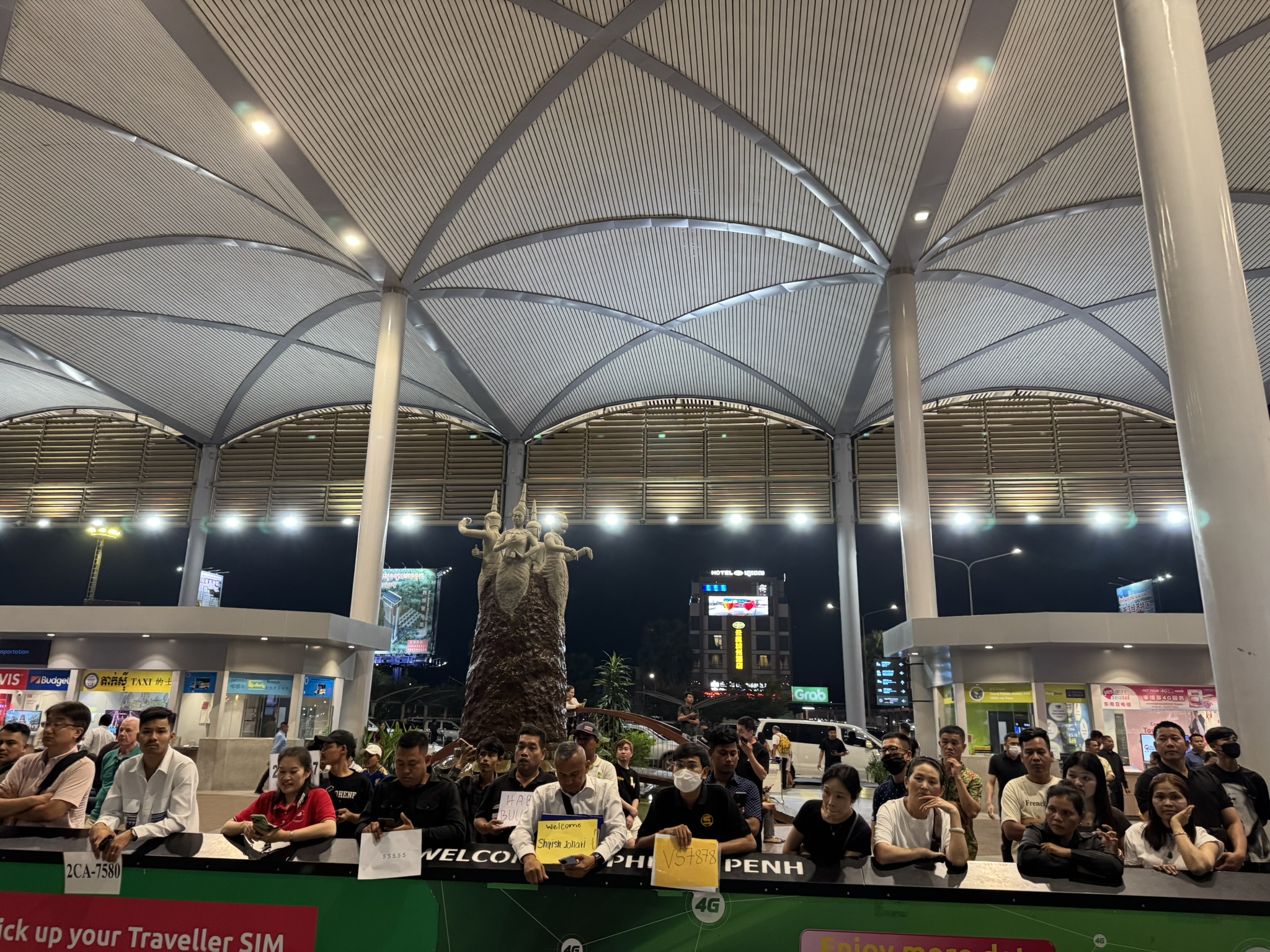
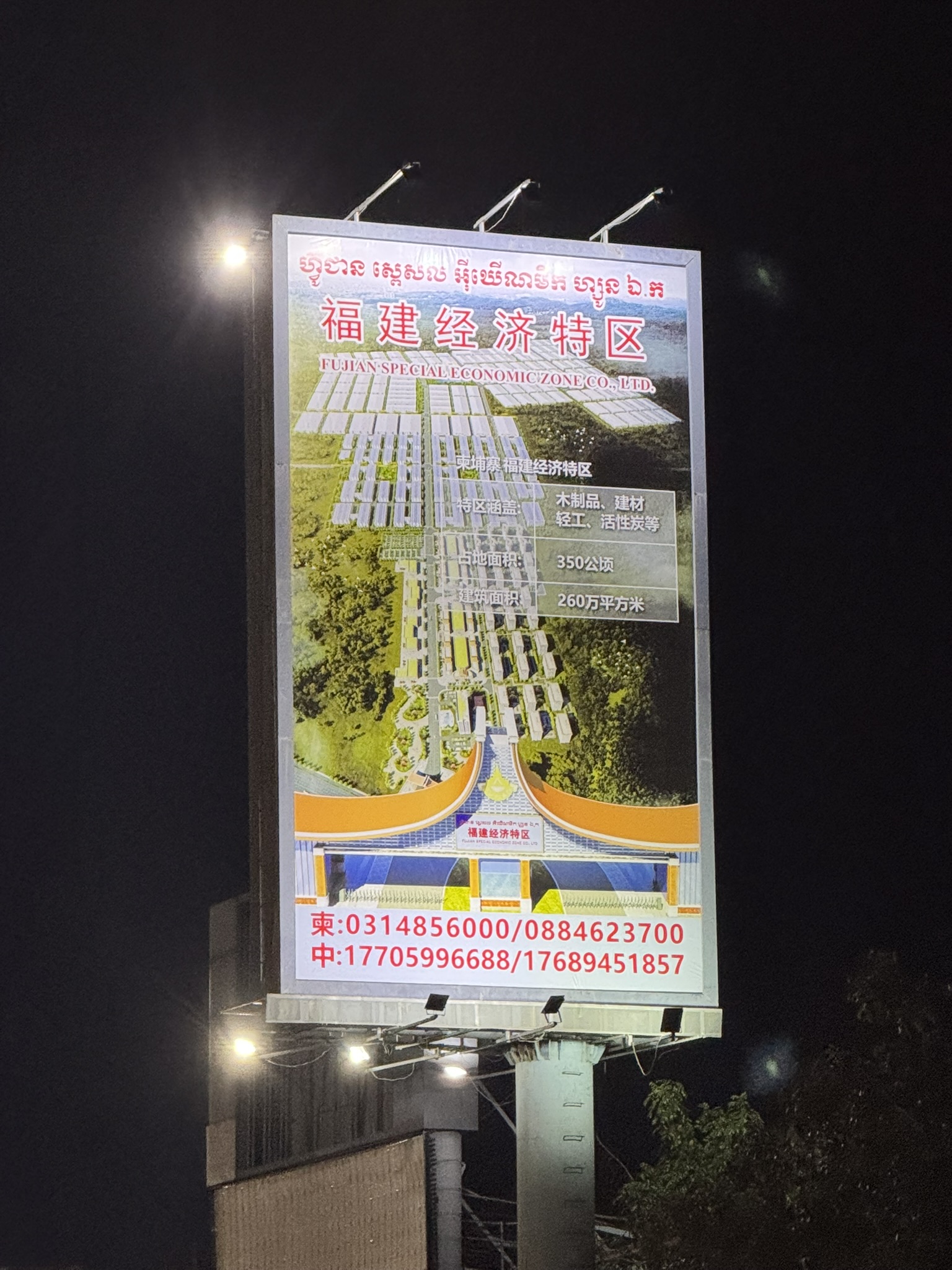
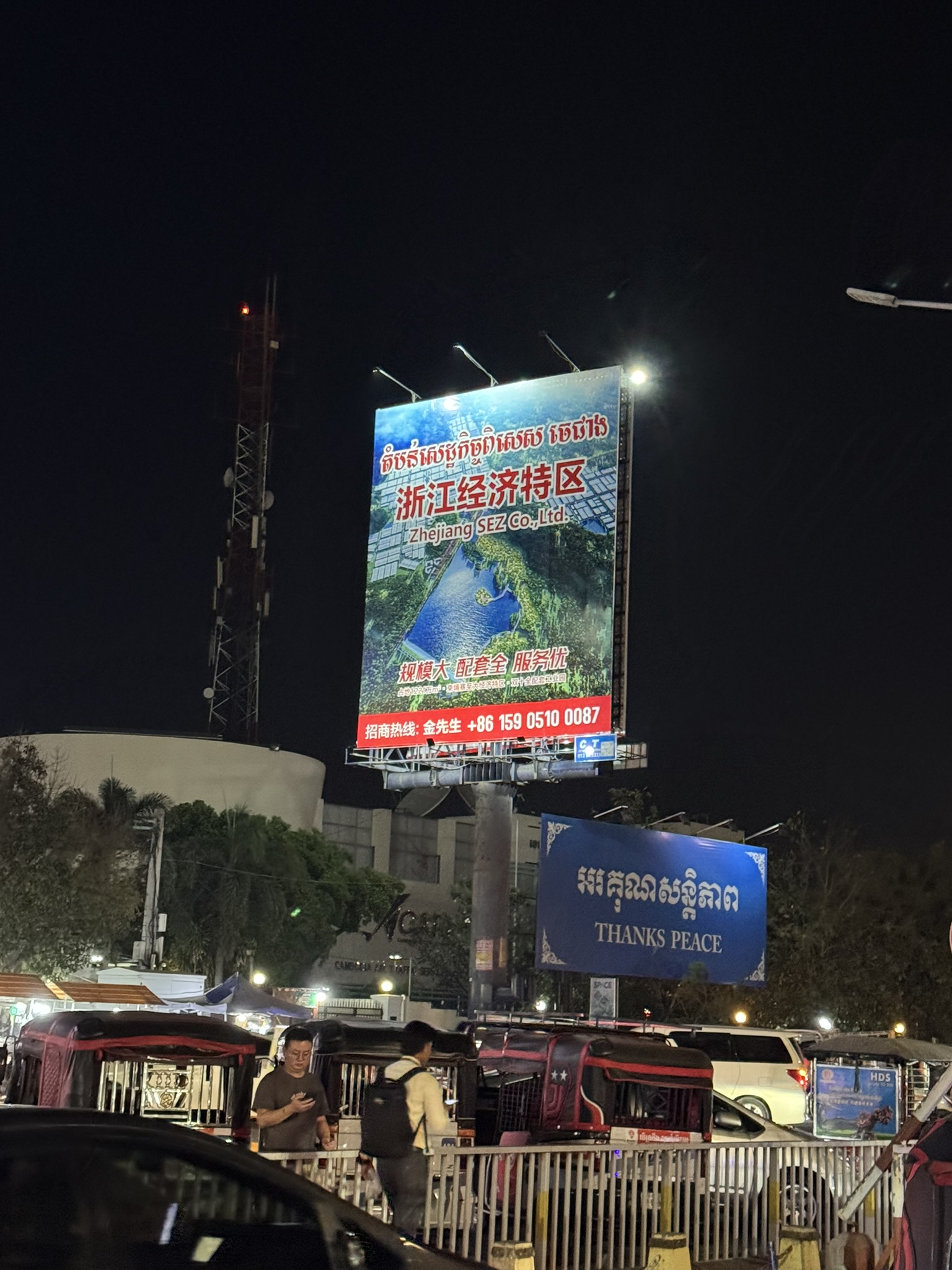
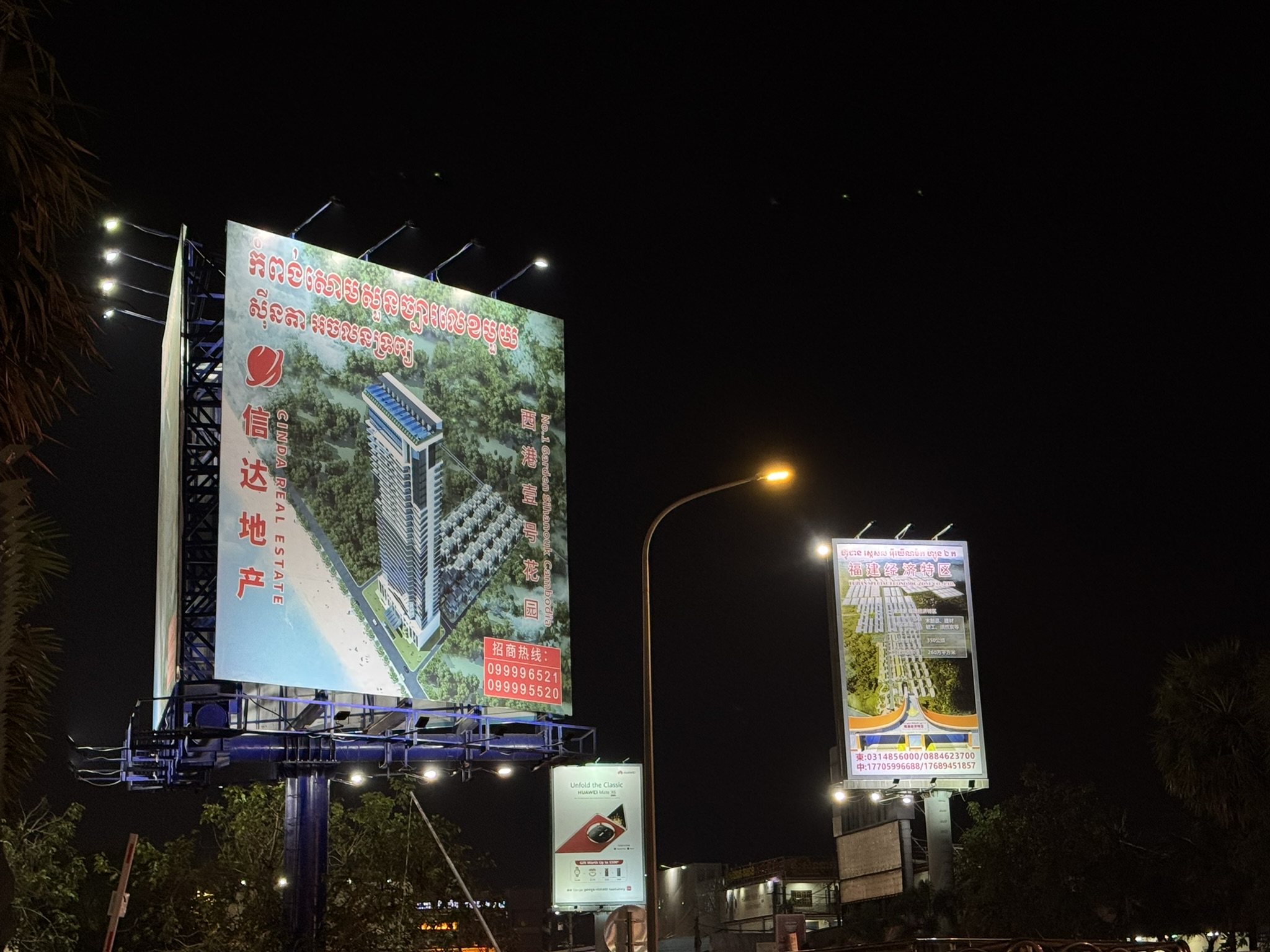
As I quickly shifted through the crowd gathering at the entrance, two men sandwiched me from both sides in hurried steps. They were illegal cab drivers, asking where I was heading to etc. I faked a playful smile pointing into an arbitrary direction, signaling to them that I lived right there (I did not). They first did not get the signal, smiled too and kept repeating to offer me a ride, respectively pointing at the sentence showing in the Google translate on they phones, which I pretended to read intently while continuing foward. I did not slow down or stop, but kept pacing fast in the direction I was pointing, they followed and kept me sandwiched. After about half a minute we were near the side of the road, and while I continued to point at that arbitrary direction in the darkness of the night with a sorry but firm smile that I faked, it seemed to have finally clicked for them that, oh, this guy lives right there. The two of them then respectively slapped their thigh and forehand as a sign of realization, and waved me goodbye.
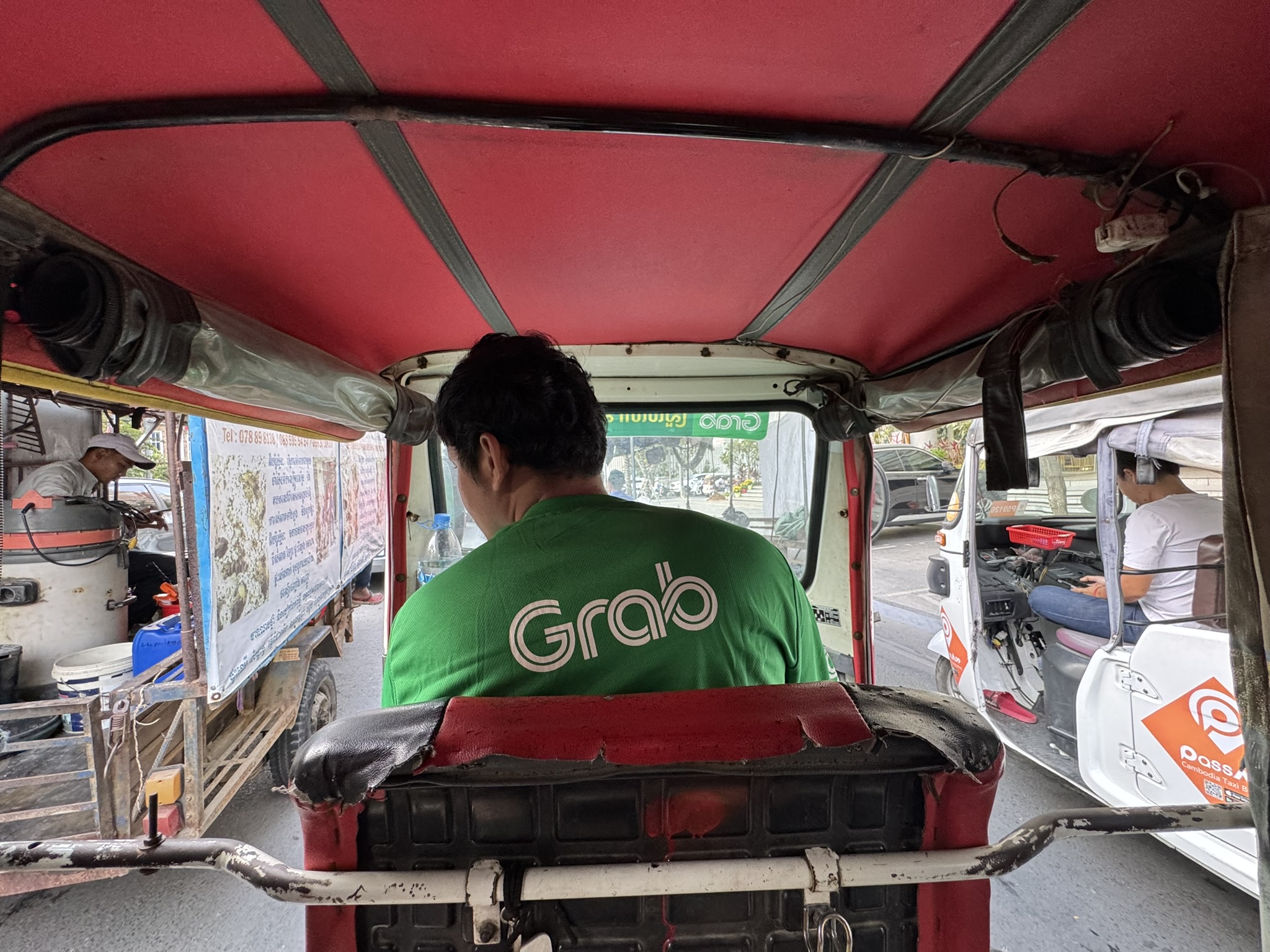
I pretended to continue on my way “home”, went around a corner, and called a Grab to my hotel.
Night Ventures
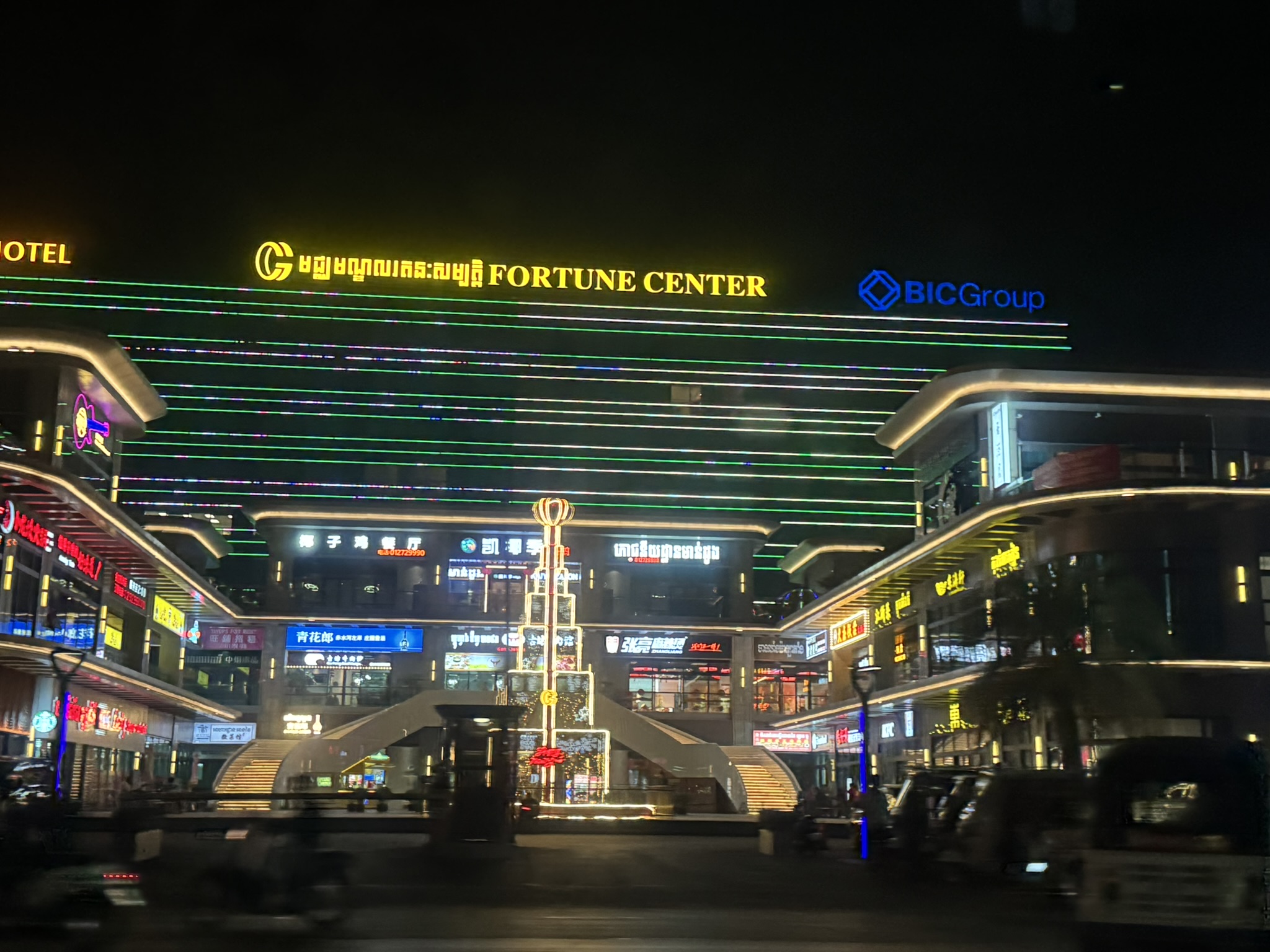
I arrived at the hotel. It was room in a tall condominium building overlooking the city. I wondered if it had appeared in one of the billboards seen earlier, and what kind of locals could afford to stay in this kind of places. Cambodia’s GDP per capita was only about USD$2600. Since the ads were in Chinese, it must have been Chinese people who owned and dwelled in here? It must have been Chinese people who patronize those highend stores I saw in the cab? How was the neighborhood like? What exactly did the Chinese population here do? I had many burning questions and an empty stomach, so I headed out to find out.
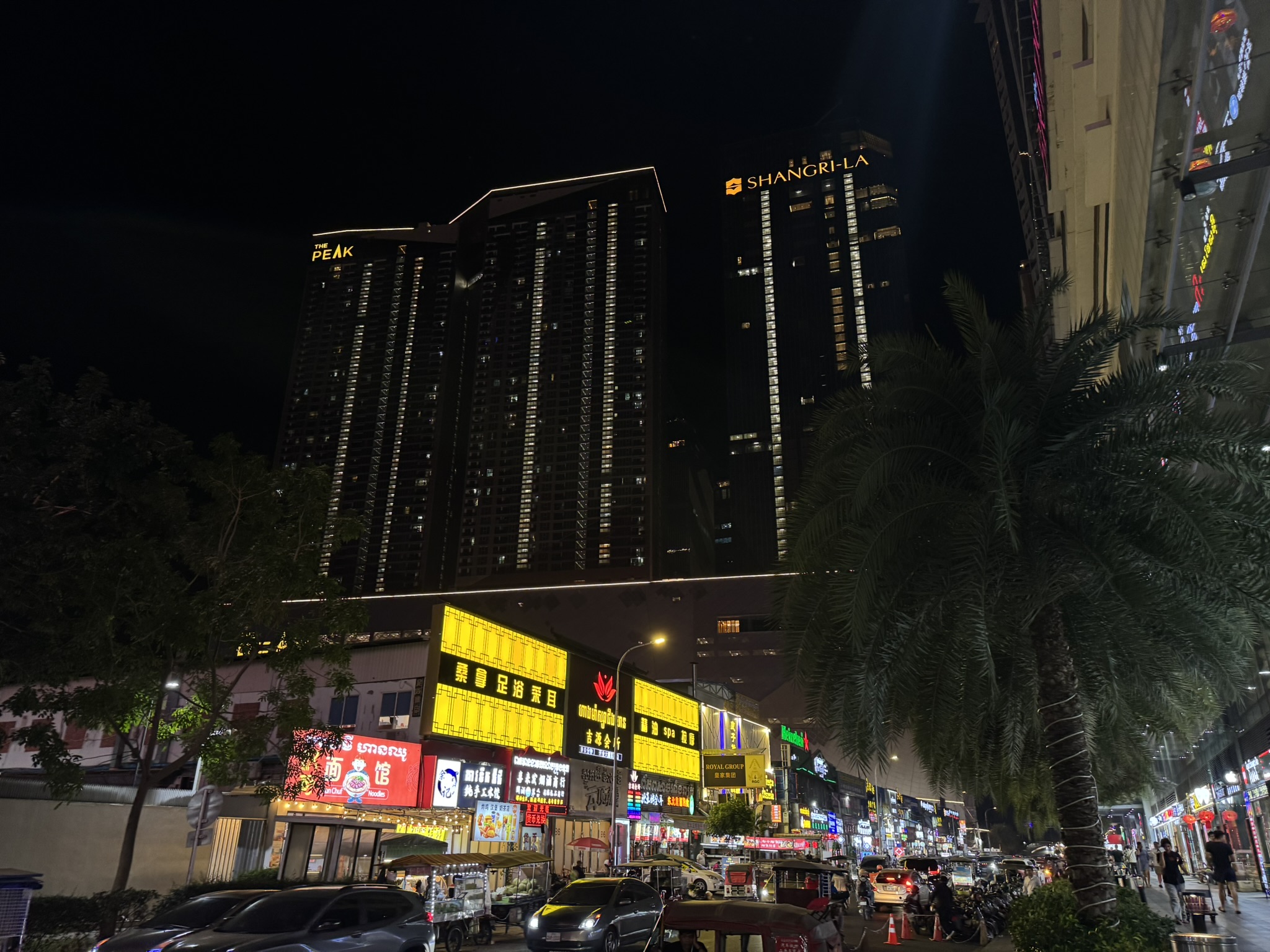
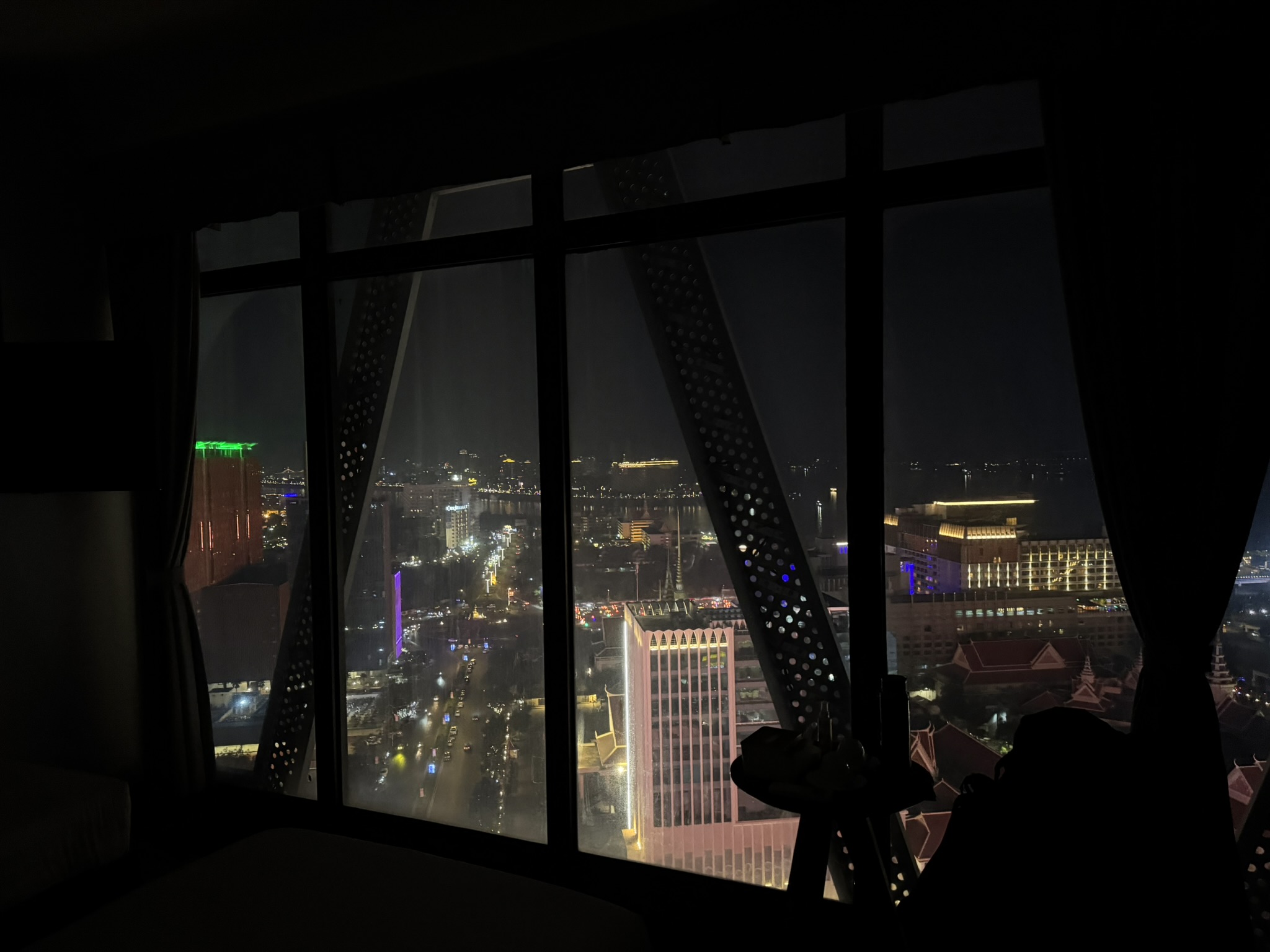
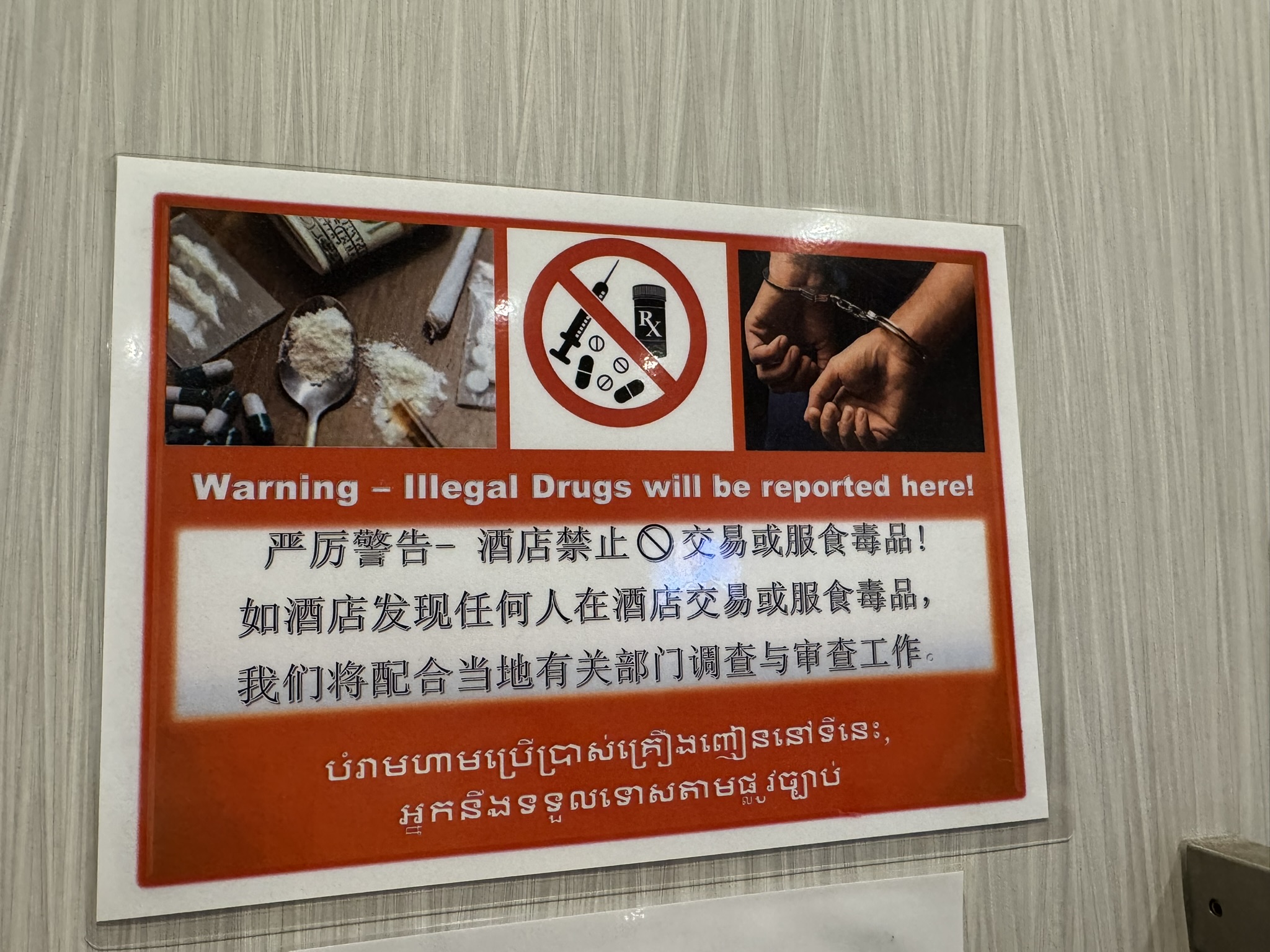
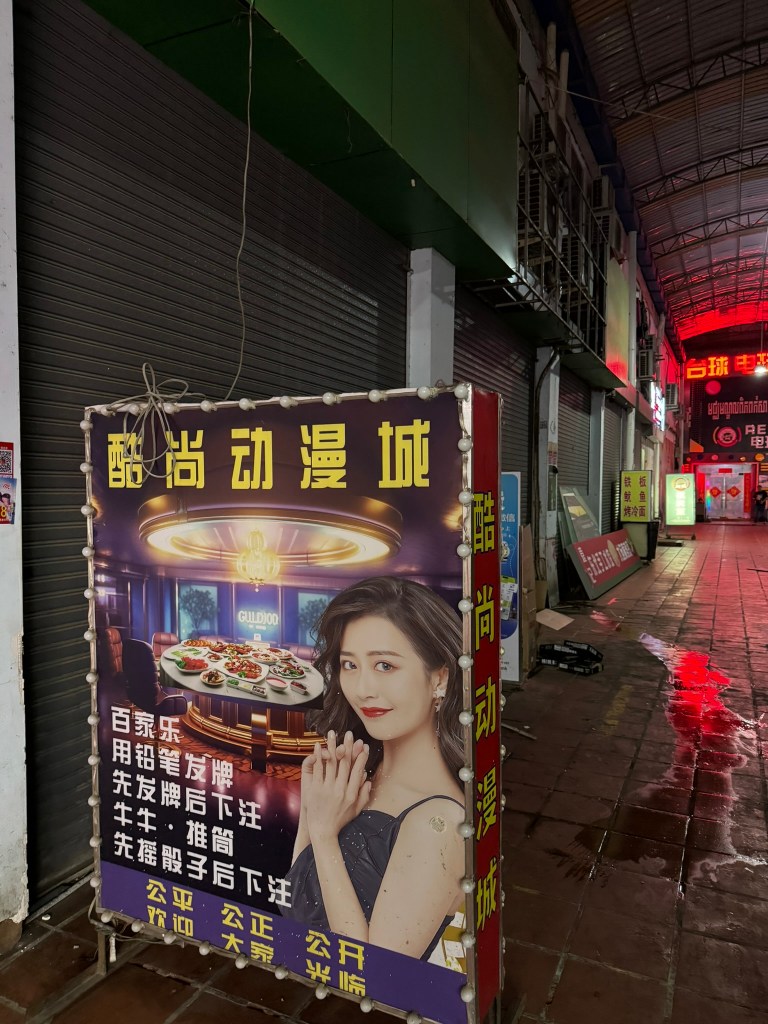
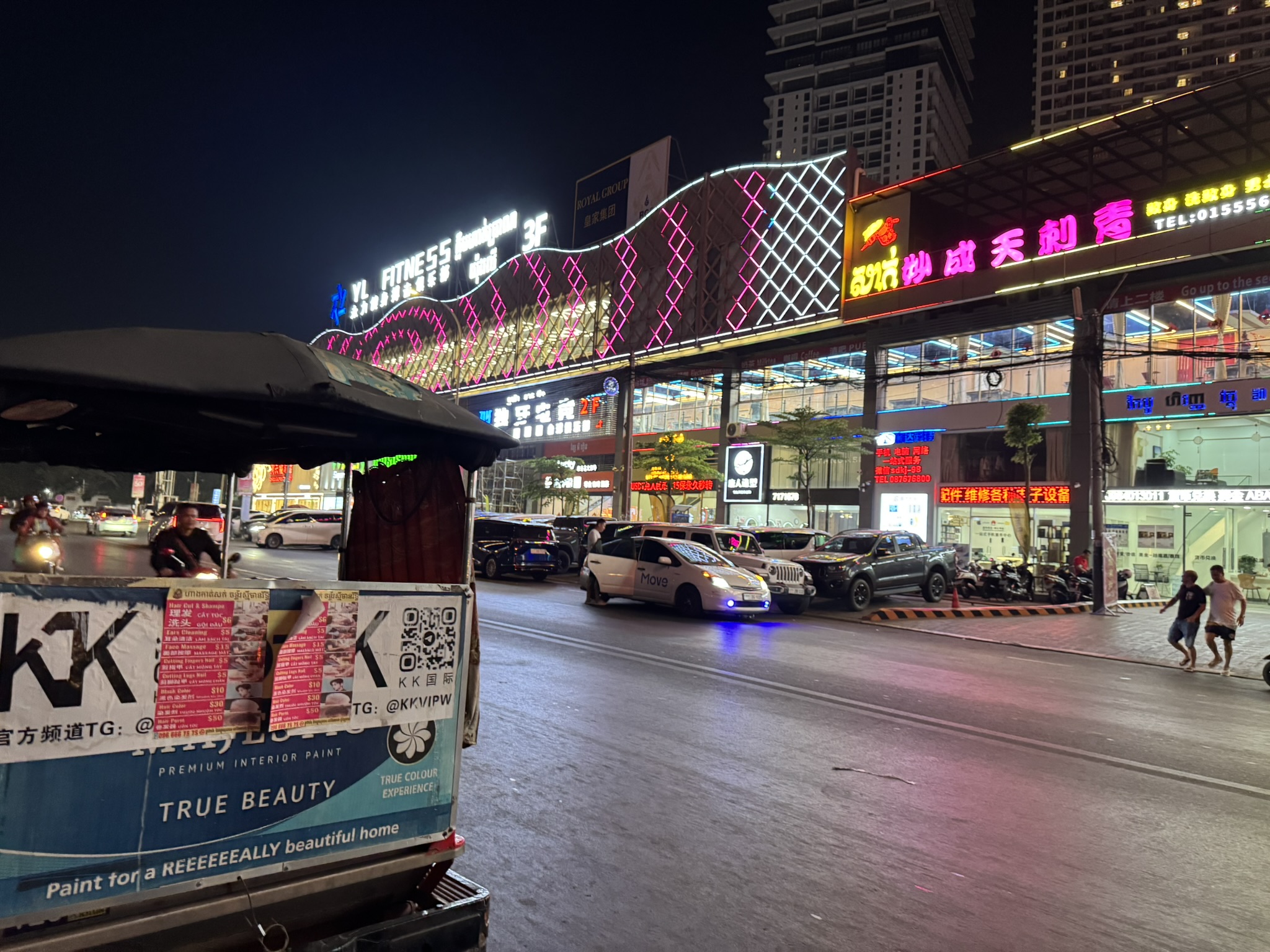
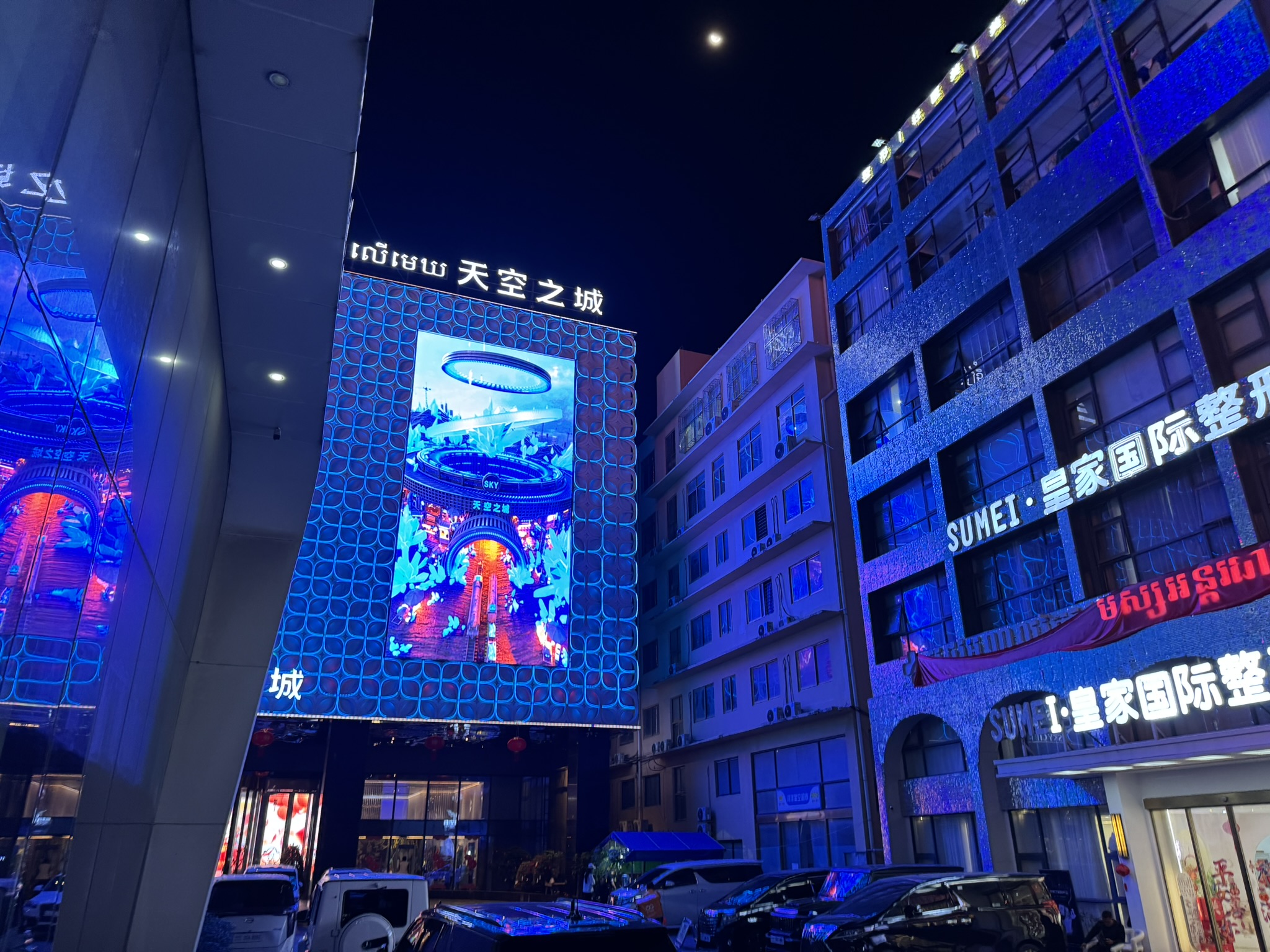
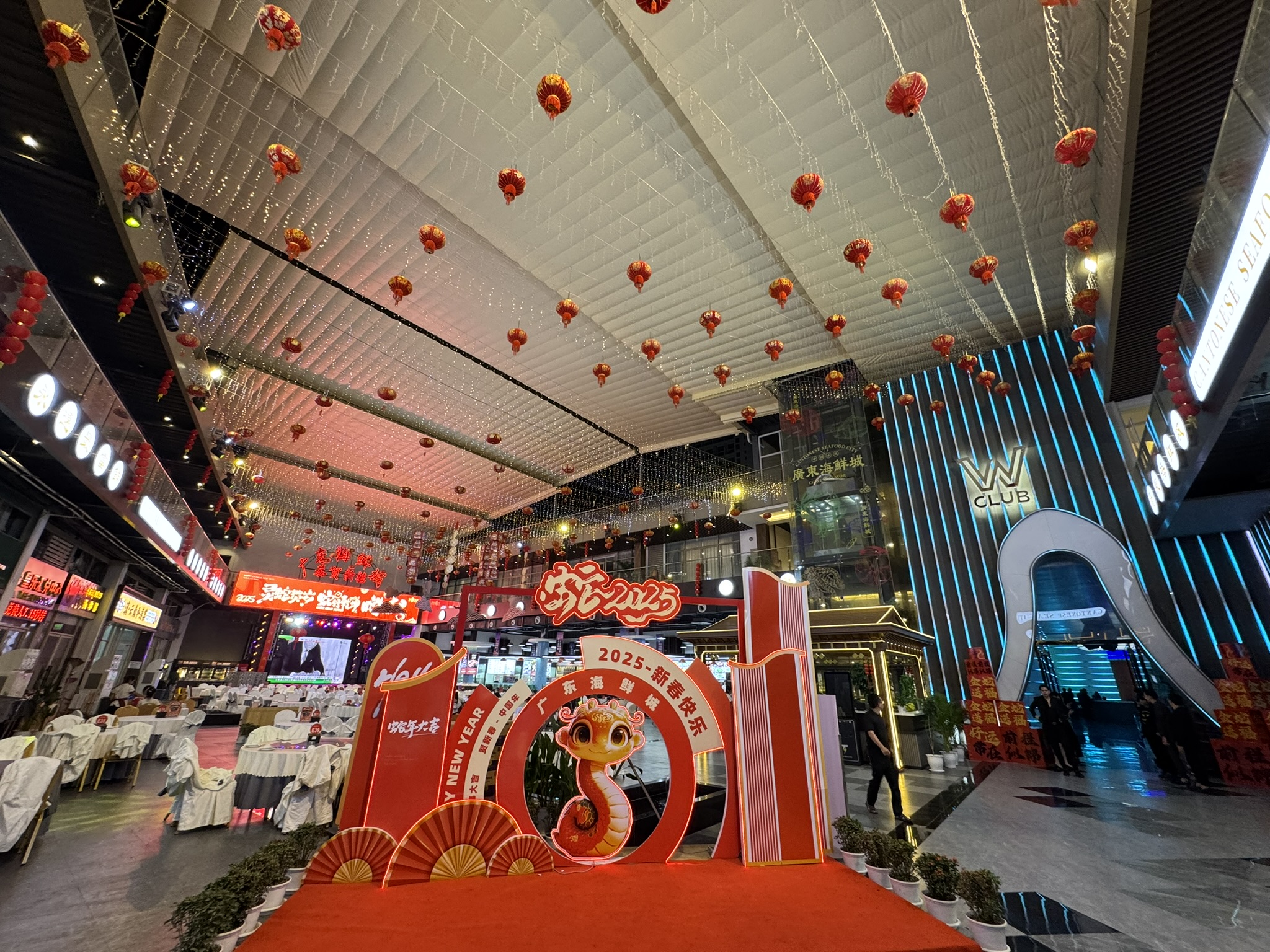
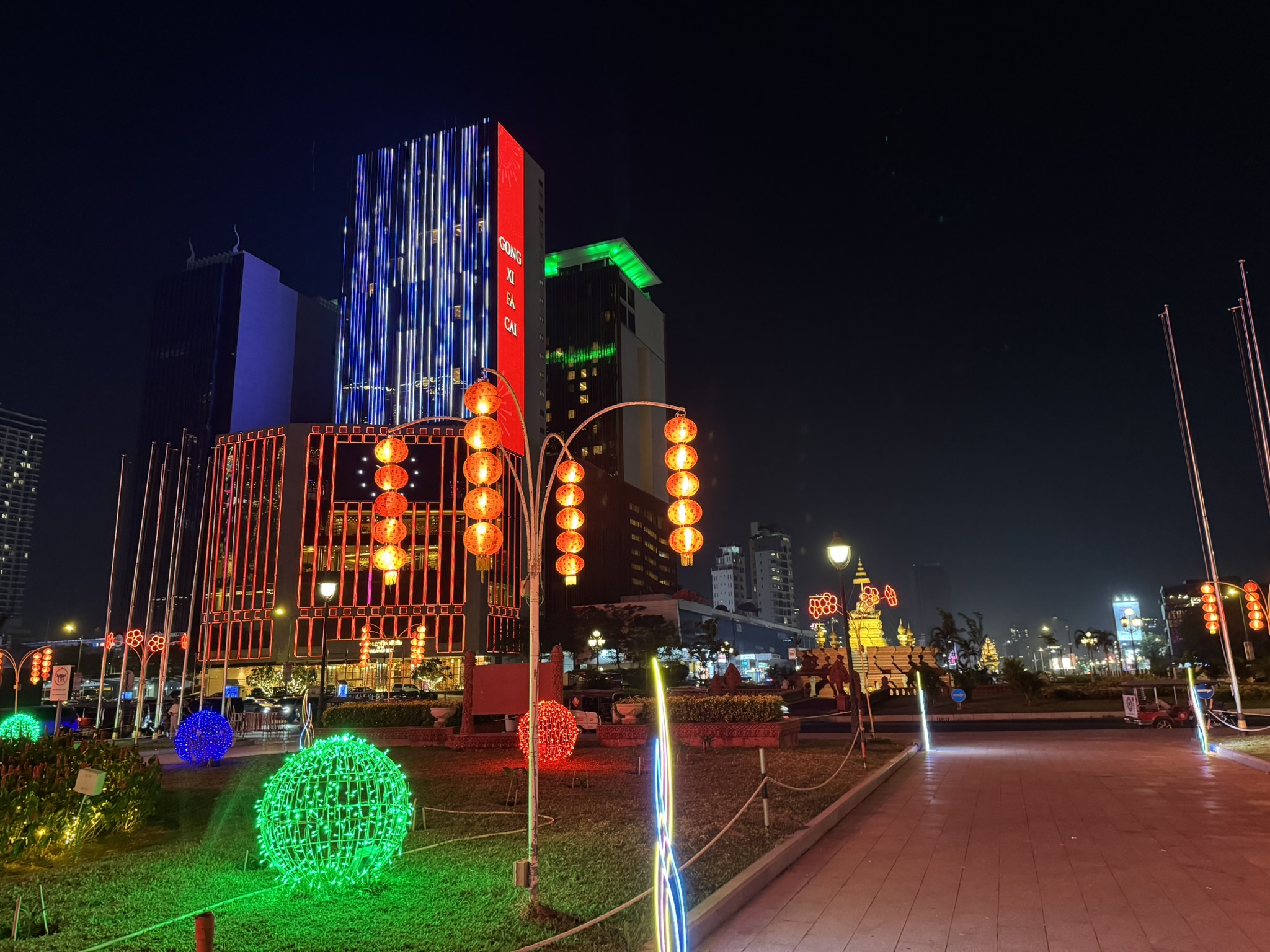
Just about every storefront was bilingual in Khmer and Chinese, some exclusively in Chinese. There were: Chinese restaurants, Spas, massage parlors, a TCM clinic, webcafes, tattoo shops, and game centers (really just gambling joints), lining up blanketed in bright and colorful neon lights down the street. I had the illusion that I just stepped into some small town in China.
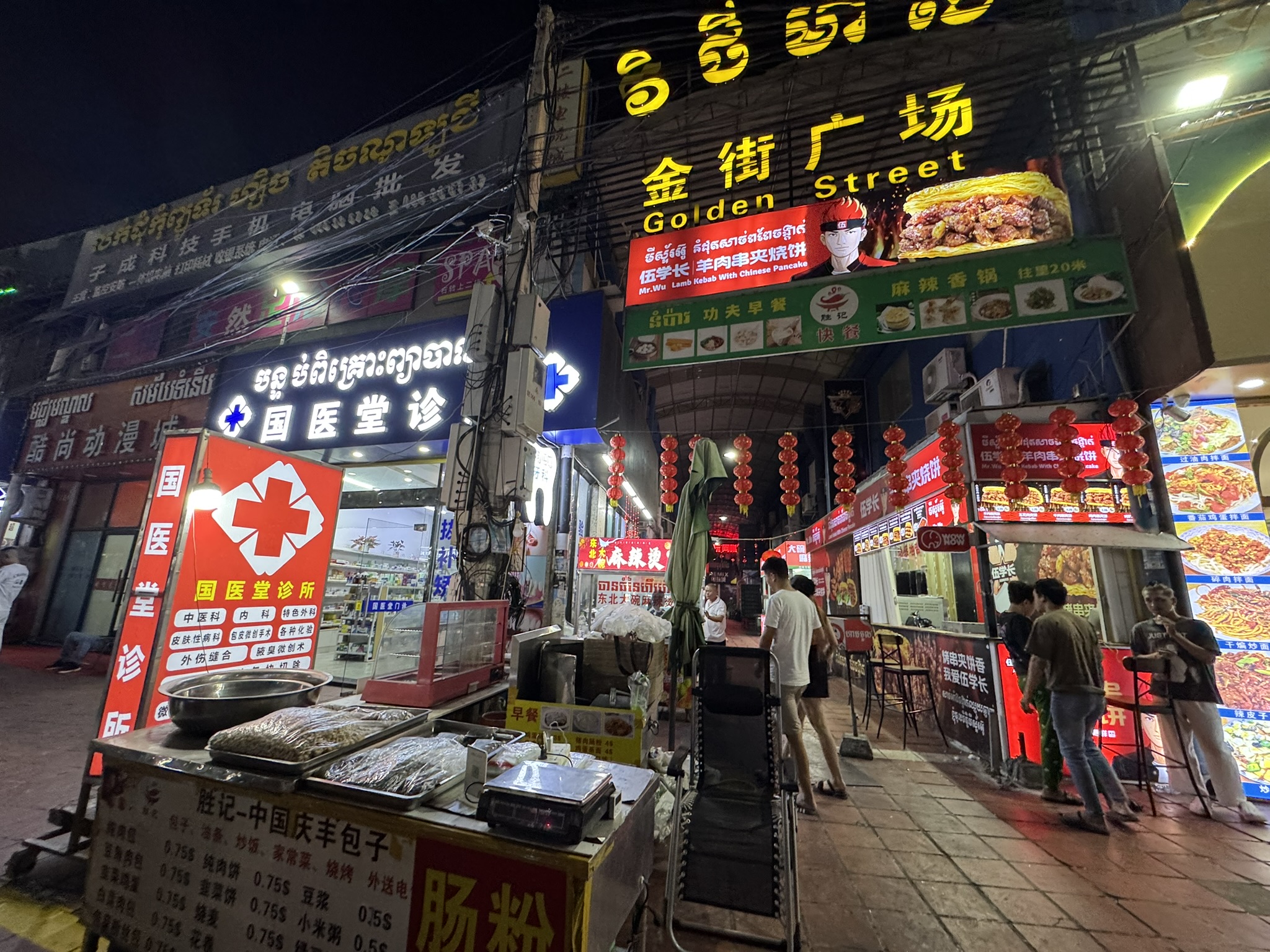
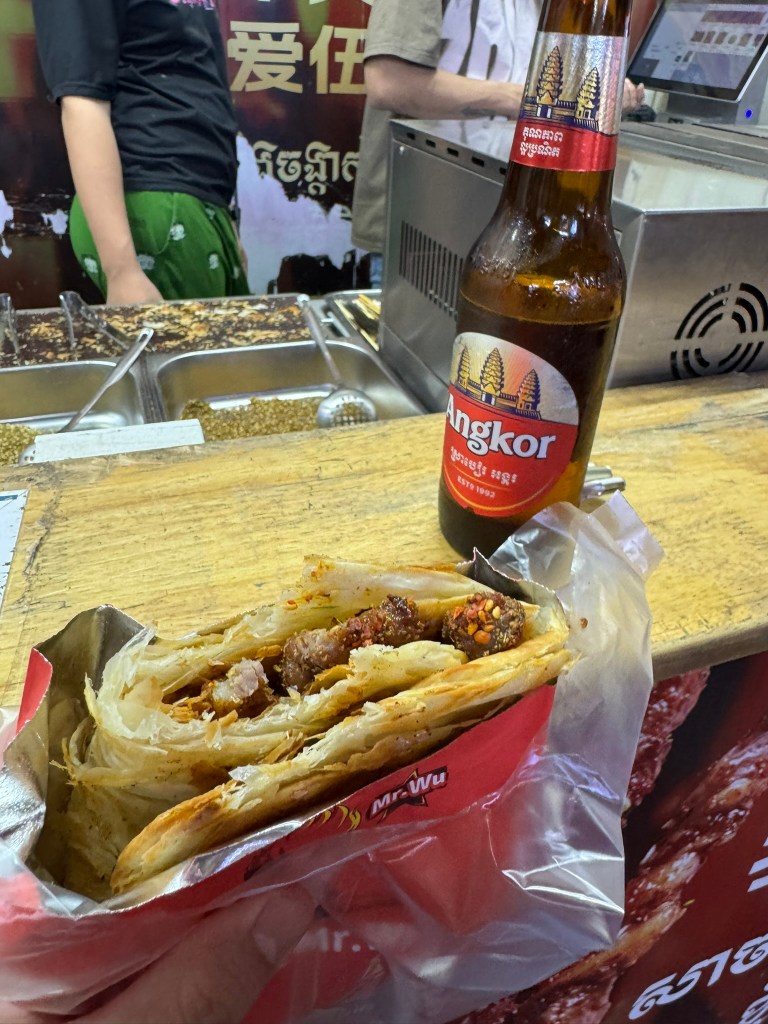
I picked a random stall and sat down. It sold crusty BBQ sandwiches, the prices were in USD. Cambodia had quite the inflation disaster post-communism so USD was preferred over their national currency riel. Nowadays, riel’s value had stablized at around 1USD:4000KHR. I paid $3.5 for a lamb BBQ sandwich and it was good. Didn’t quite filled my stomach, though.
Just as I was sitting on the stool finishing the food, a lady in her early 30s approached. Without me even acknowledging her presence, she started offering a number of services of extremely wide range from an equally wide range of professionals. I was frozen by the sheer straightforwardness and professionalism of her solicitation. She spoke in a way as if this was just as common as grabbing a quick sandwich at a stall on the street. Then she started reciting prices in USD, some in the higher hundreds.
Were these pussies plated in gold? I thought to myself, squinted at her in silence. Where did the people who frequented these services get this kind of money?
I wasn’t reacting much, and as she finished the whole routine, she insisted to add my contact on WeChat. I sat there rejecting her for a good 5 minutes, and finally got off her hook. That was wild. I continued on my way.
Into the Casino
Nagaworld is a huge integrated casino-resort complex in Phnom Penh, Cambodia. Operated by Hong Kong–listed NagaCorp, it is the country’s largest hotel-casino and enjoys an exclusive casino concession around the capital (beside the hundreds of small unofficial “game ceneters” scattering around). The resort combines a five-star hotel with over 1,600 rooms and suites, extensive gaming floors, more than 20 dining and nightlife venues, spas, duty-free shopping, a 2,000-seat NABA Theatre, and major conference facilities, making it a key hub for tourism and entertainment in the city.
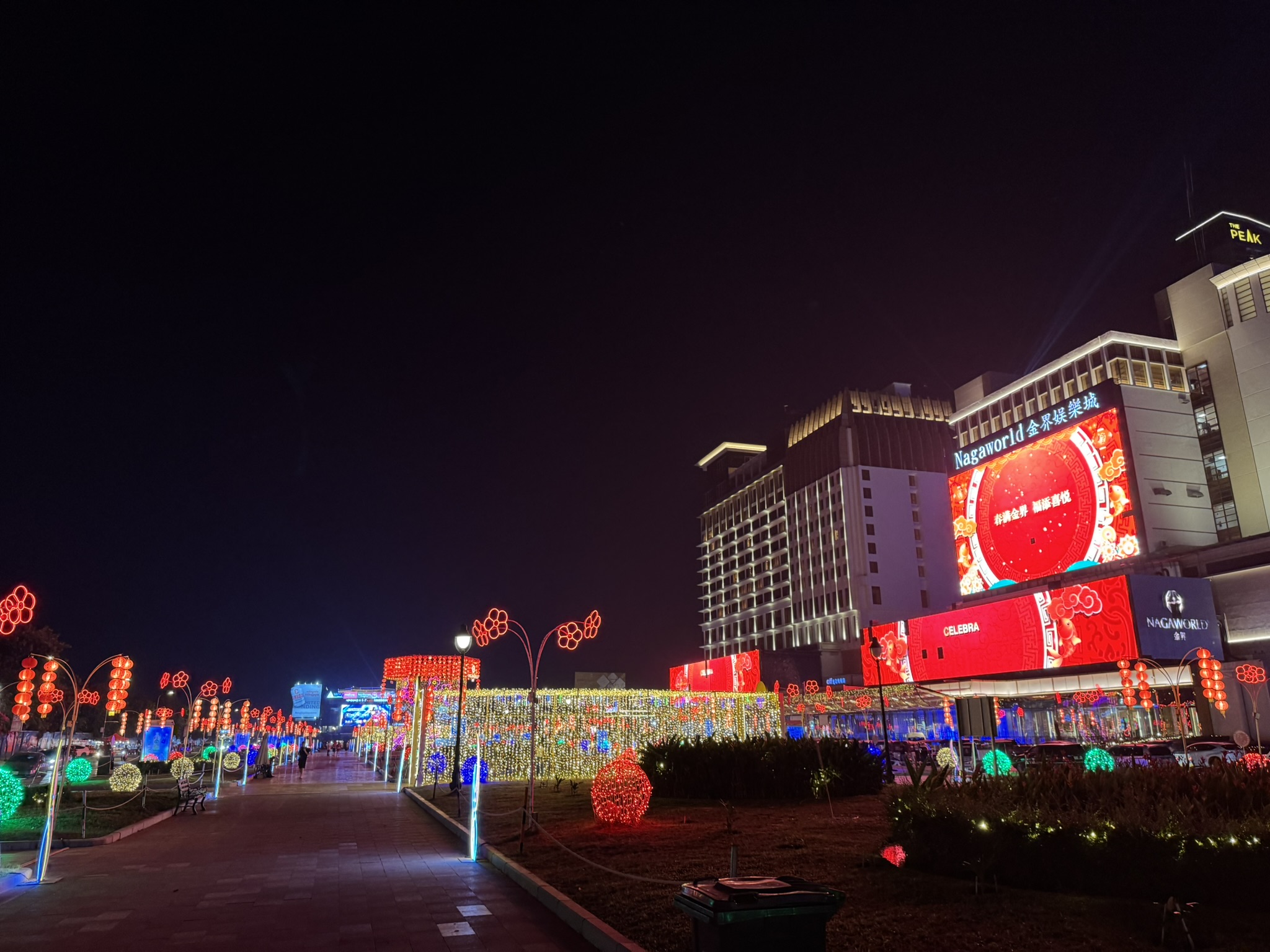
I found myself at the foot of Nagaworld, THE casino of Phnom Penh. I was not tempted to gamble anything, and so it was not too different from the other smaller joints I saw on the lively streets earlier. Its inside must be grand though. Then I remembered that I had not been inside an official casino ever before. Can’t believe I’m losing my casino-virginity to a Chinese casino in Cambodia. Double whammy for the commies, I guess.
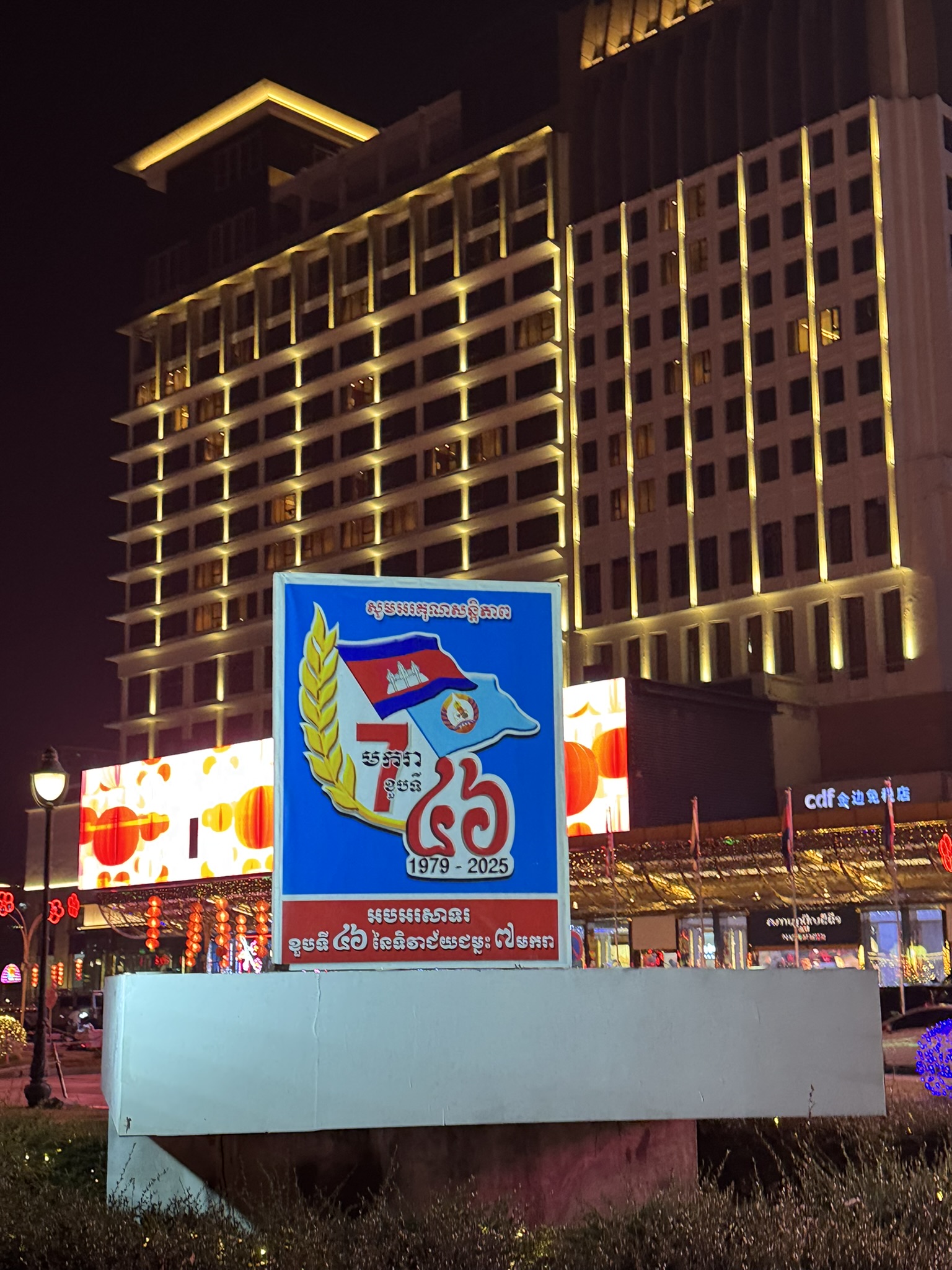
Into the building was a mall-like space. I presumed it forked into various entertainment districts. Farther down was security. Thankfully I was allowed in just like that. Past the security were fleets of slots machines. A lone man sat at the far end, staring into the machine. What was going on in his head? Was he filthy rich, or filthy and poor? Did he maybe stay in the same condo as I did? Distance brought mystery. I walked pass.
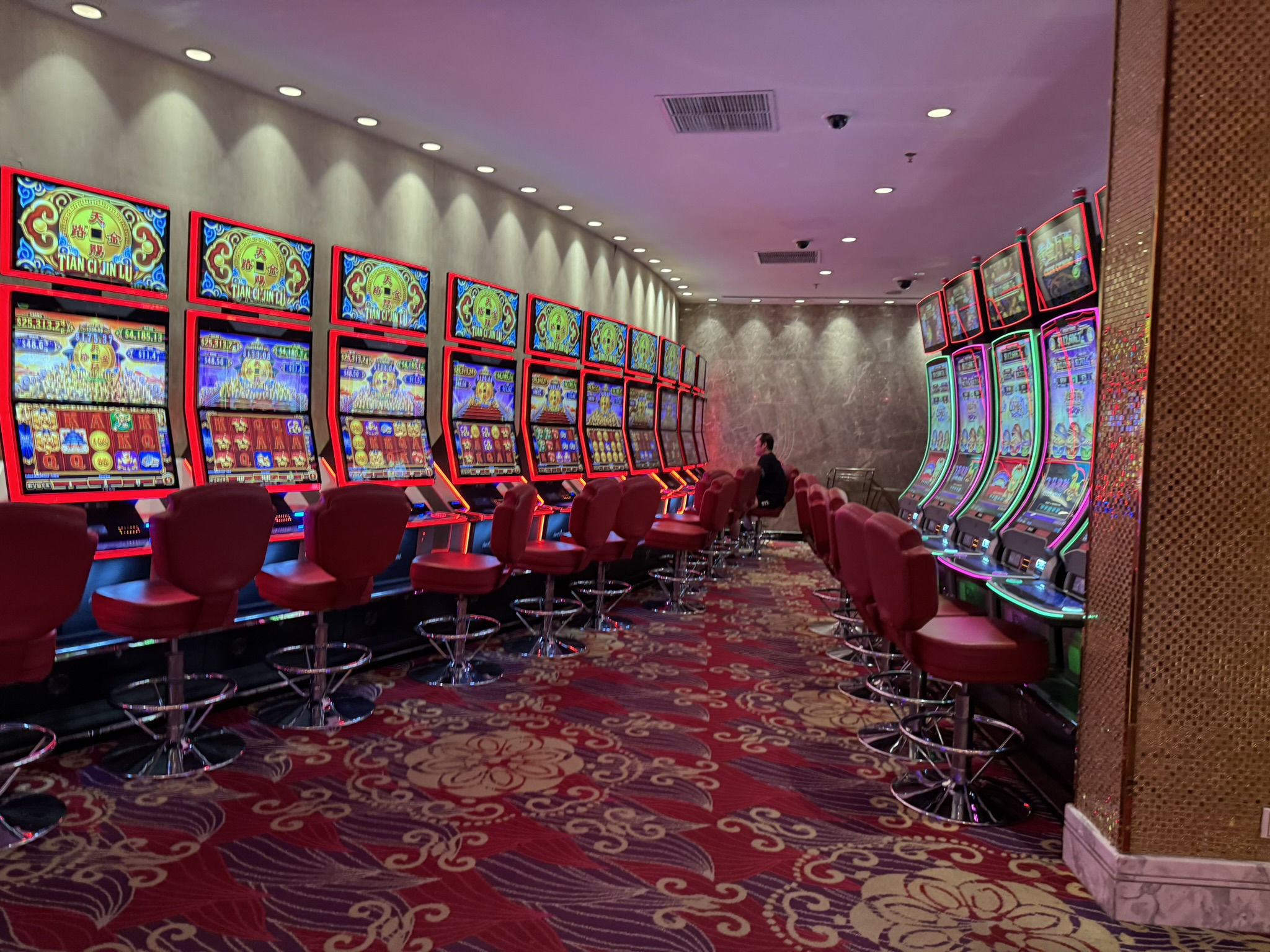
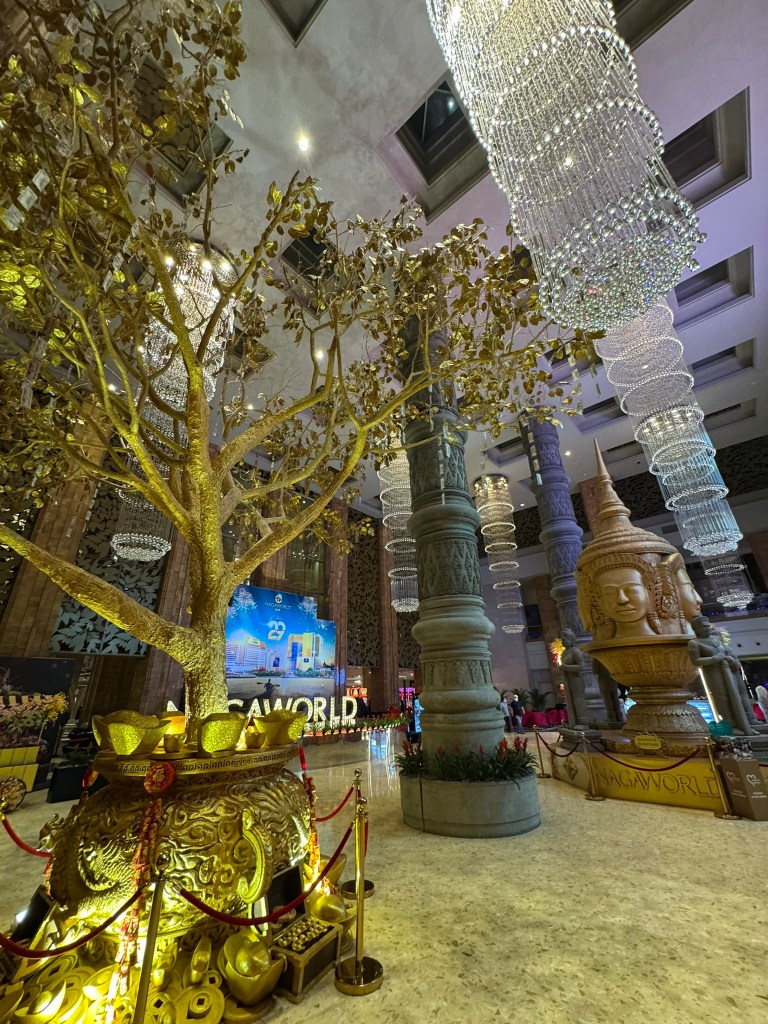
Farther down was the main lobby, busy with people. The demographic was diverse, and I was suprised to see that people weren’t dressed in suits or luxurious clothes like in the movies. Some people were carrying bags and some luggages, people were standing behind every poker table. It all looked too informal. I looked around for anything of interest and found none. I didn’t want to look lost, going in circles, so I slipped into a bar.
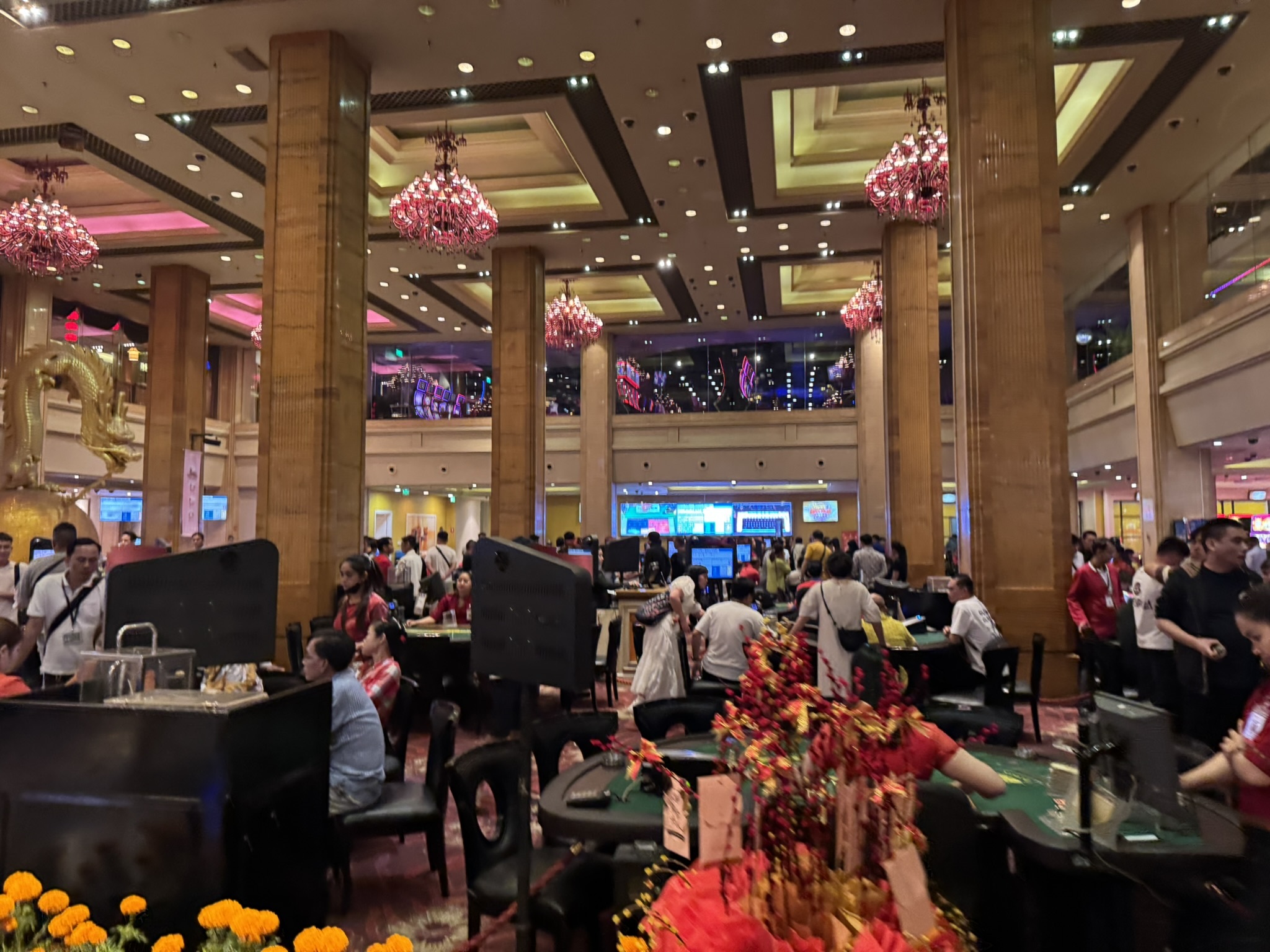
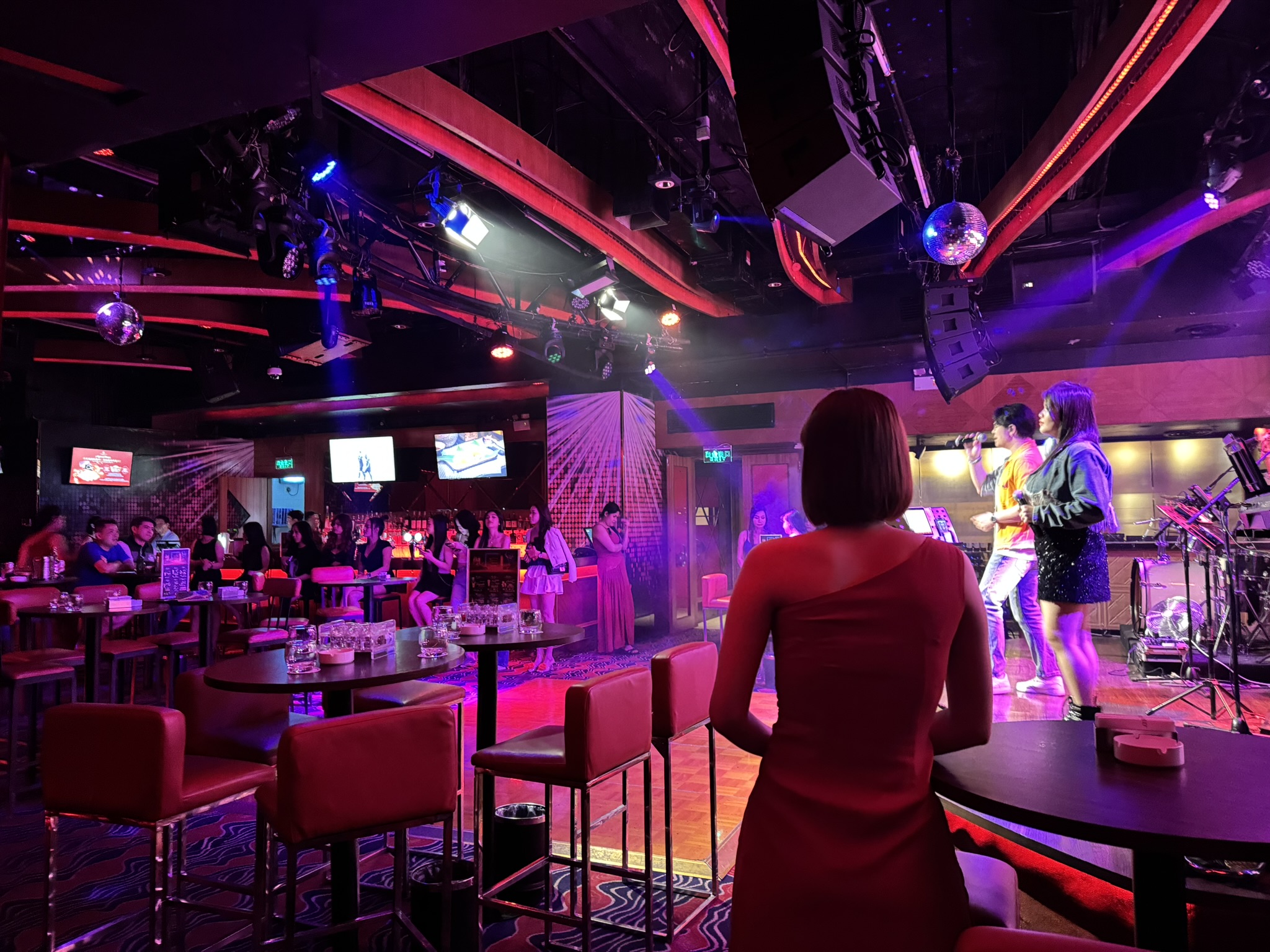
It was a neat venue with okay mandarin live music. I took a corner seat and ordered a glass of whatever. There were barely any customers that night. Hostesses were situated around the bar and near the entrance. The atmosphere though, was slight different from キャバクラ in Japan, and I suspected that, for a bit of extra cash, these girls would do a bit more than just being your drinking companion. I finished my drink and left the complex altogether, and as I walked towards the entrance and past a girl, I saw pieces of her makeup flaking off. That made my heart sink a bit.
In the Hood
I circled back to the area near my hotel. It was getting to 11 P.M. and I was getting worn out. So I wondered around a bit more and headed back.
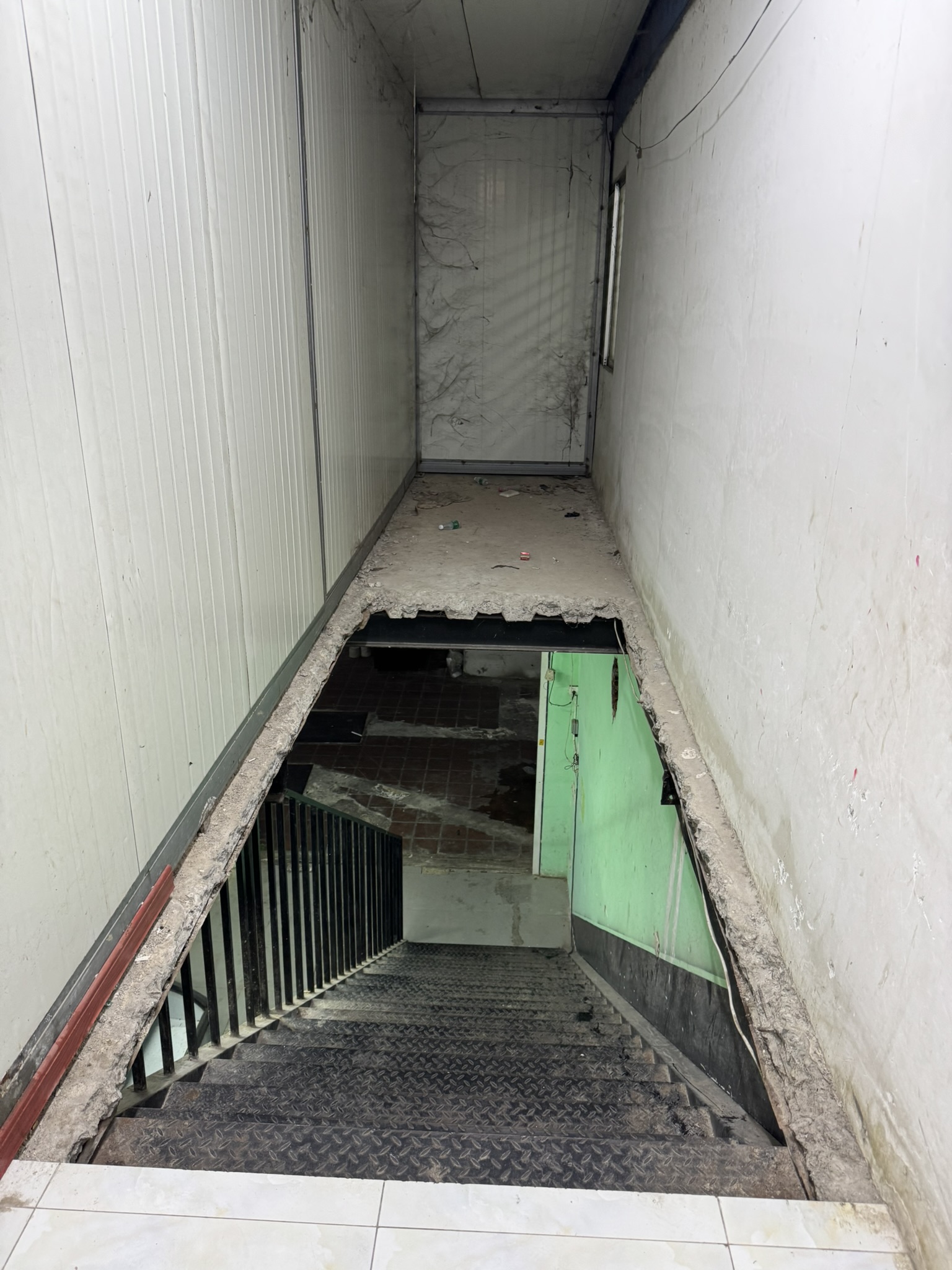
Up a squeaky metal staircase, literally a hole in the floor. 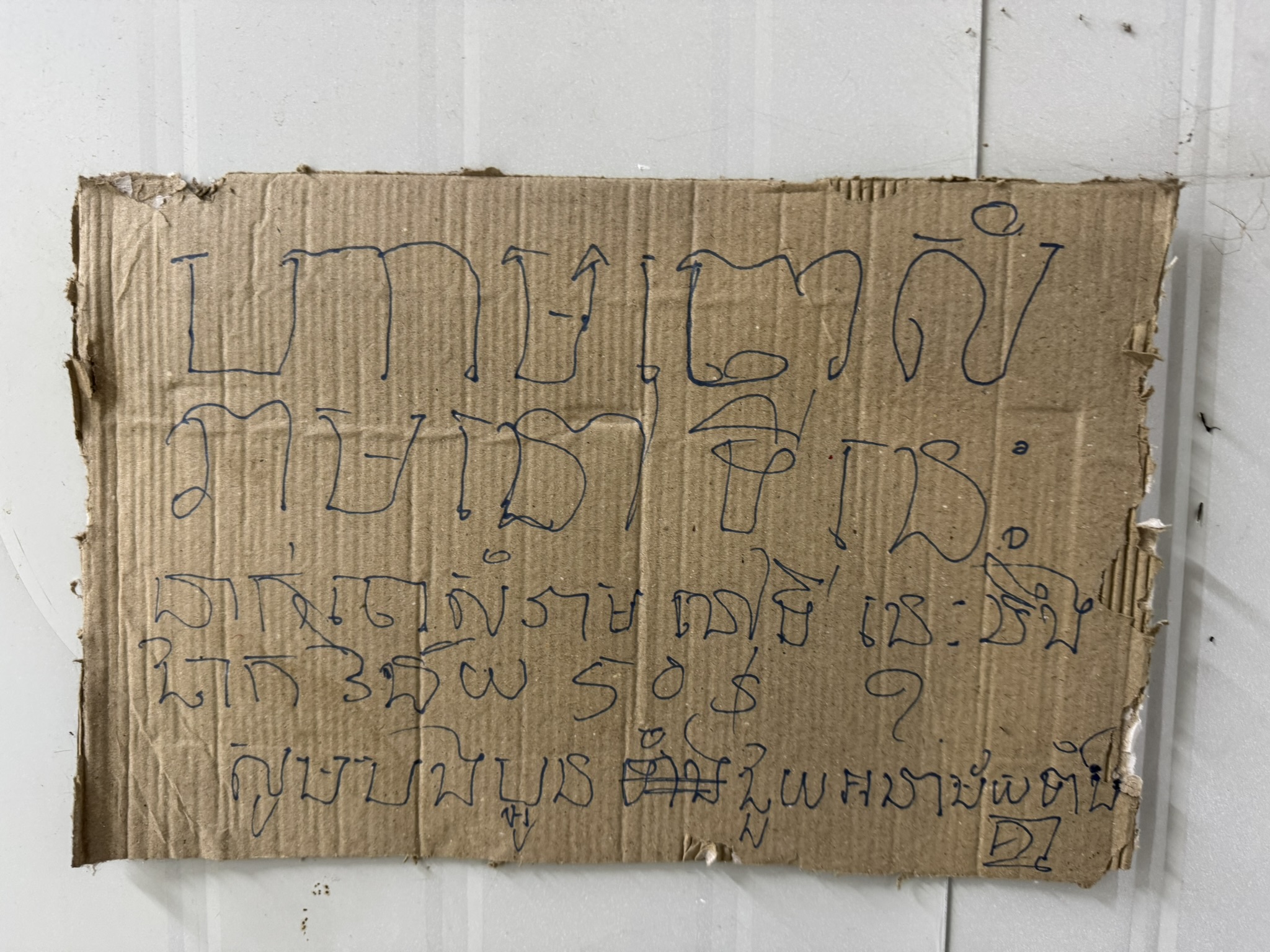
“Do not throw rubbish here or you will be fined 50USD.” 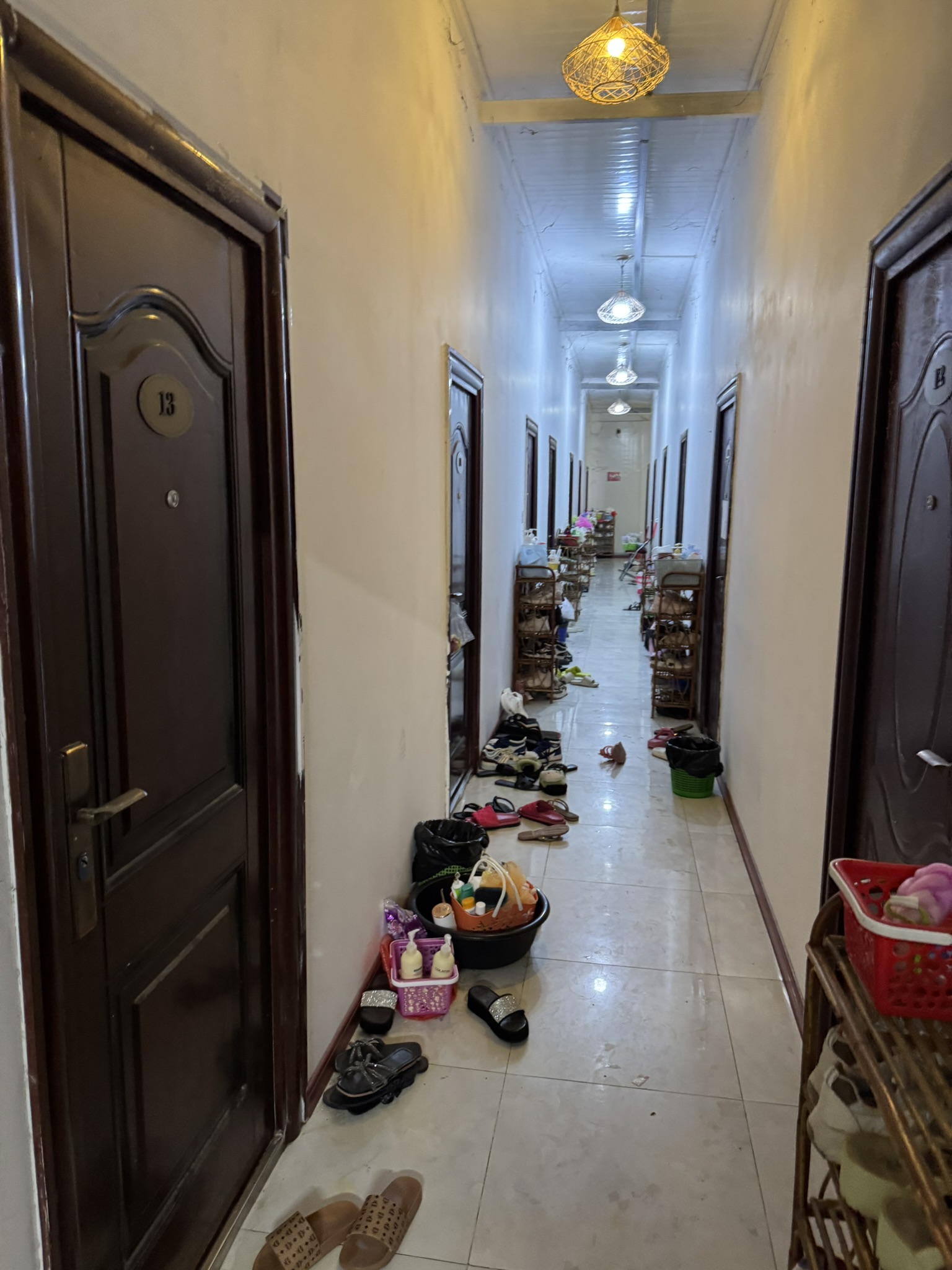
Probably a dormitory for female workers, no idea how I ended up there. 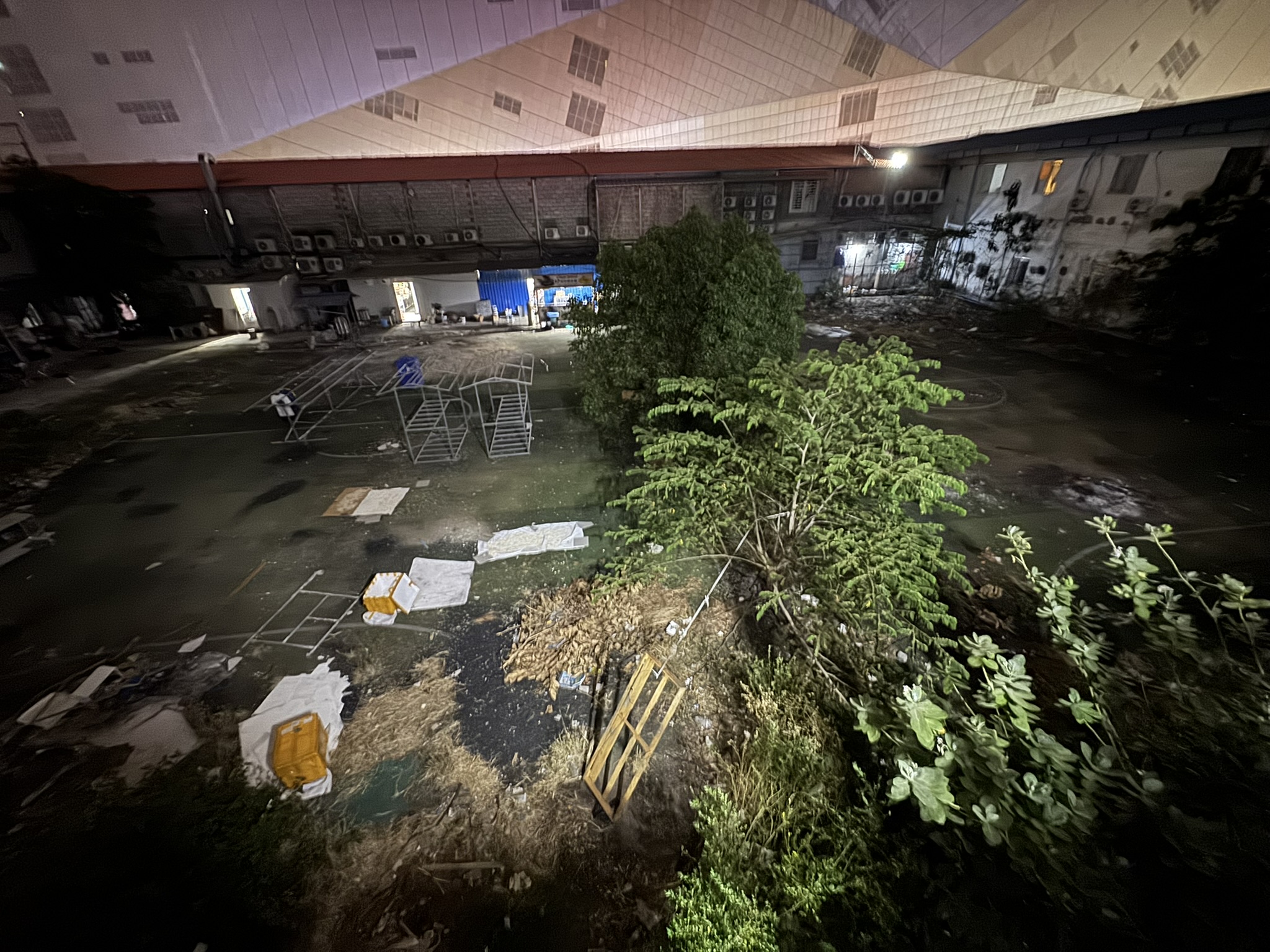
It was pretty rundown right below the highend condo. 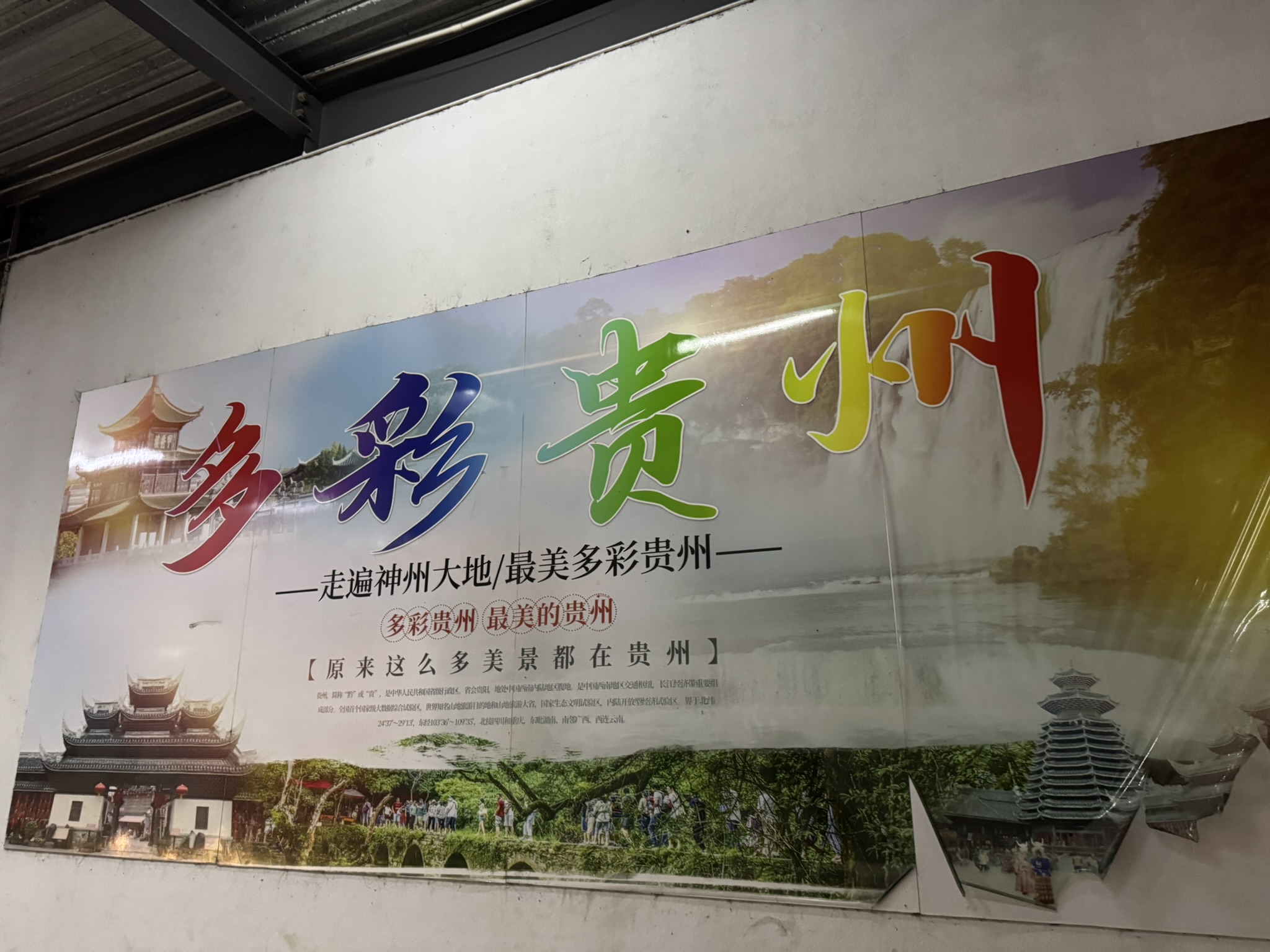
Tourism advertisement for Guizhou province, China. Who were they showing this ad to? 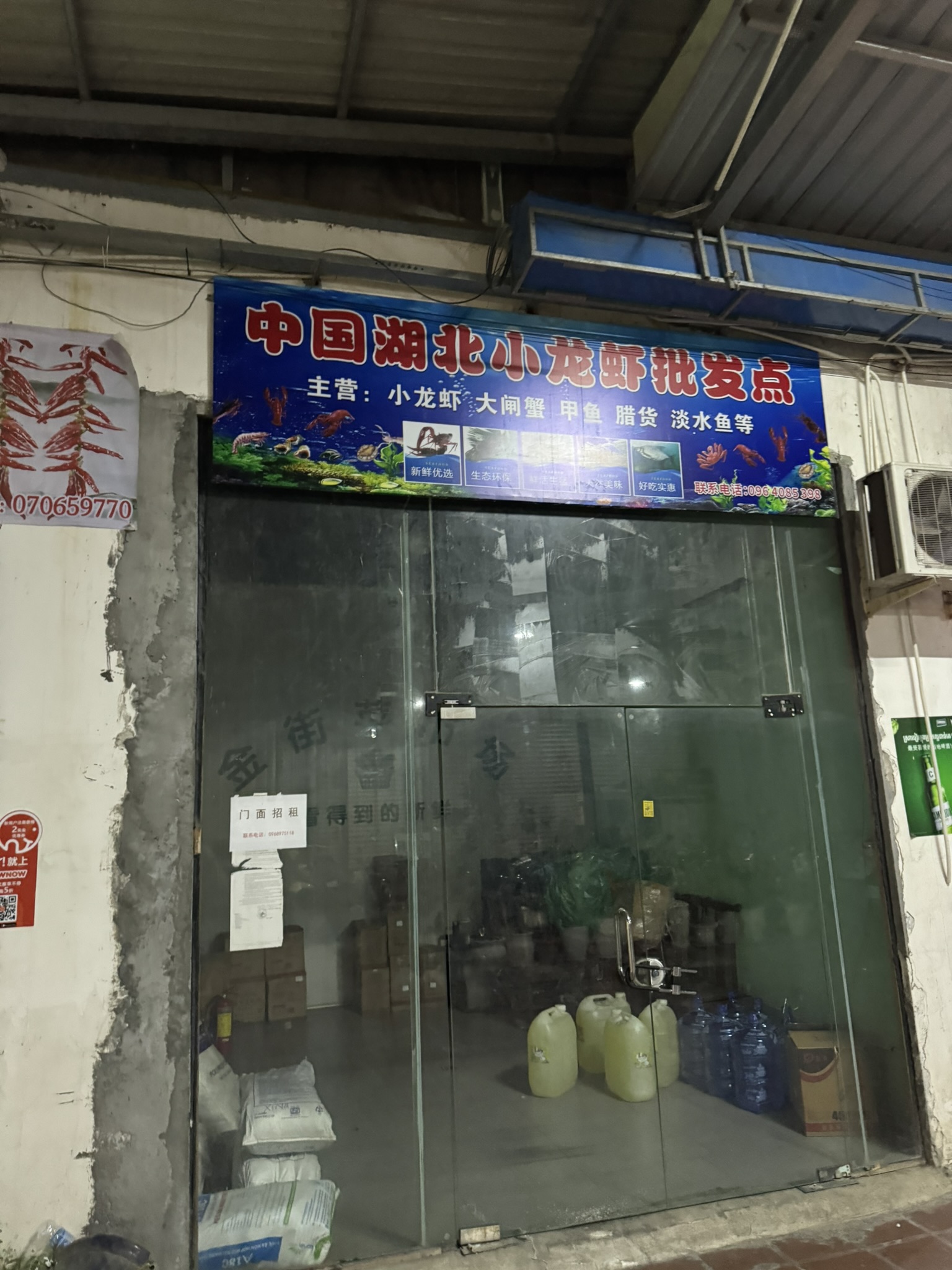
China Hubei Province Crawfish Wholesale Point 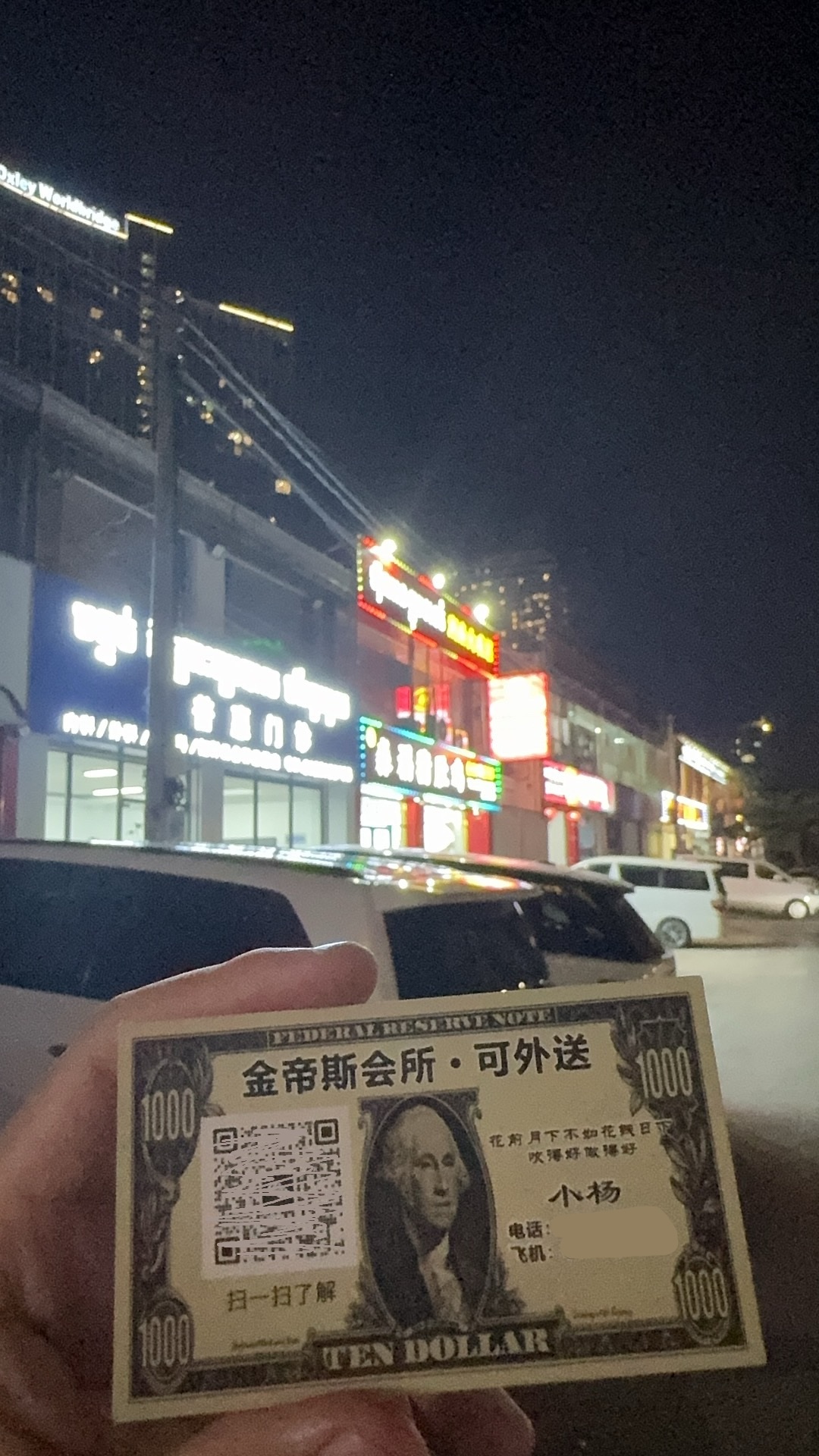
Advertisement for prostitutes delivery services, that I picked up from the ground.
The Genocide
On the second day, my goals were set to several of the genocide sites in the city.
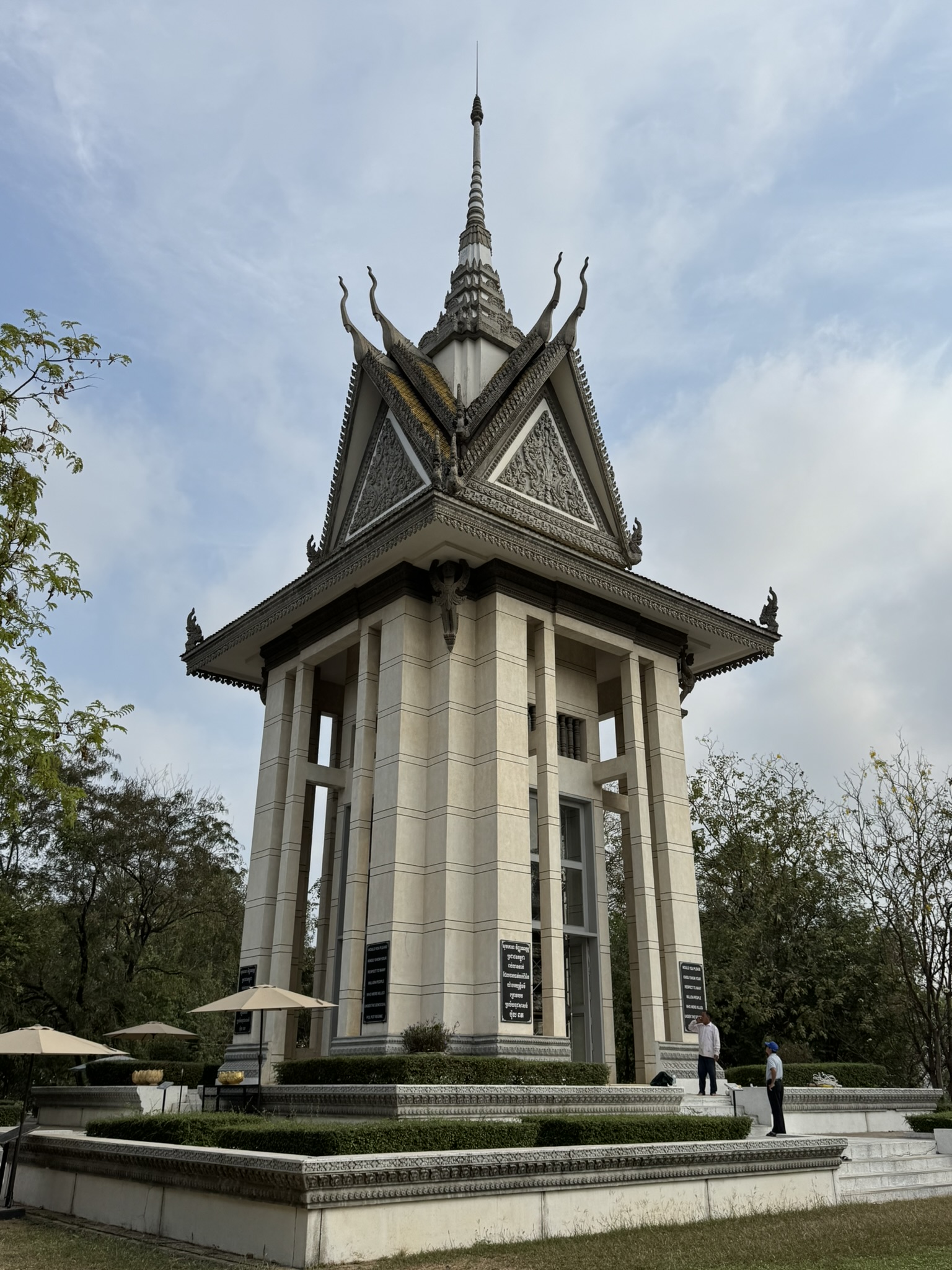
An astrocity. Khmer Rouge, in an attempt to build agrarian utopia, wiped out a quarter of the country’s population, especially the educated portion, leaving mass graves now known as the “Killing Fields.” The most prominent was Choeung Ek Genocidal Center, the main “Killing Field” site just outside Phnom Penh.
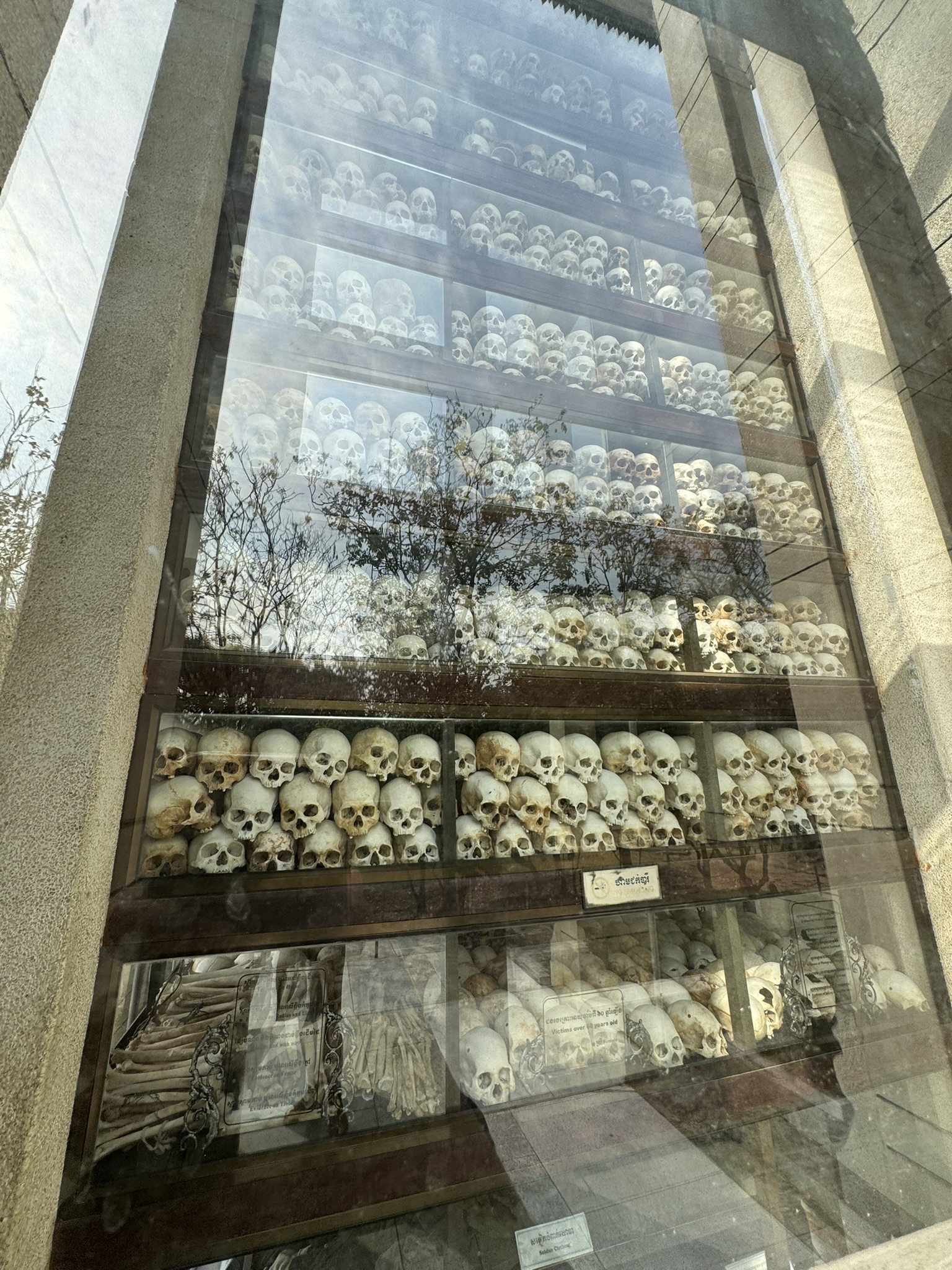
Choeung Ek Genocidal Center was a former orchard about 15 to 17 km south of Phnom Penh that the Khmer Rouge used from 1975 to 1979 as an execution and mass-grave site linked to the S-21 (Tuol Sleng) prison. Around 17,000 prisoners from S-21 and other centers were brought here to be killed, and about 8,895 bodies have been exhumed in mass graves.
The site provided audio guide in many languages, the explanations were vivid and informative. I highly recommend it.
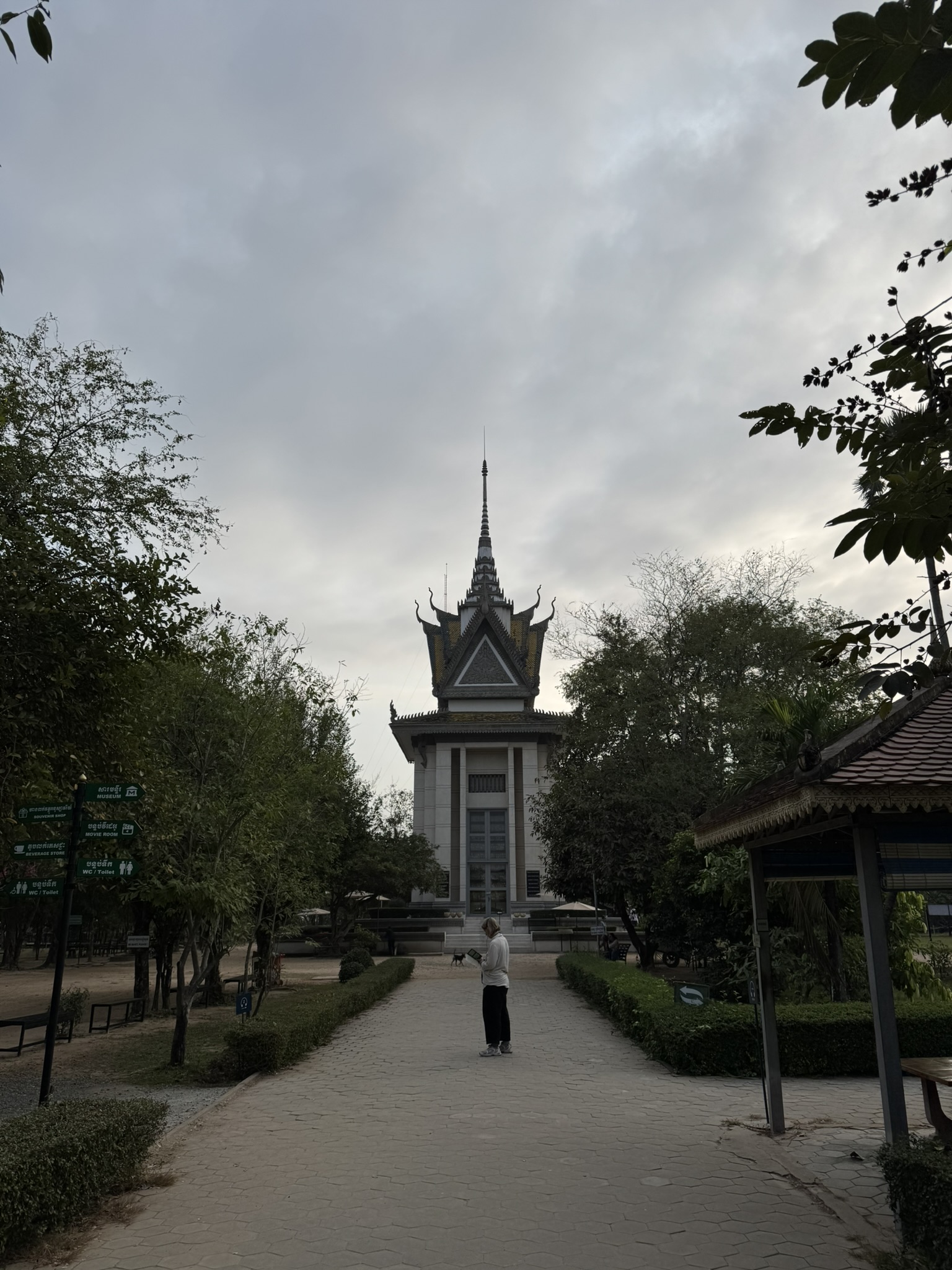
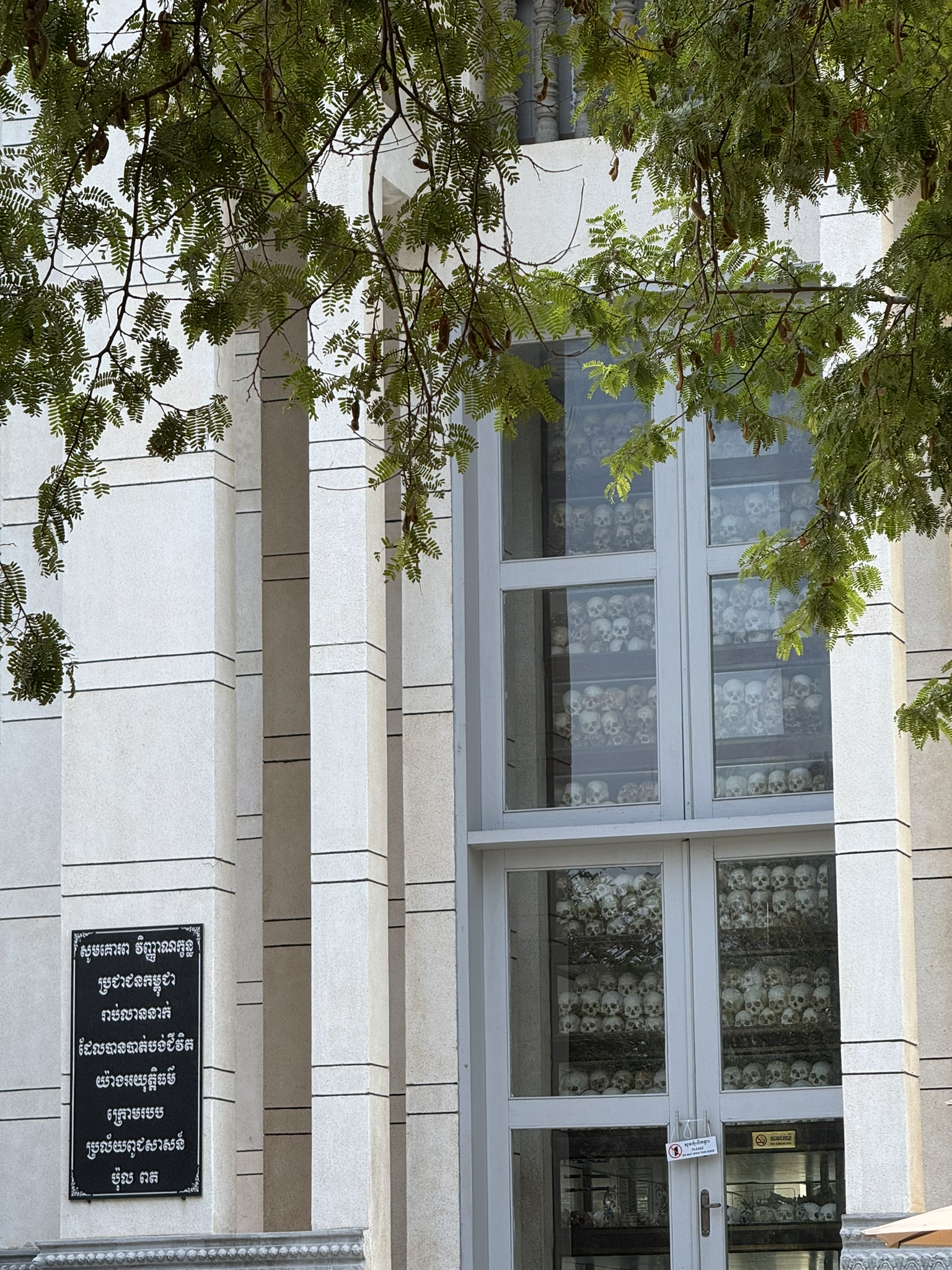
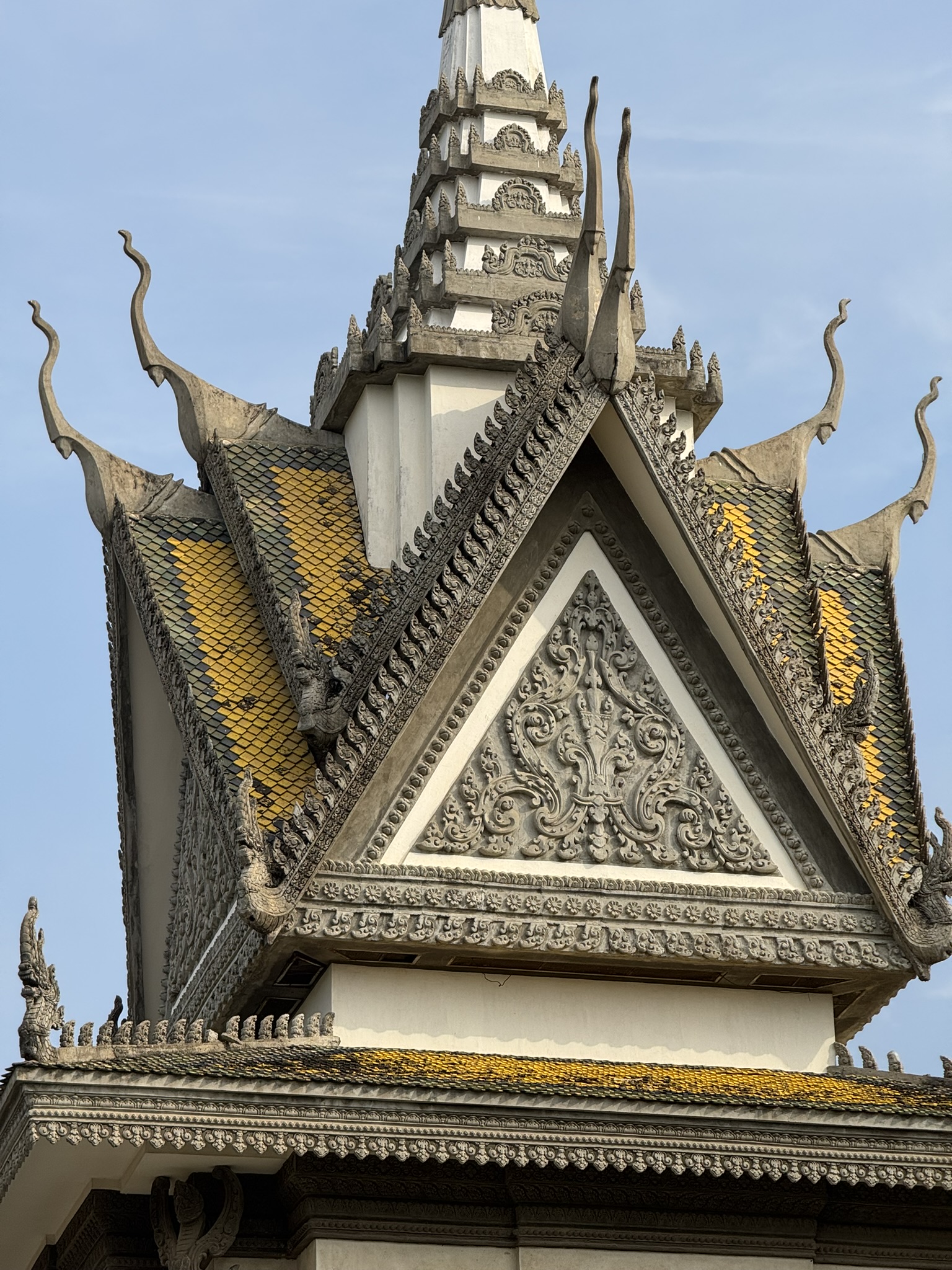
There was the option to leave flowers at the stupa for 2000 riels, and I did. Along with me were a white couple. The girl was sobbing in absolute despair when they approached the tower. I felt bad for what happened here as well, just not as intense. I tried to picture the piles of bodies of men, women and children, in rags and sandals, being pushed down pits newly dug. Weilings and screamings filled the skies, a scene of nightmare.
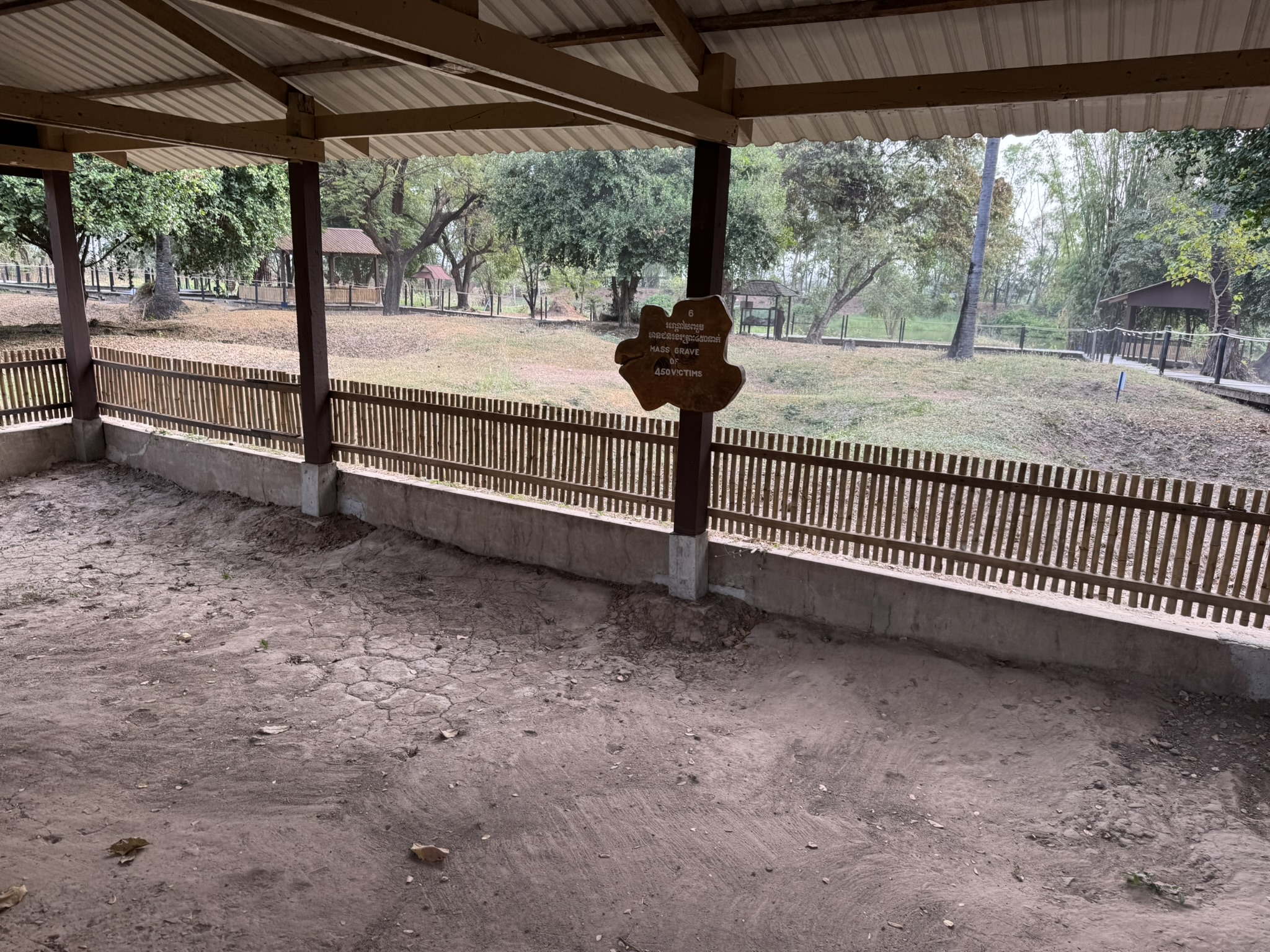
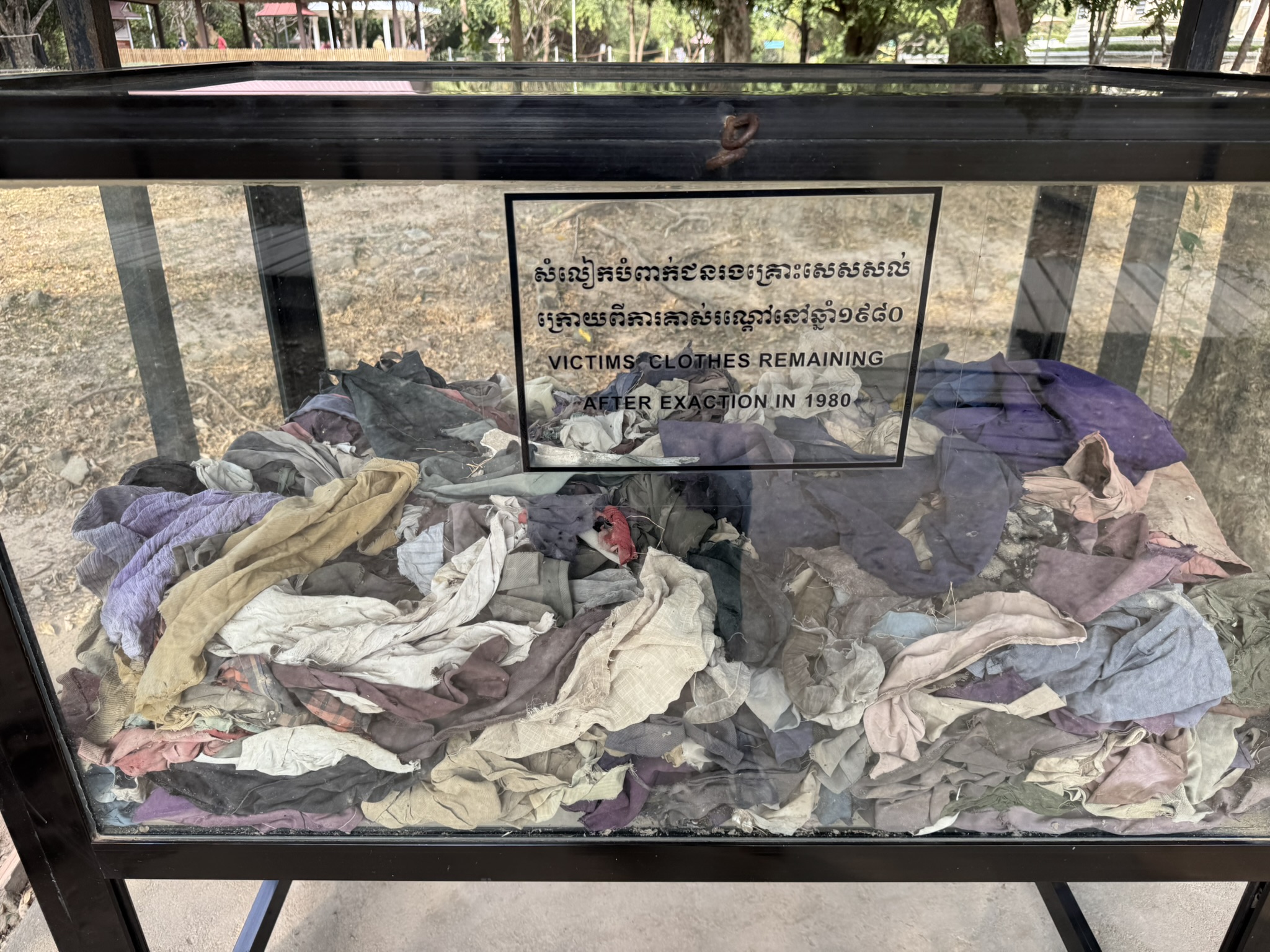
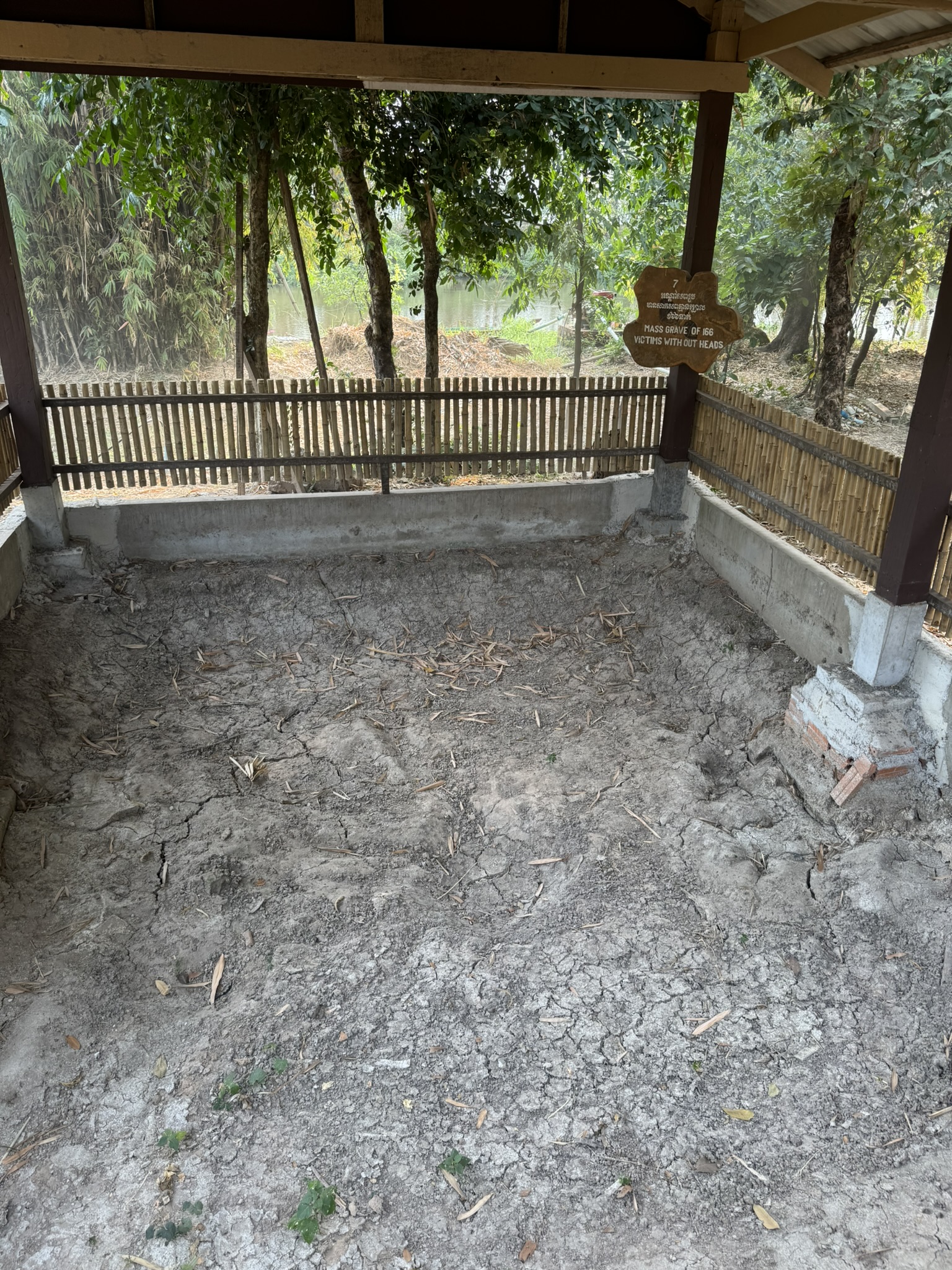
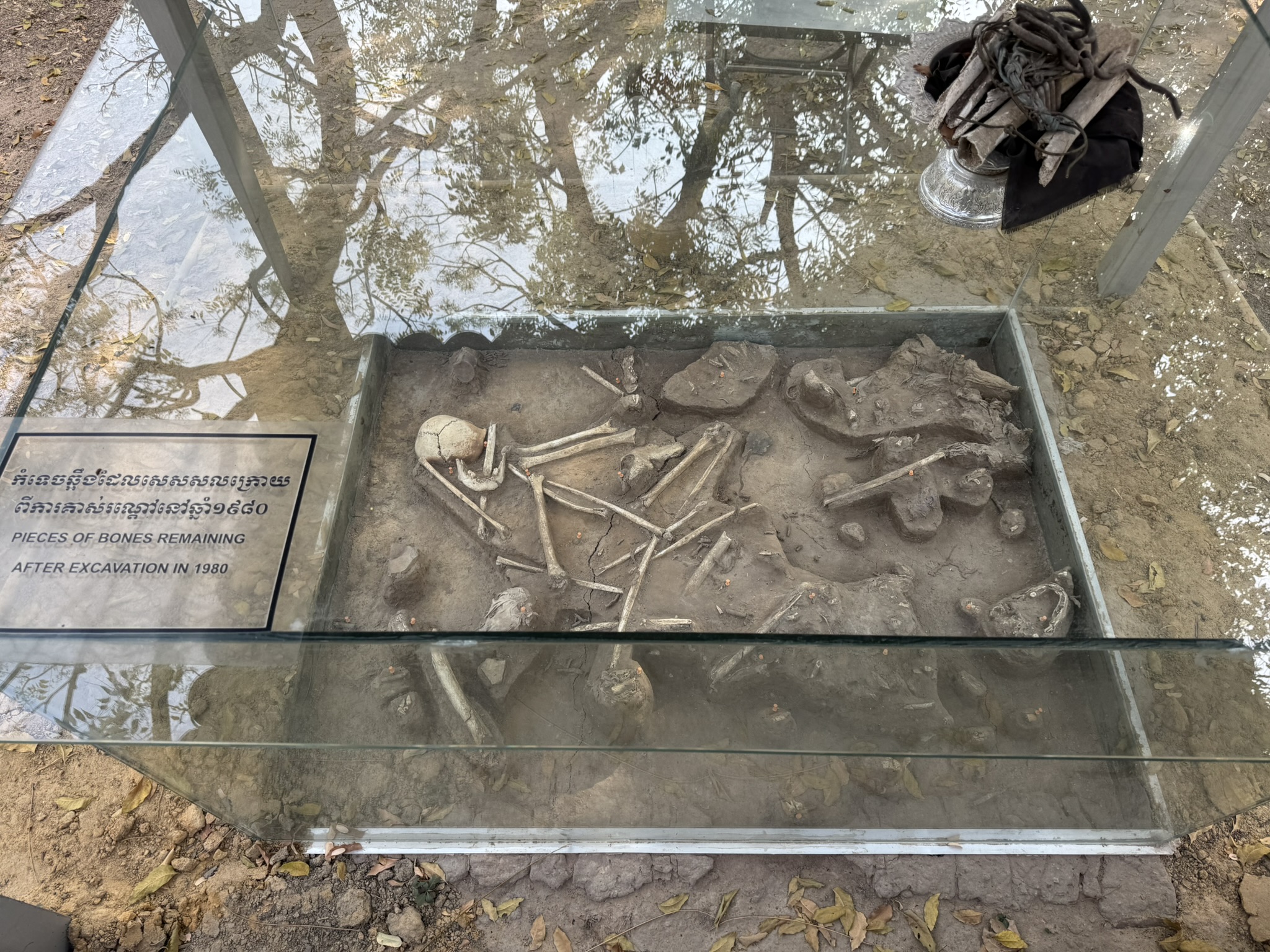
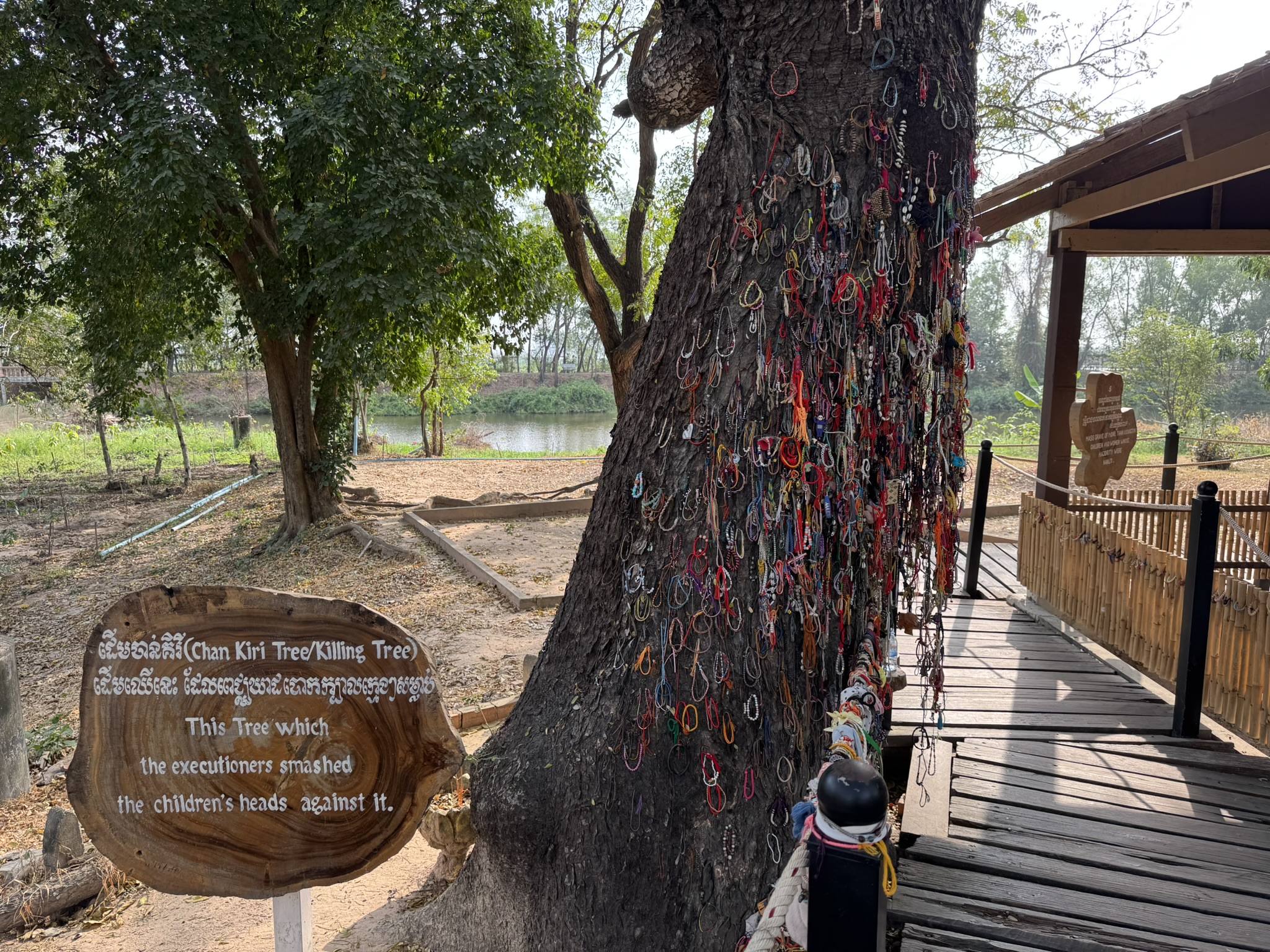
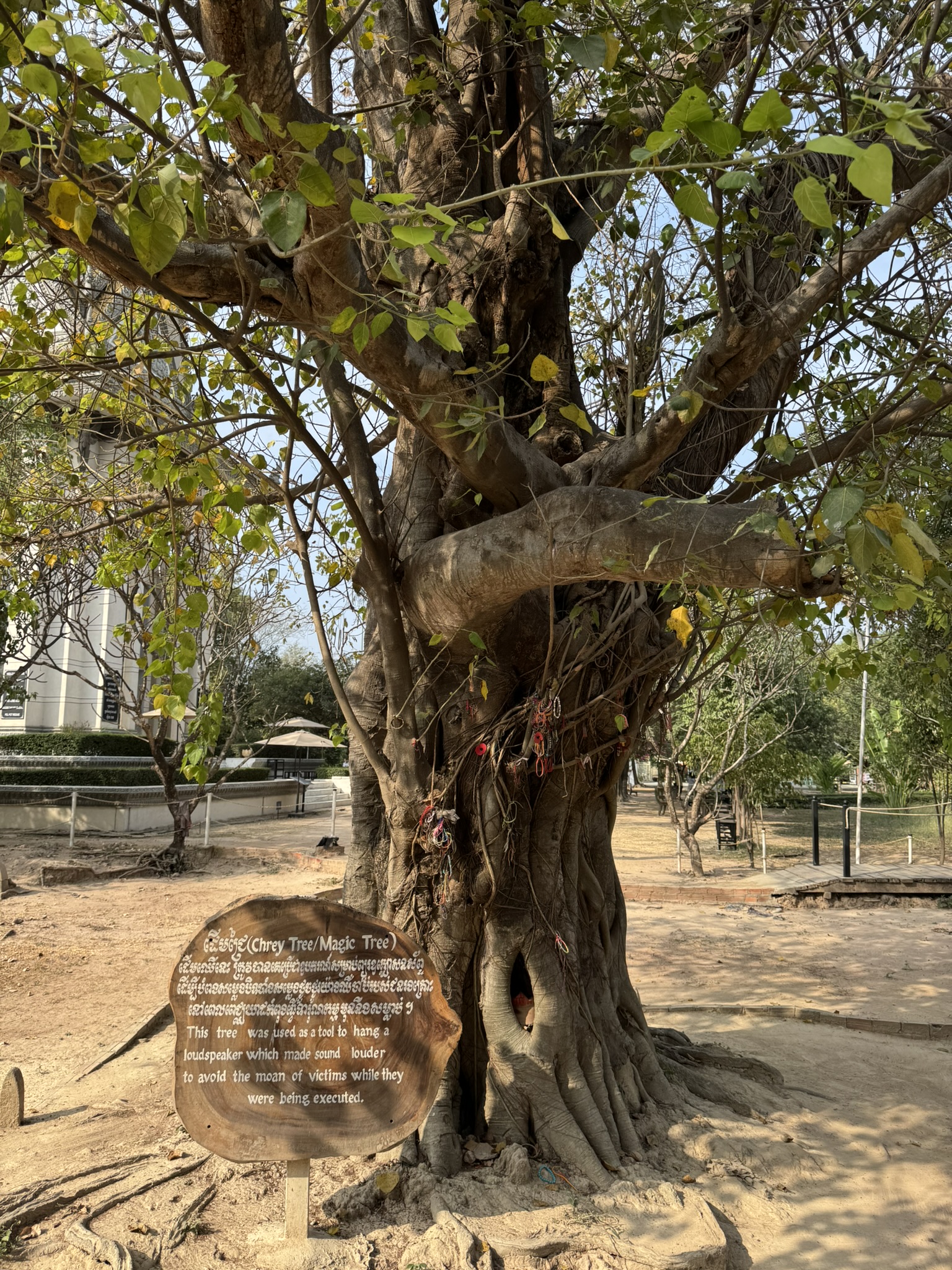
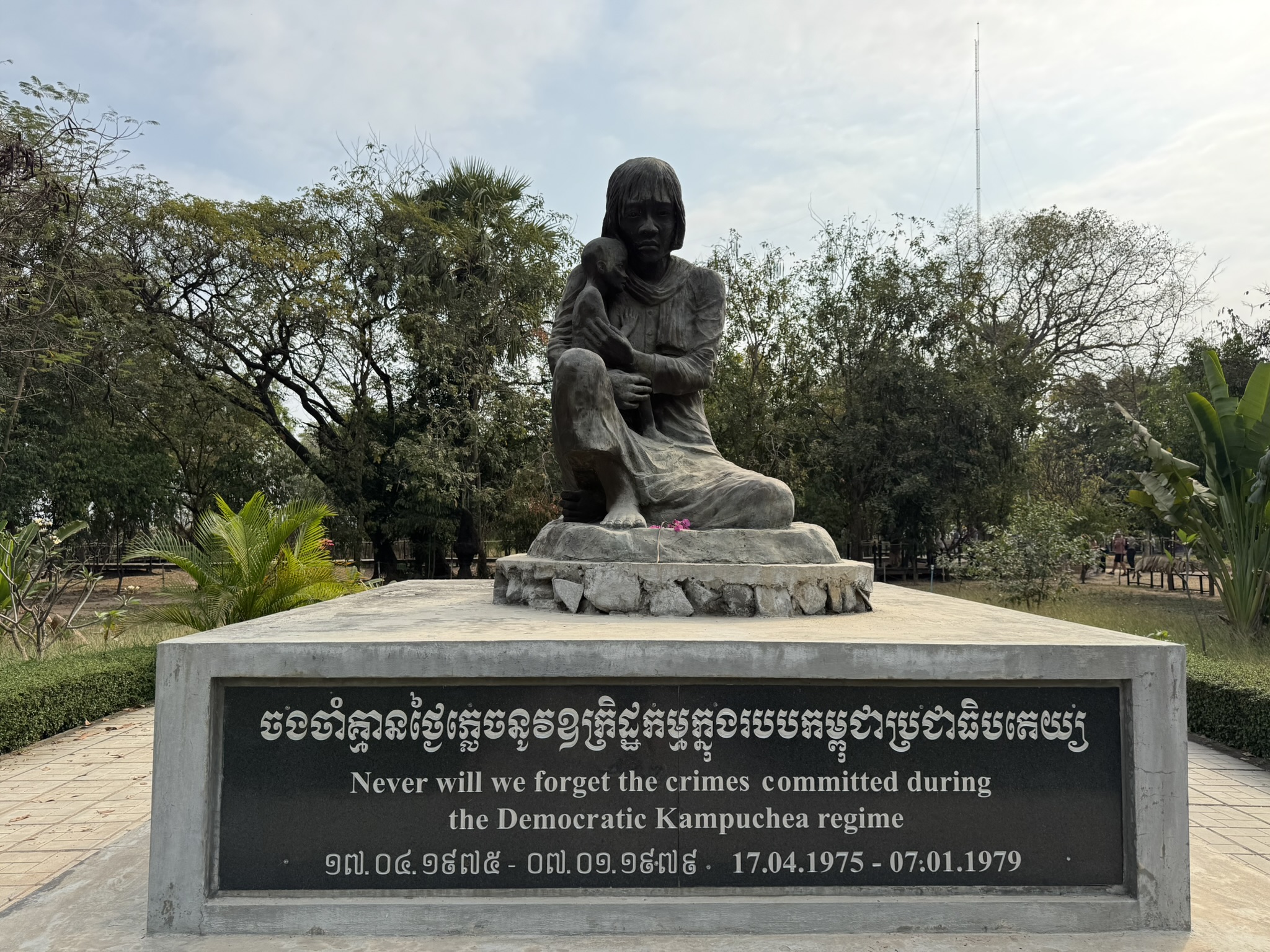
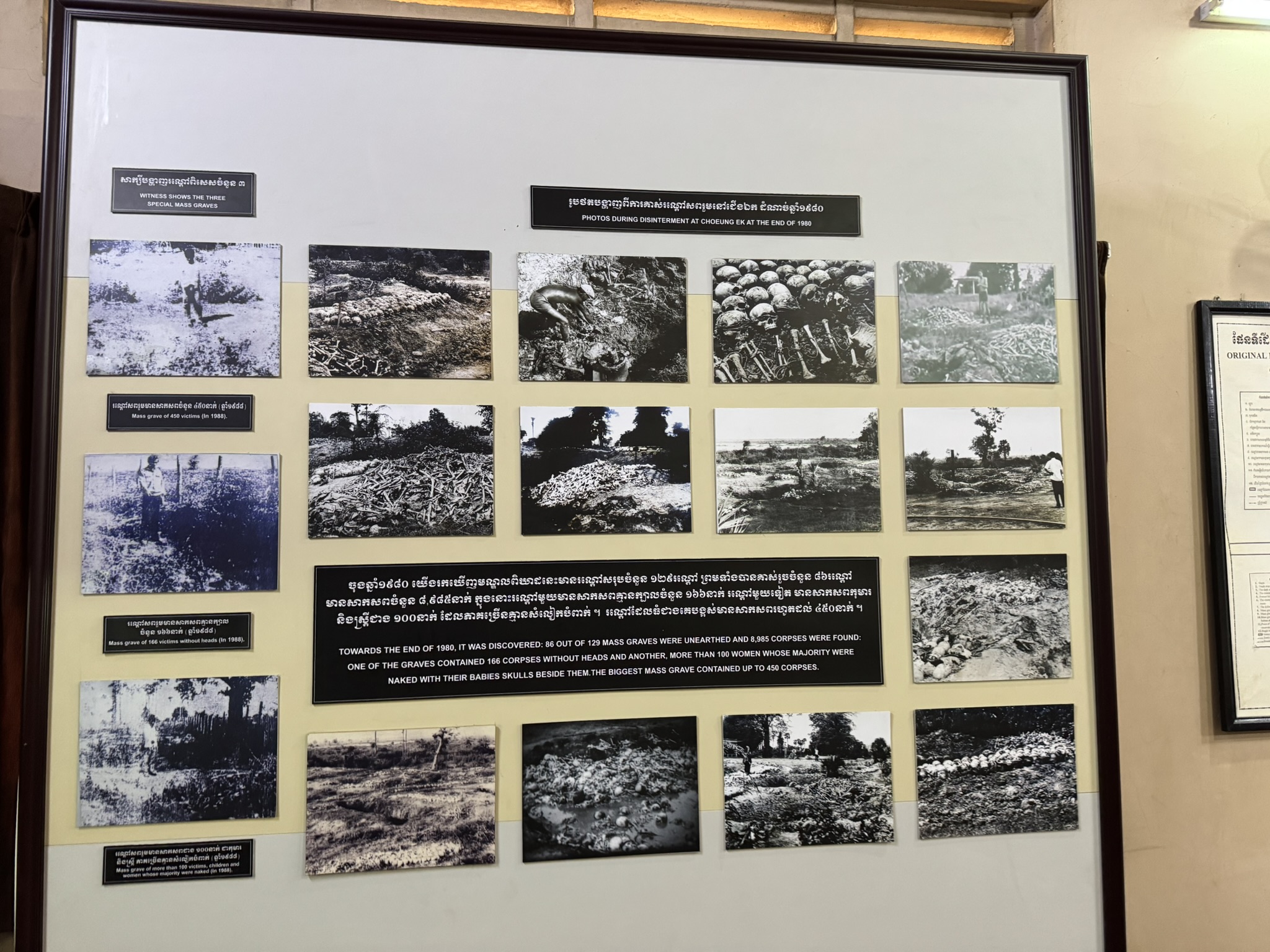

The audio guide said that human bones and clothing fibers could still emerge from the soil after heavy rain. I looked around, and every stick looked like a broken bone.
The ride back to Phnom Penh was also on a tuk-tuk. It was a dusty trail against a barren landscape. The air was filled with a hazy veil that diffused the sunlight and turned everything a muted orange.
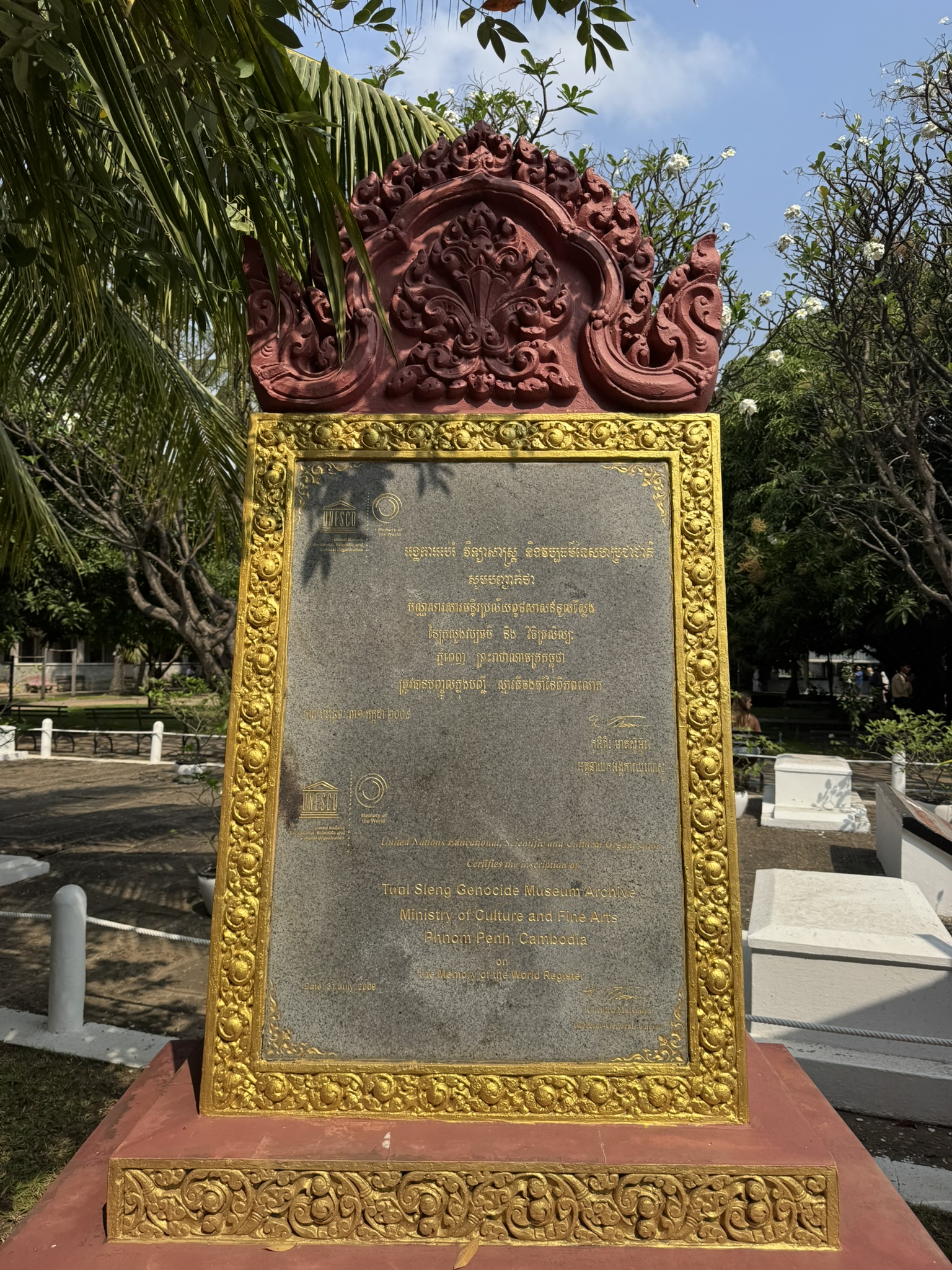
Tuol Sleng was the main Khmer Rouge torture-and-interrogation prison, known as Security Prison 21 (S-21), where thousands of people were held, tortured into “confessions”, and then sent to be executed. It was originally a Phnom Penh high school (Tuol Svay Prey), with classrooms rebuilt into prison cells and tortue chambers.
Prisoners were photographed, registered, and then subjected to systematic torture (beatings, electric shocks, stress positions, water torture, medical experiments, etc.) to force them to sign long confessions naming supposed co-conspirators. Many died in the prison itself from torture, starvation, or disease, most others were transported at night to Choeung Ek (the Killing Fields) to be executed and buried in mass graves.
Around 18000 to 20000 people were believed to have been imprisoned there, but only a handful of adult survivors were known.
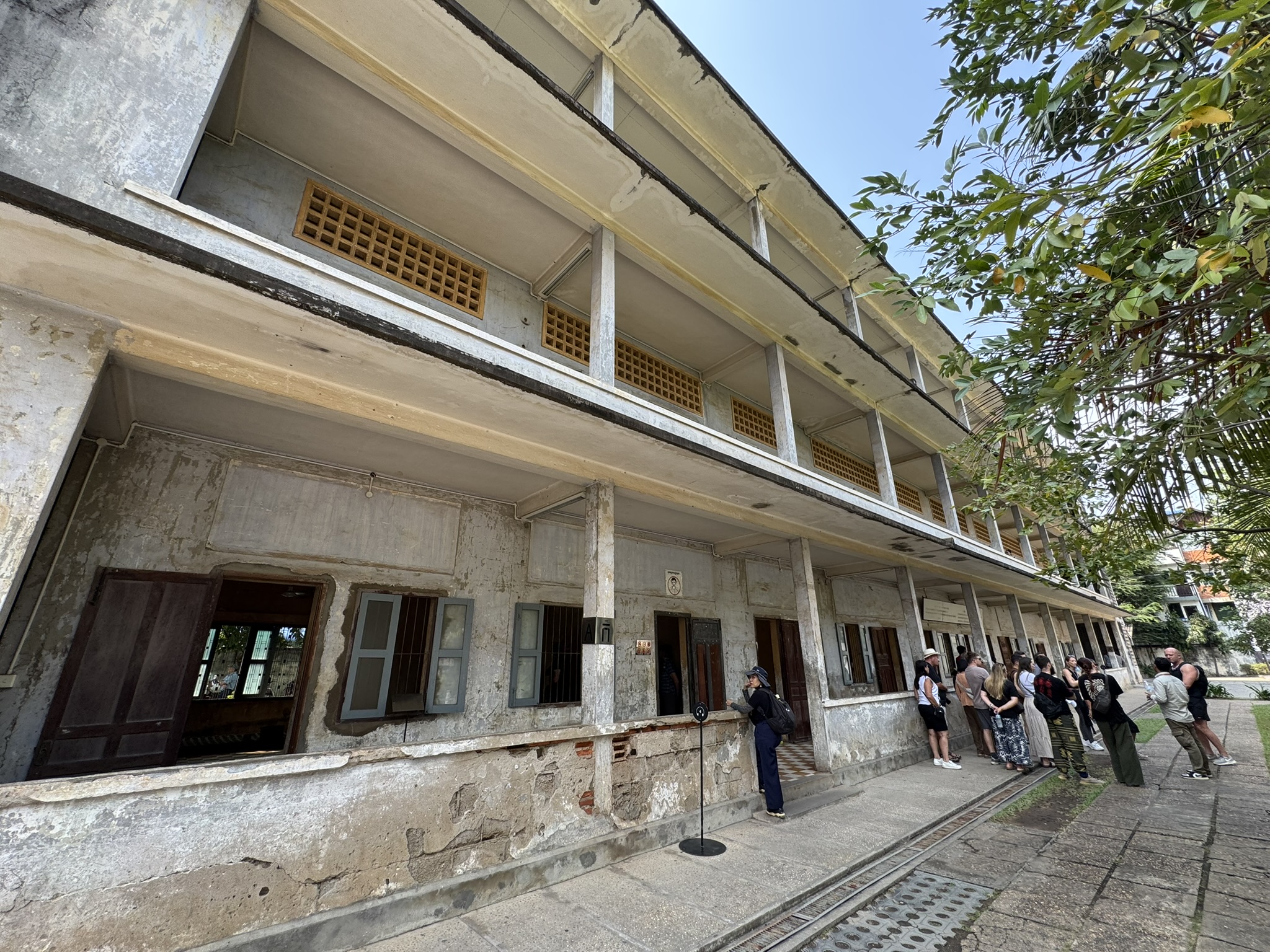
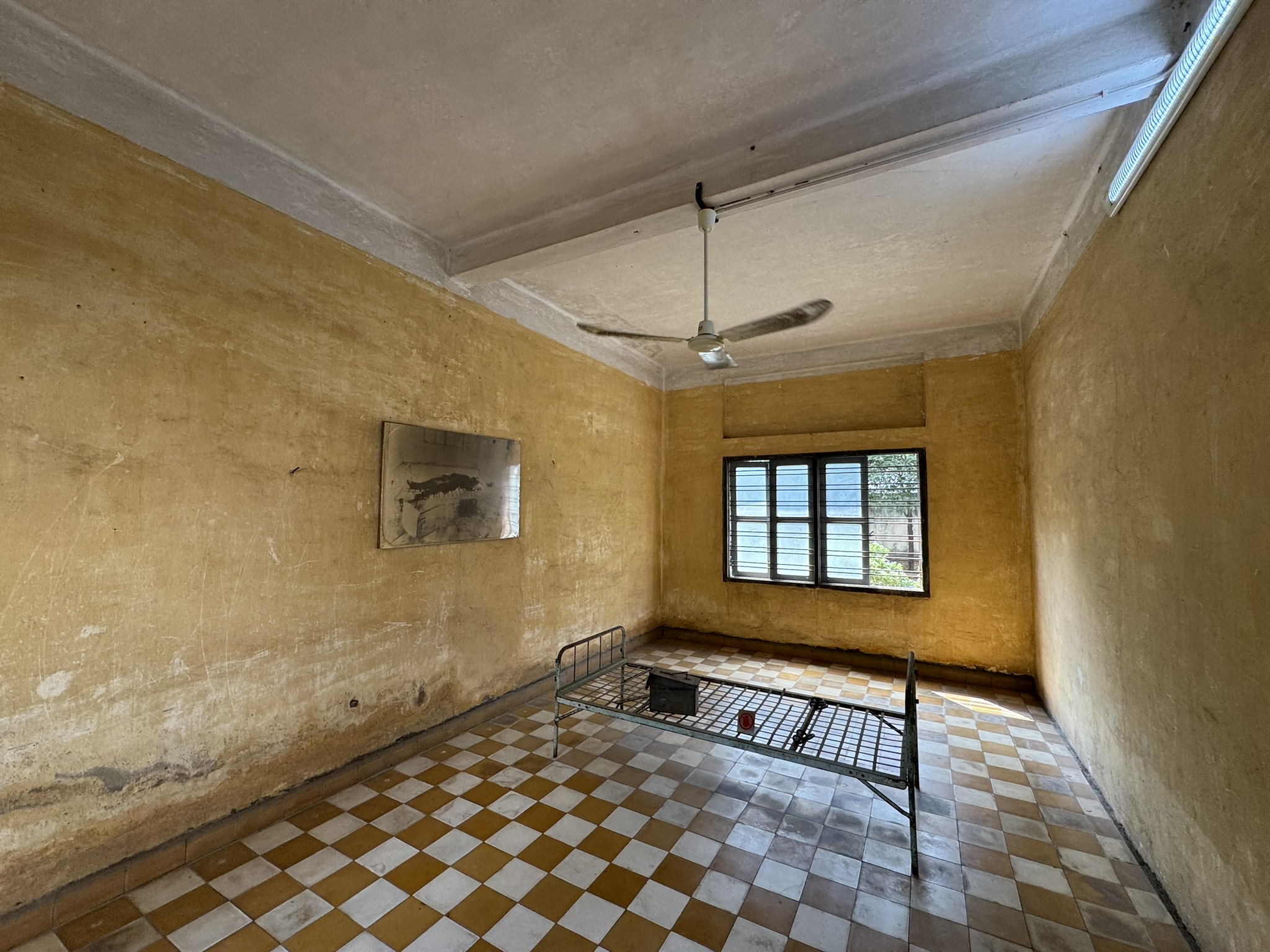
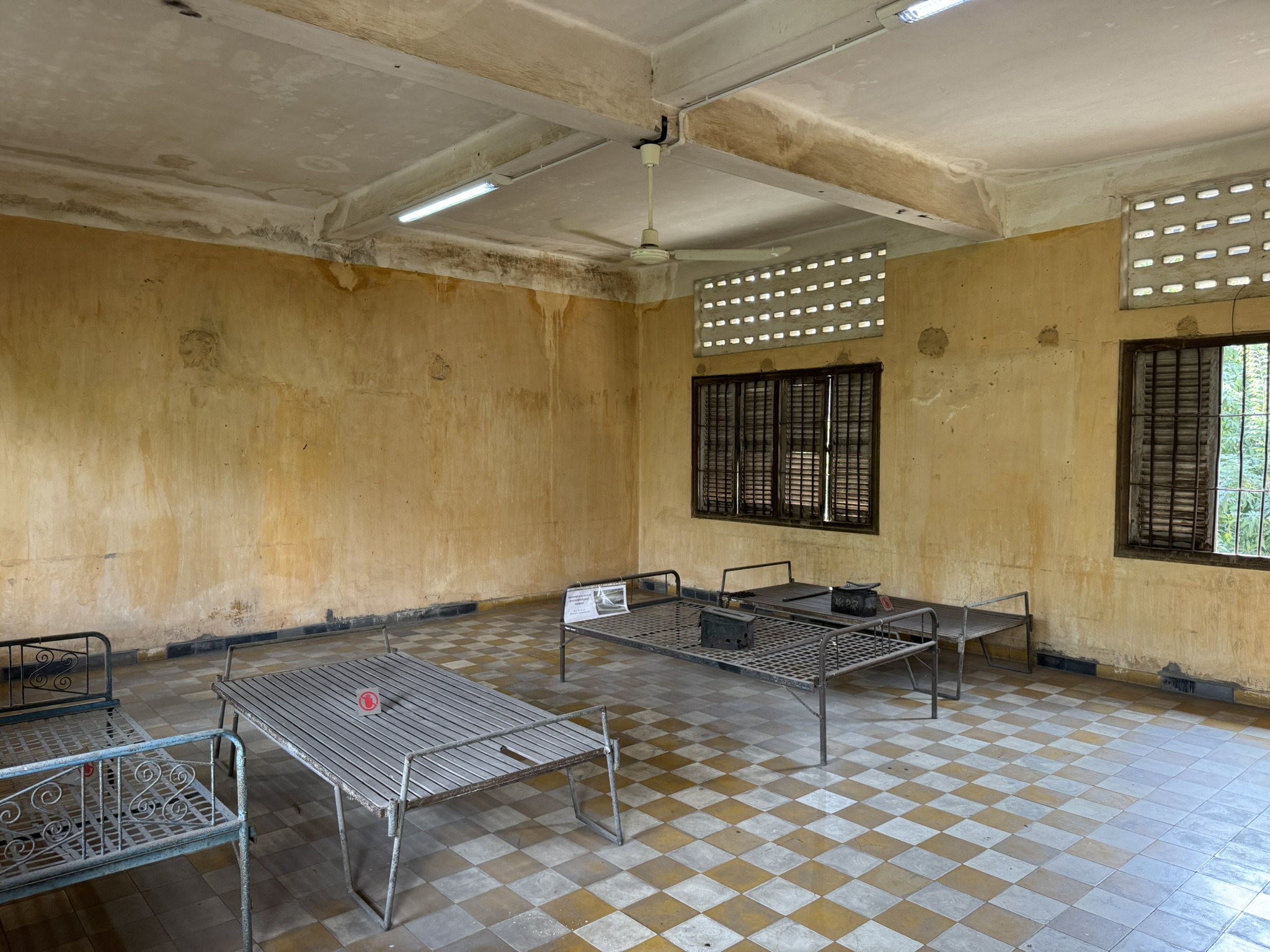
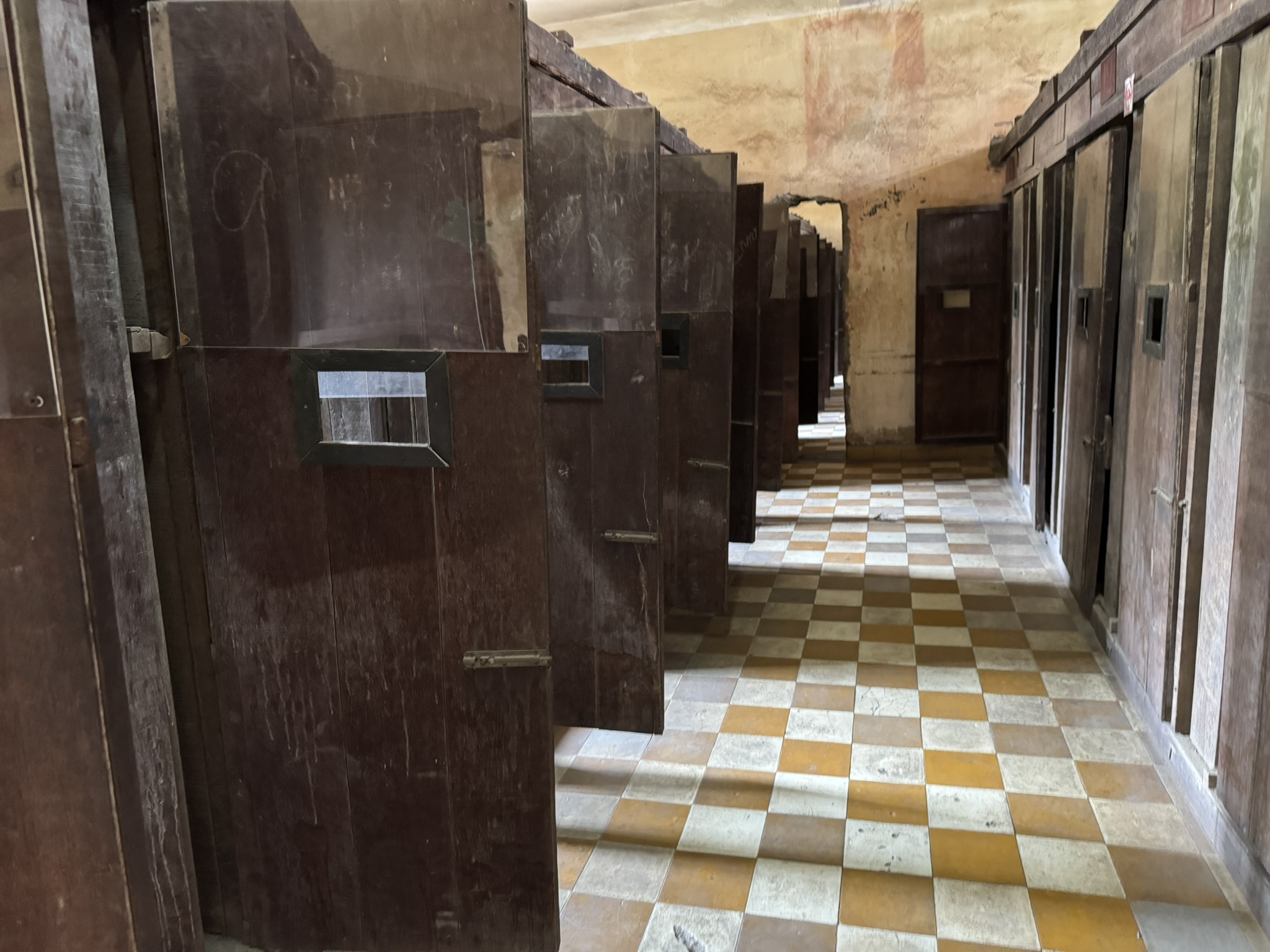
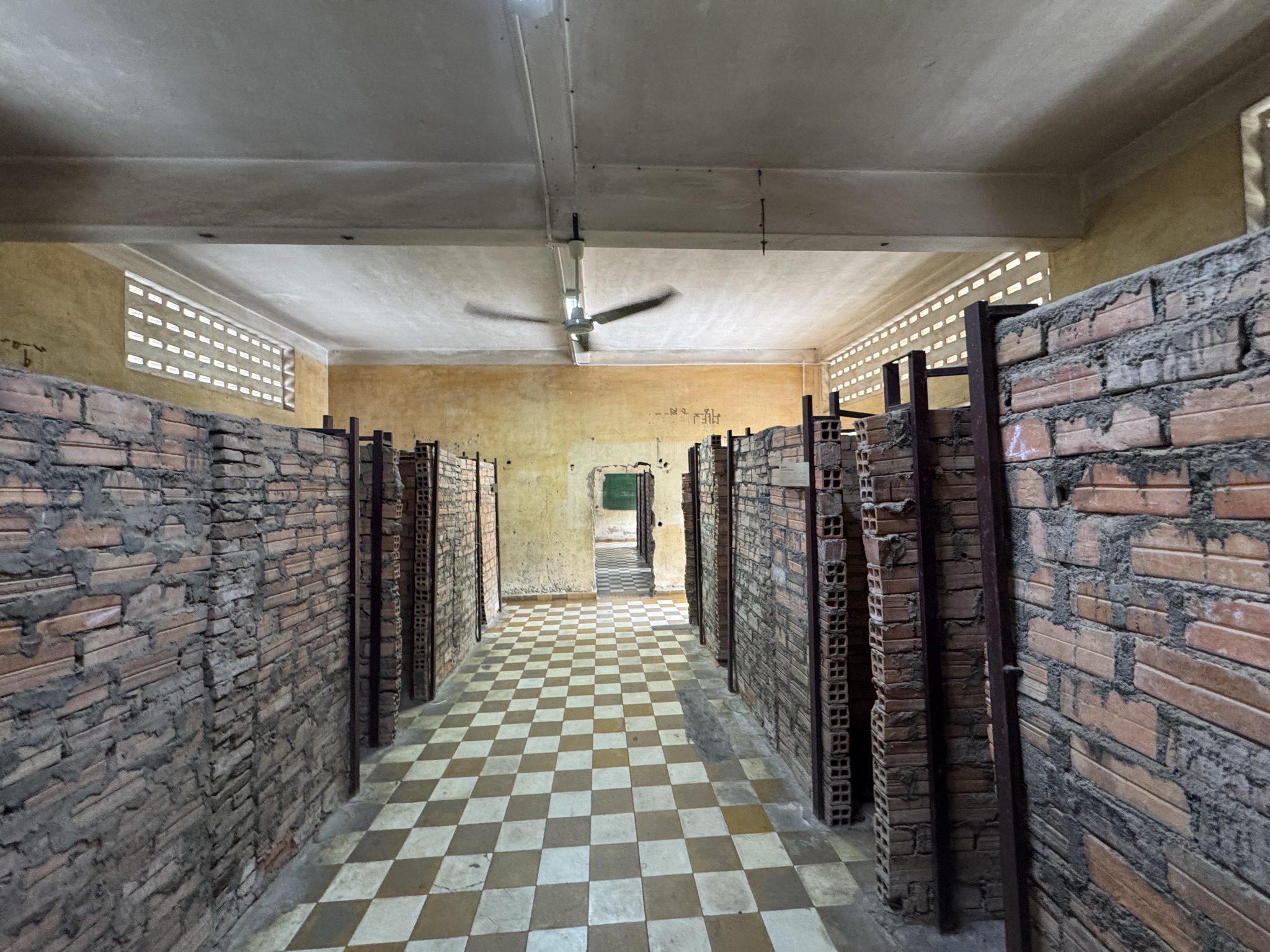
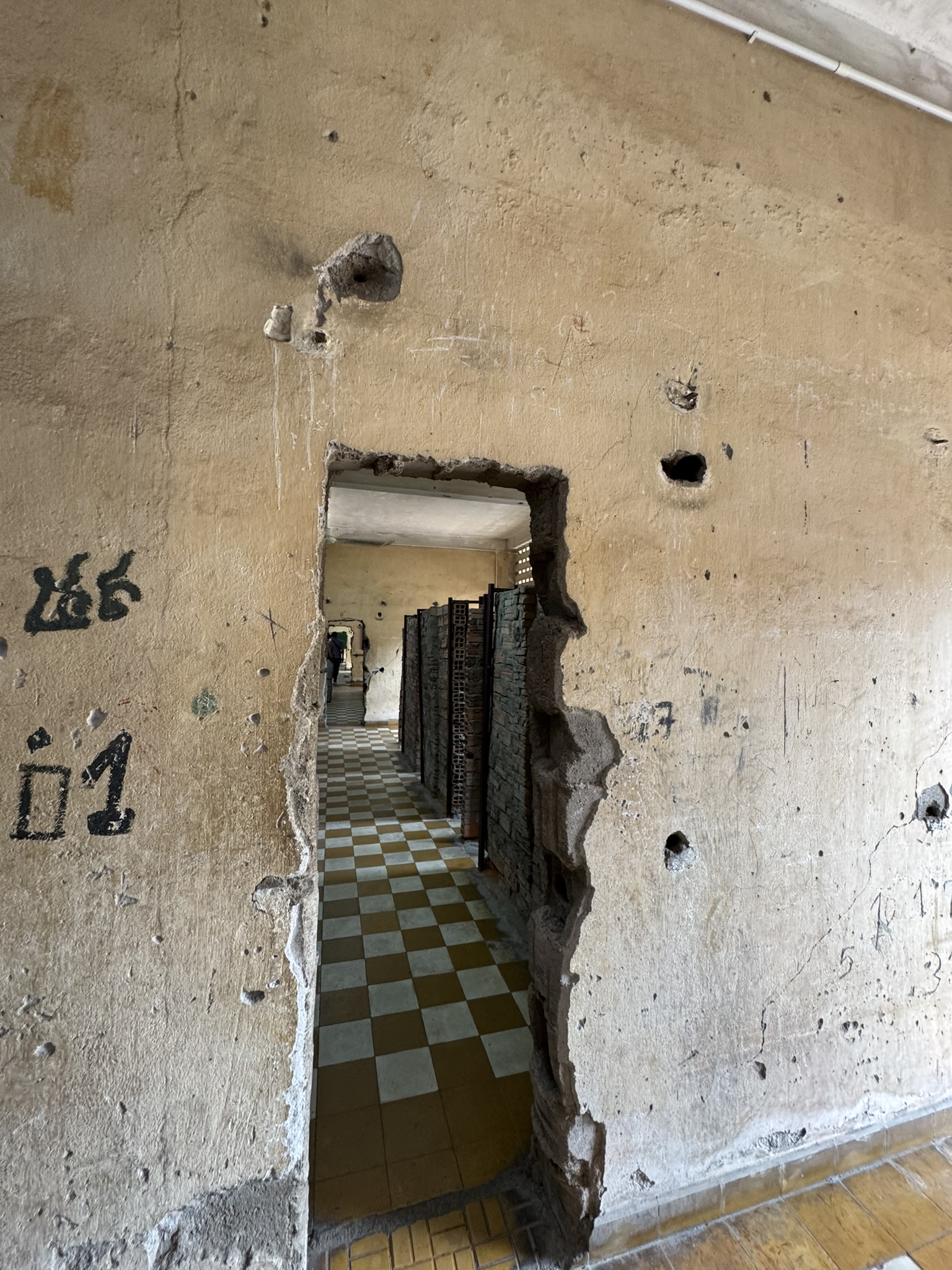
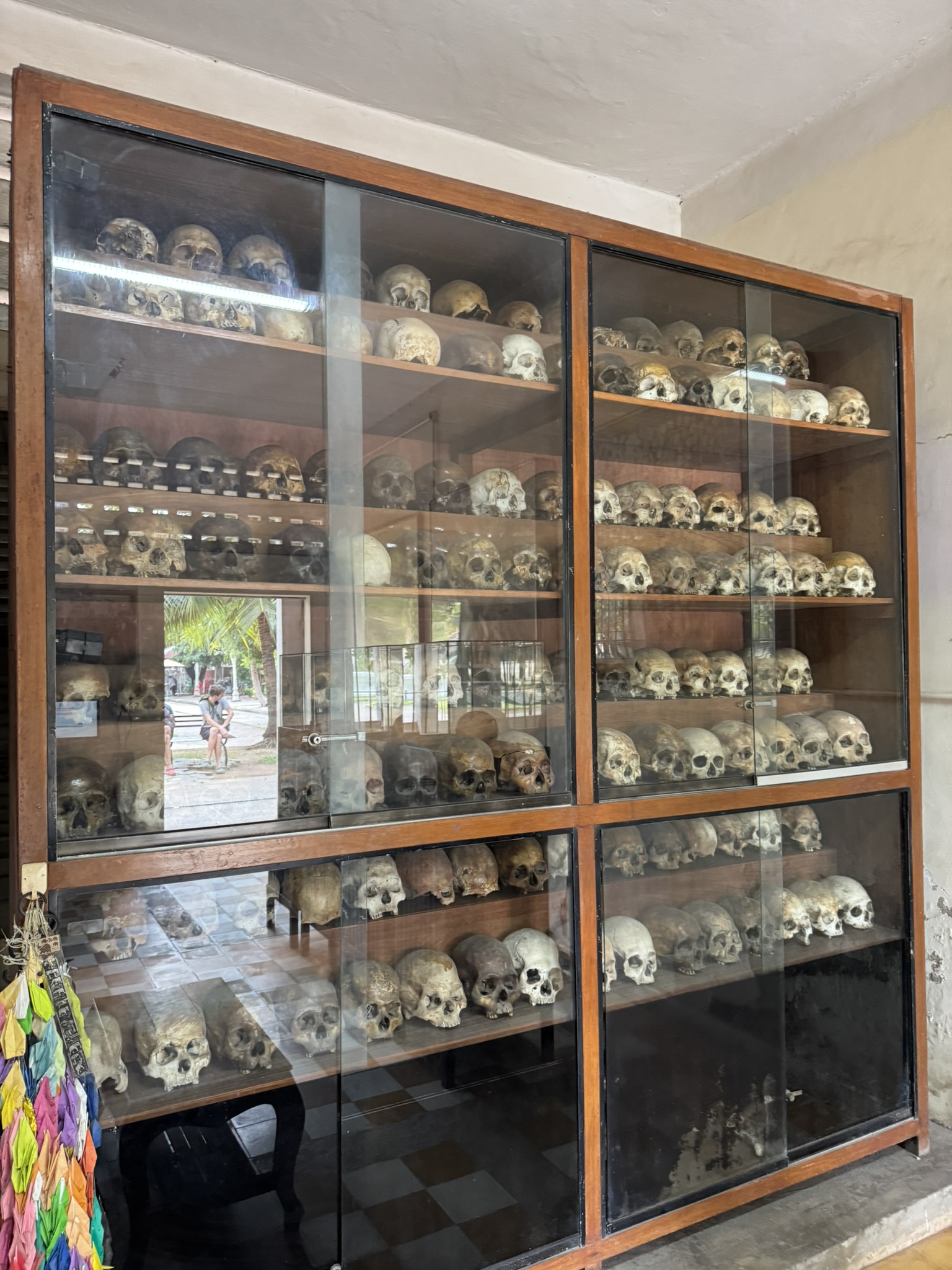
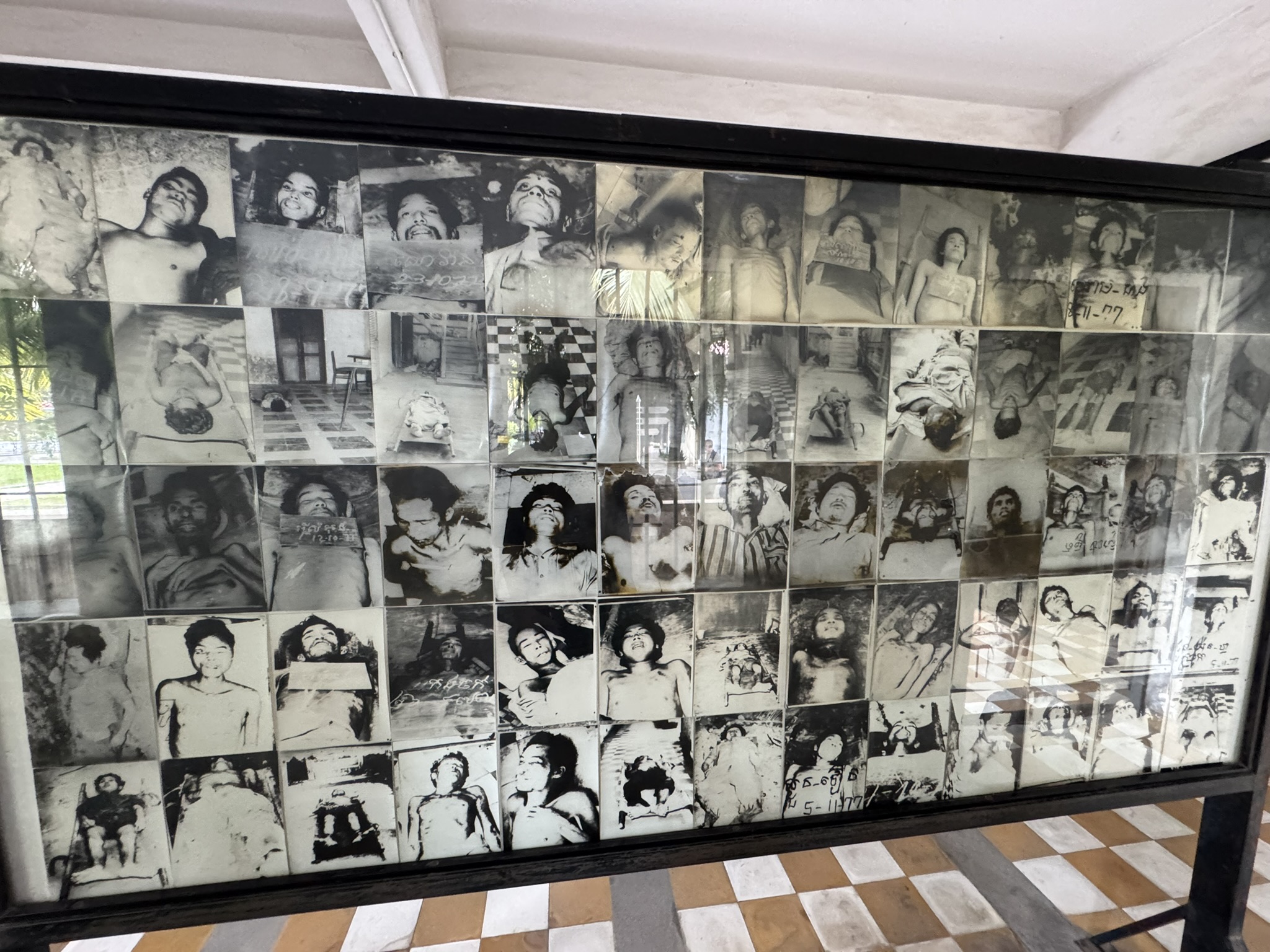
Some of the rooms had real graphic photos on display. Rows of faces lined the walls like a parade of silent portraits, each pair of eyes a door half-open onto a life that never finished its sentence.
The black-and-white photos looked like they’d been drained not just of colour, people suspended at the exact moment before the world closed over them. Seen together, the photos stopped being individual portraits and became a single, vast face of suffering—a mosaic of expressions: confusion, fear, defiance, blankness, segregating the room.
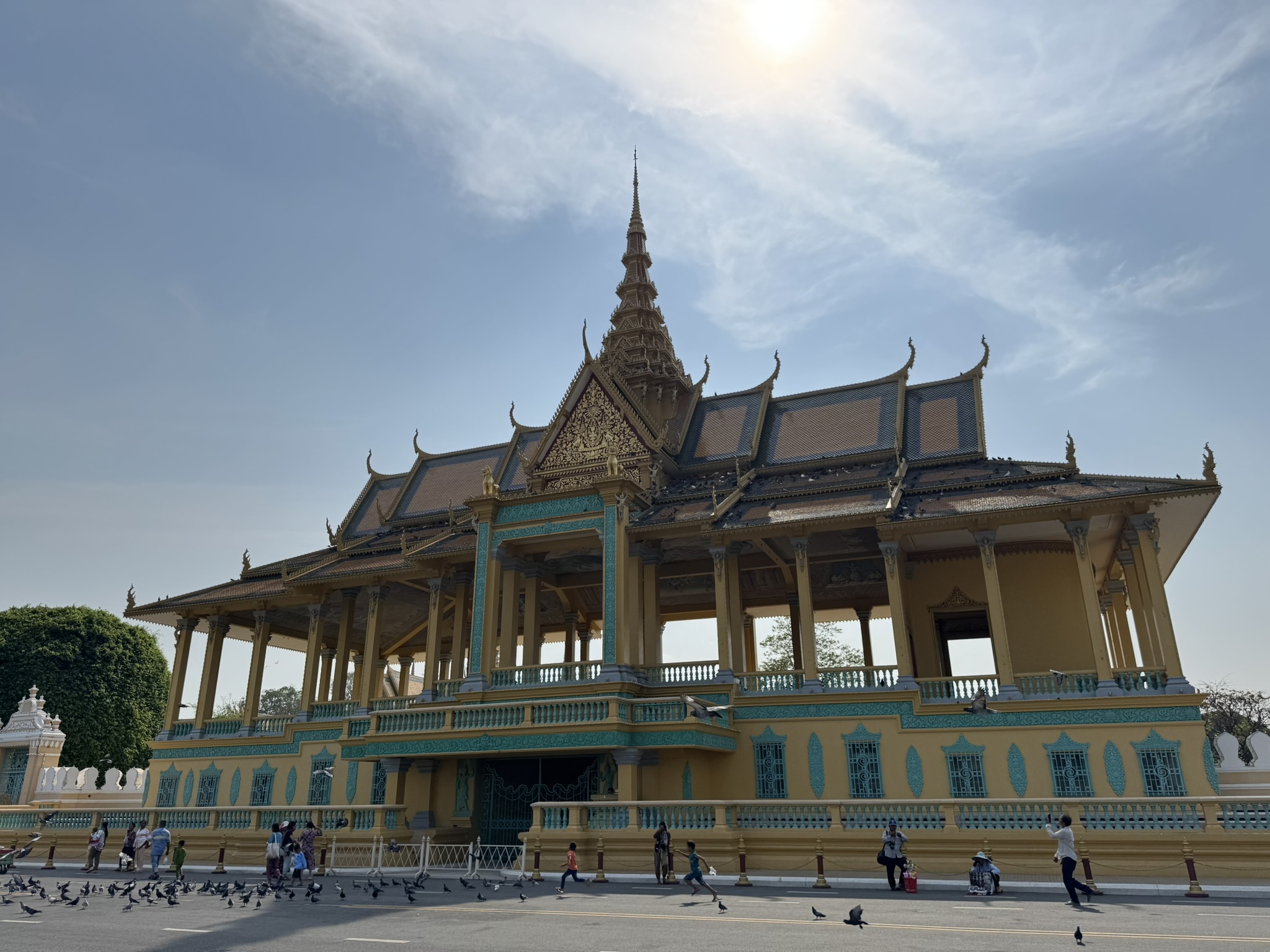
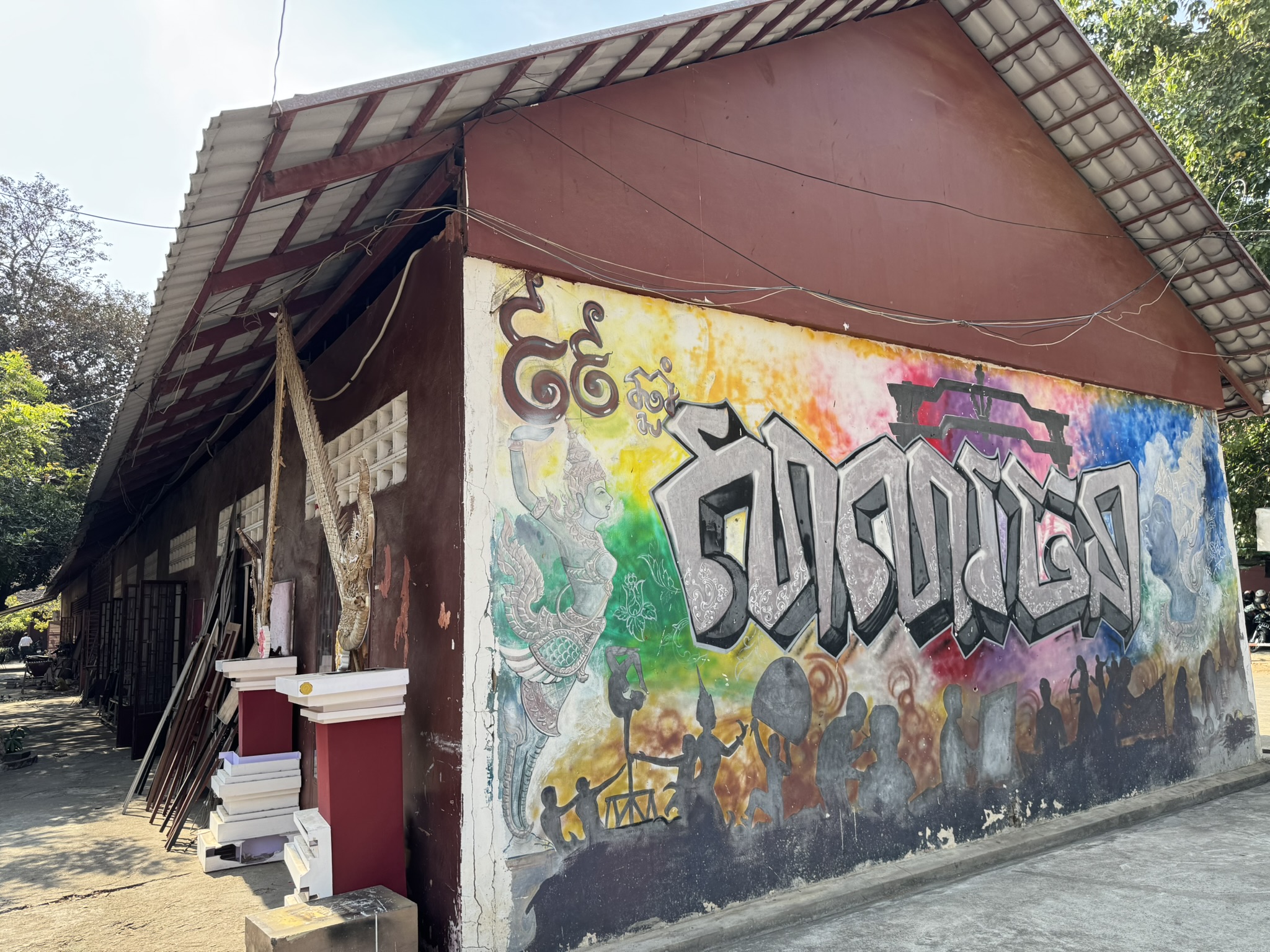
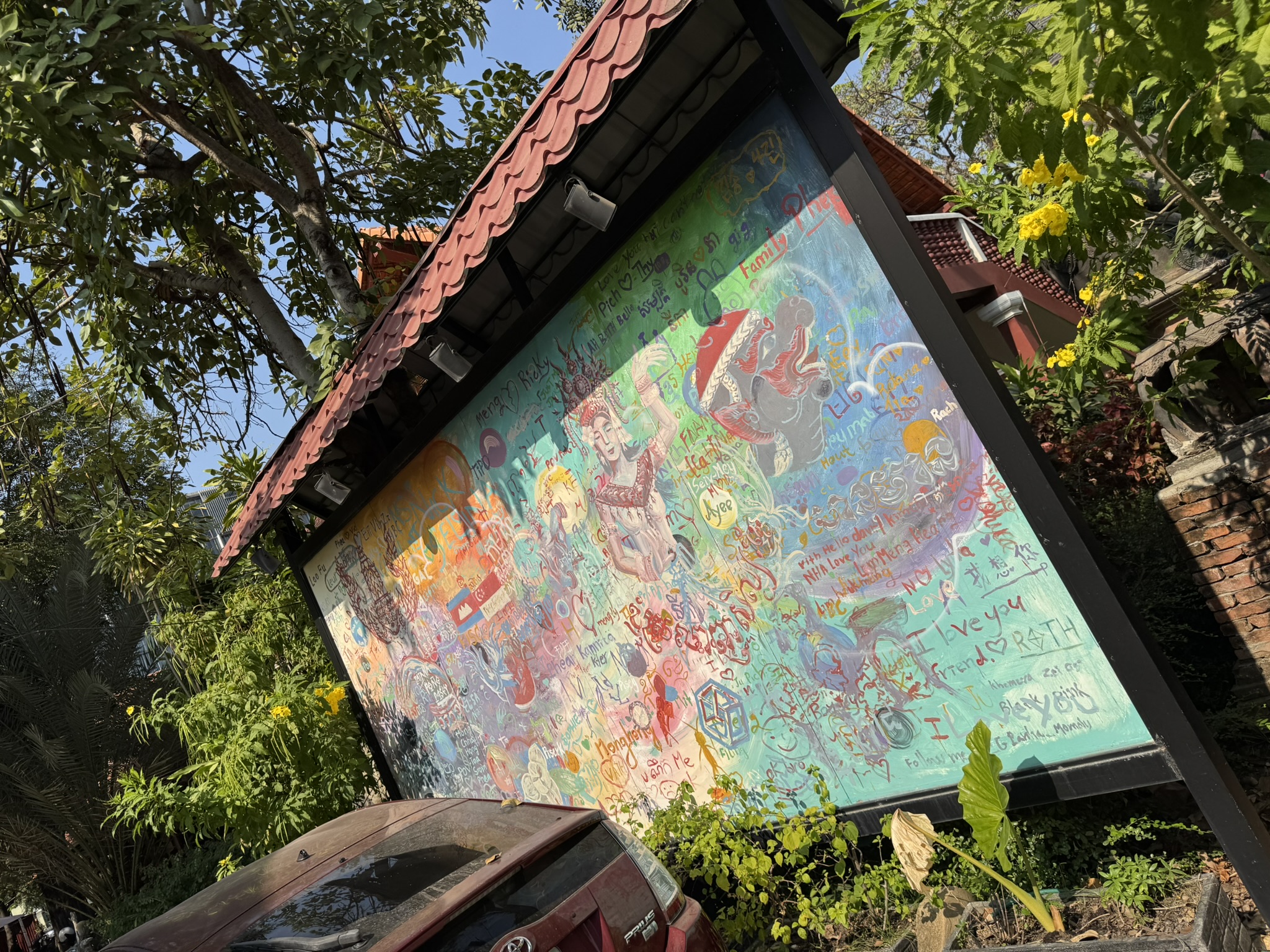
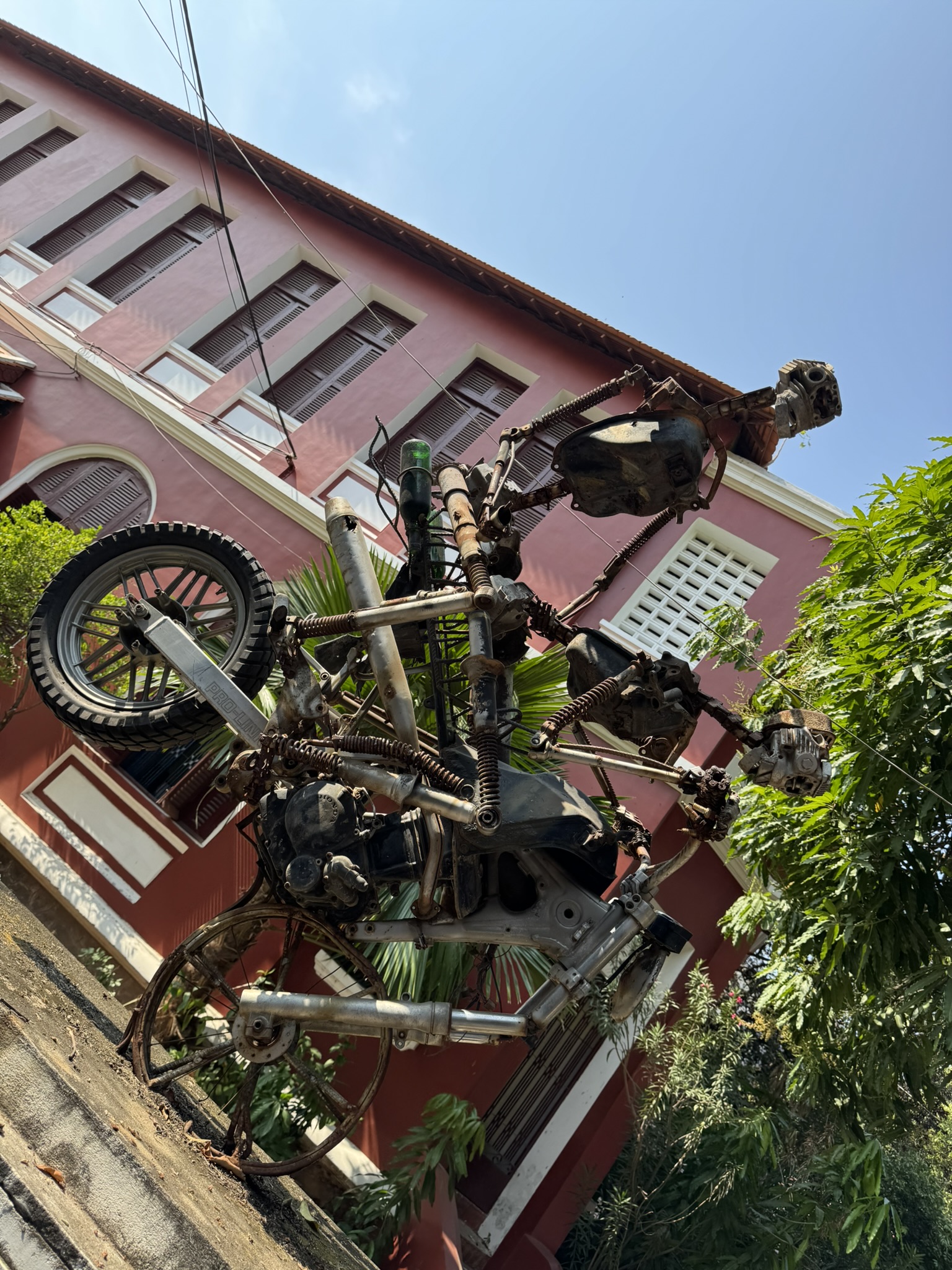
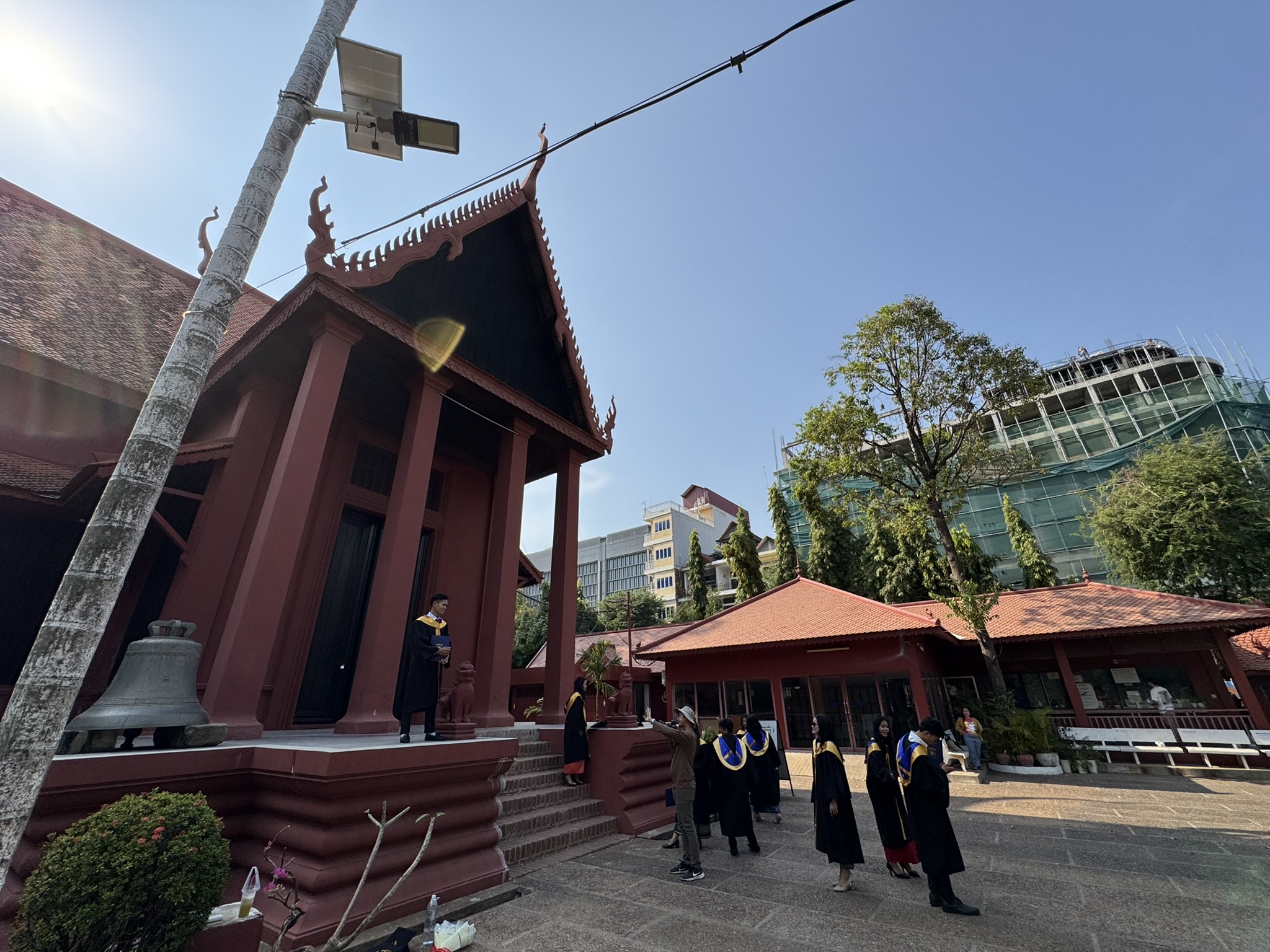
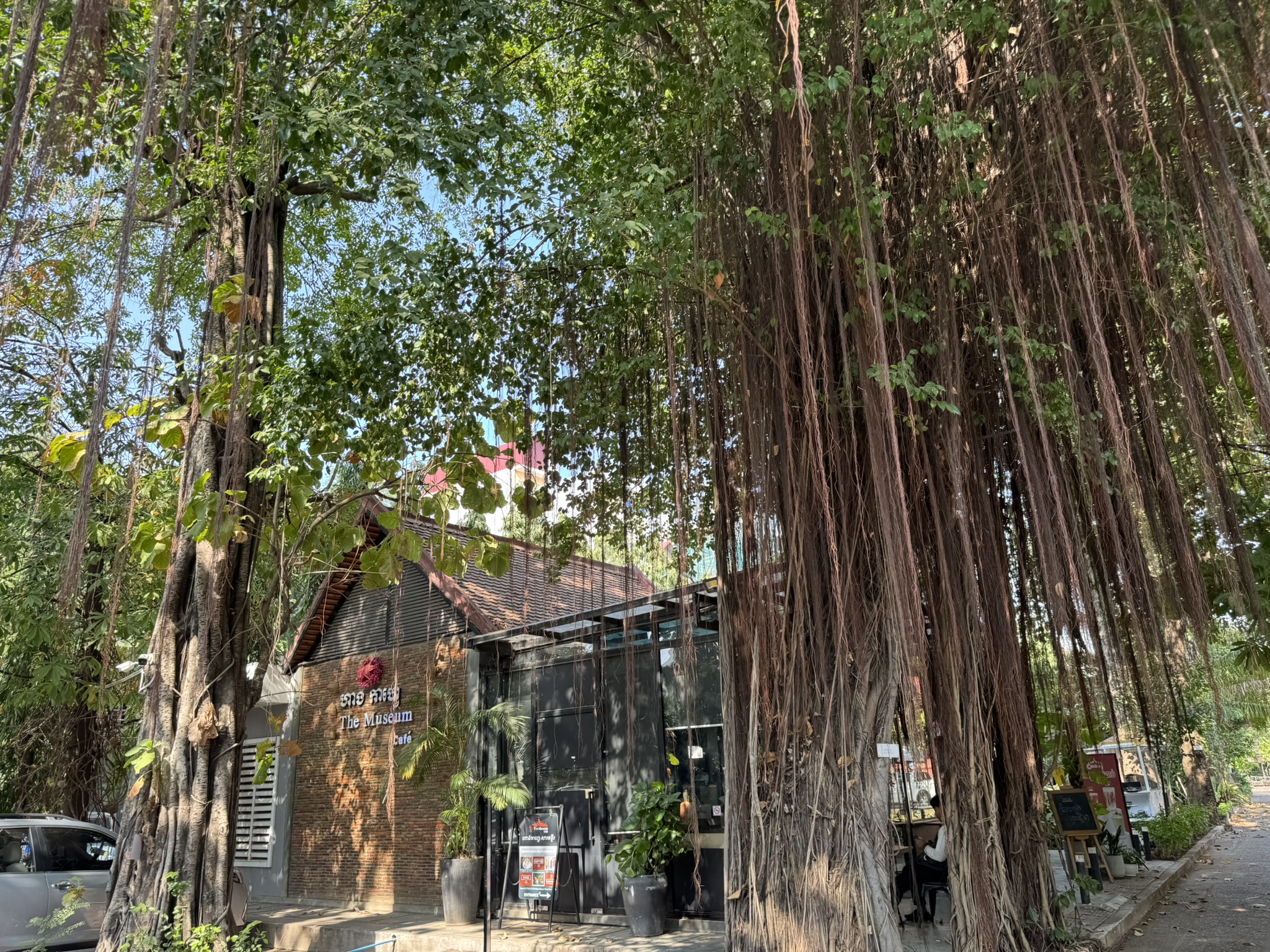
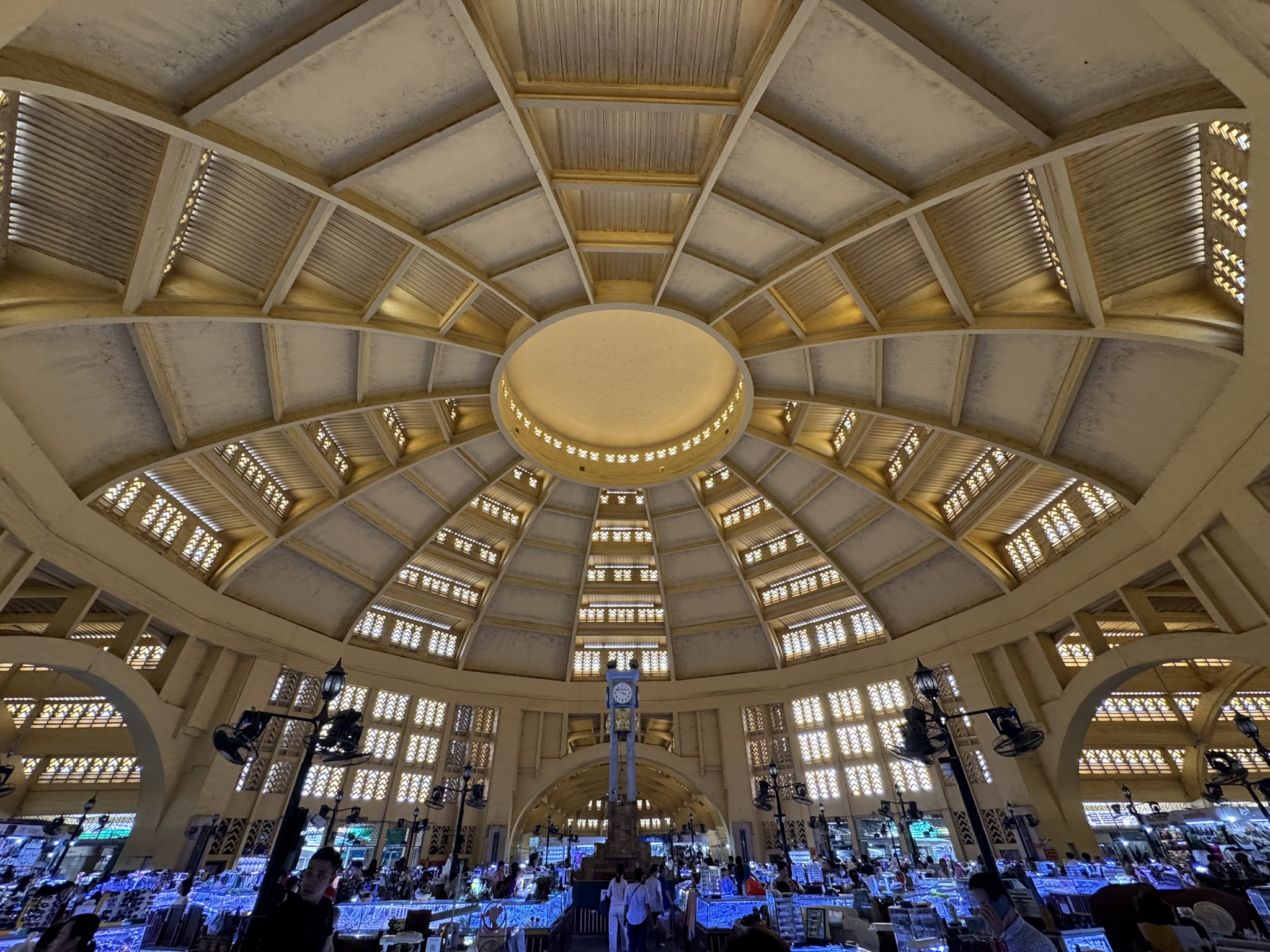
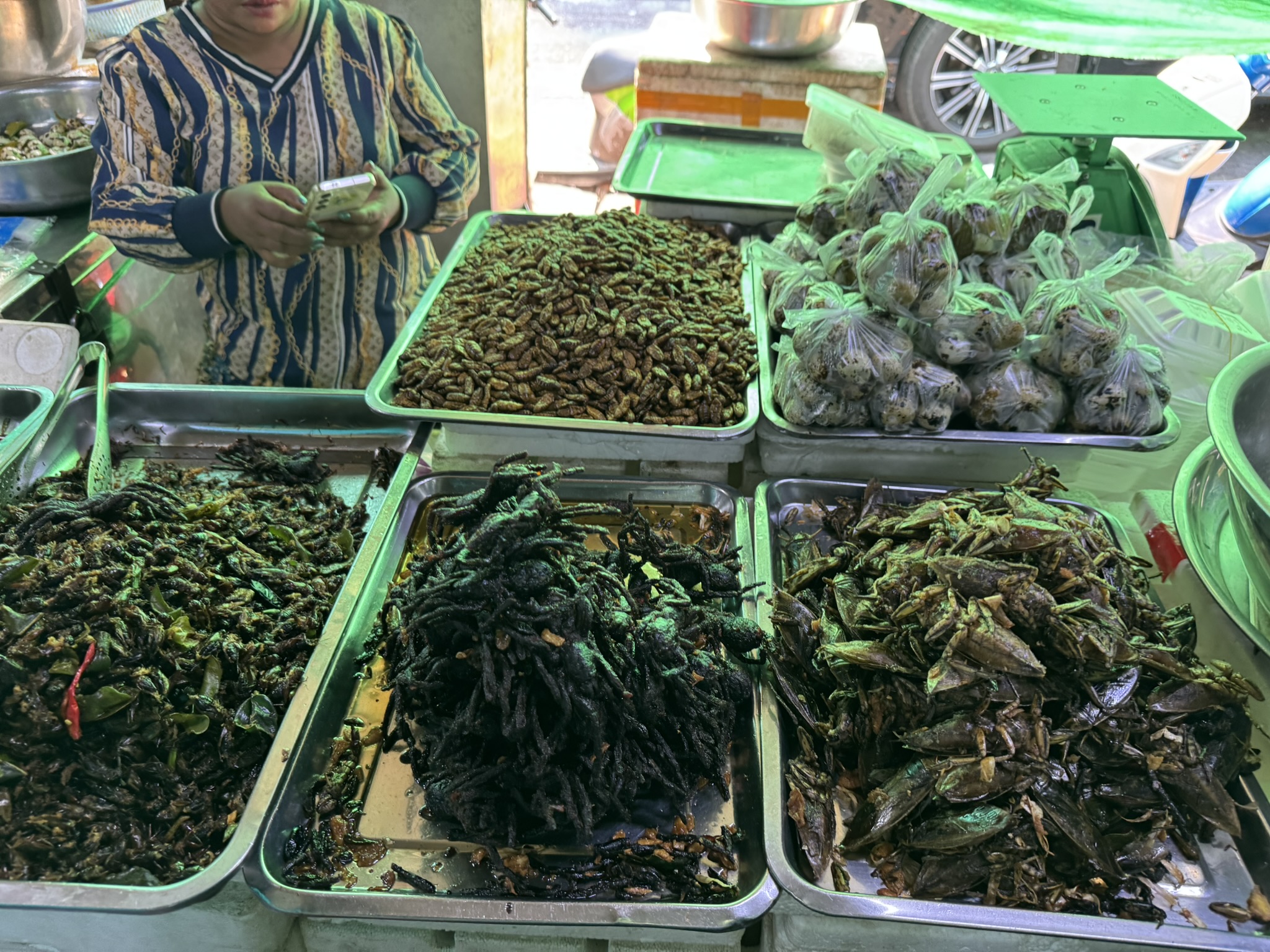
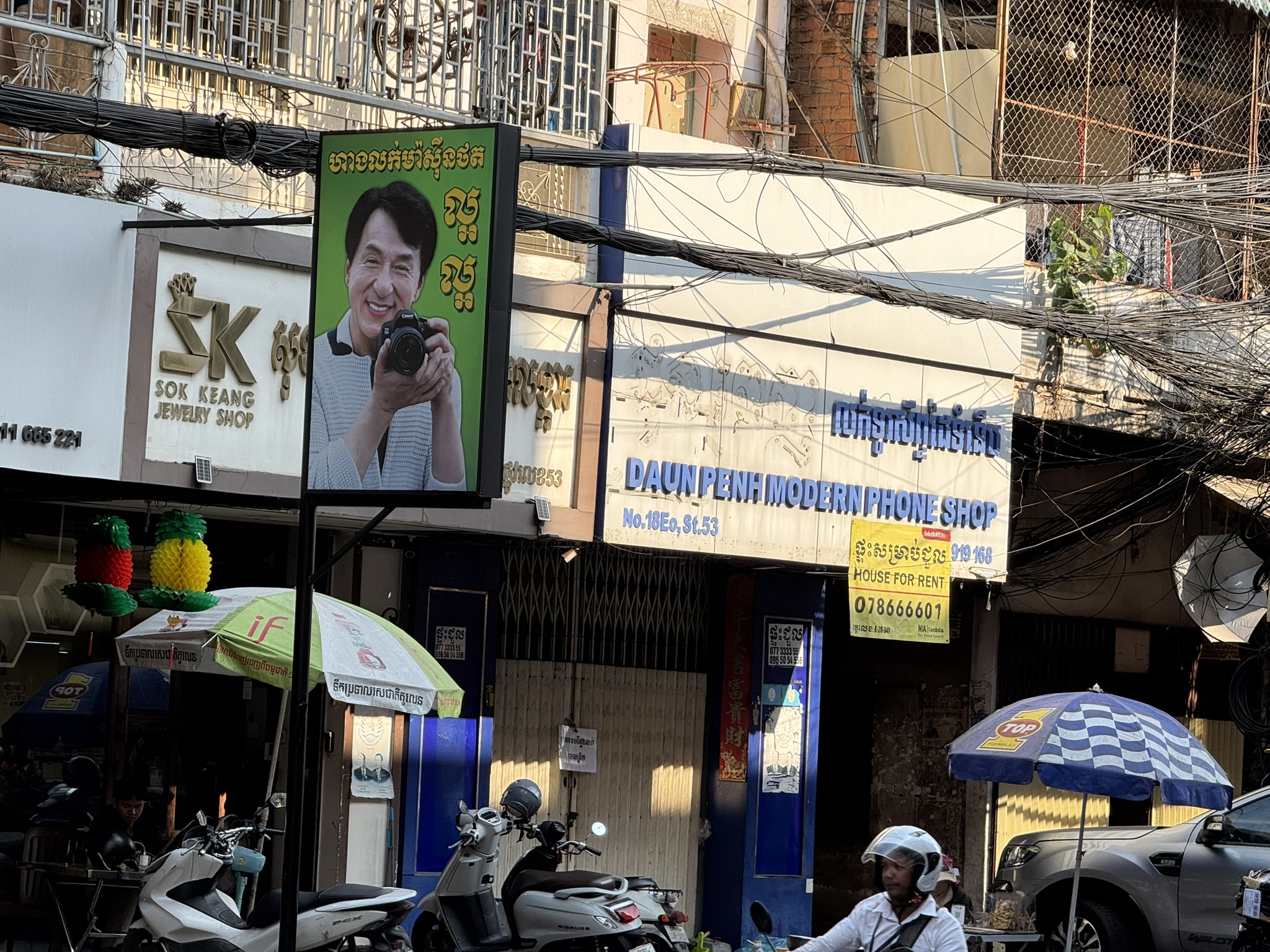
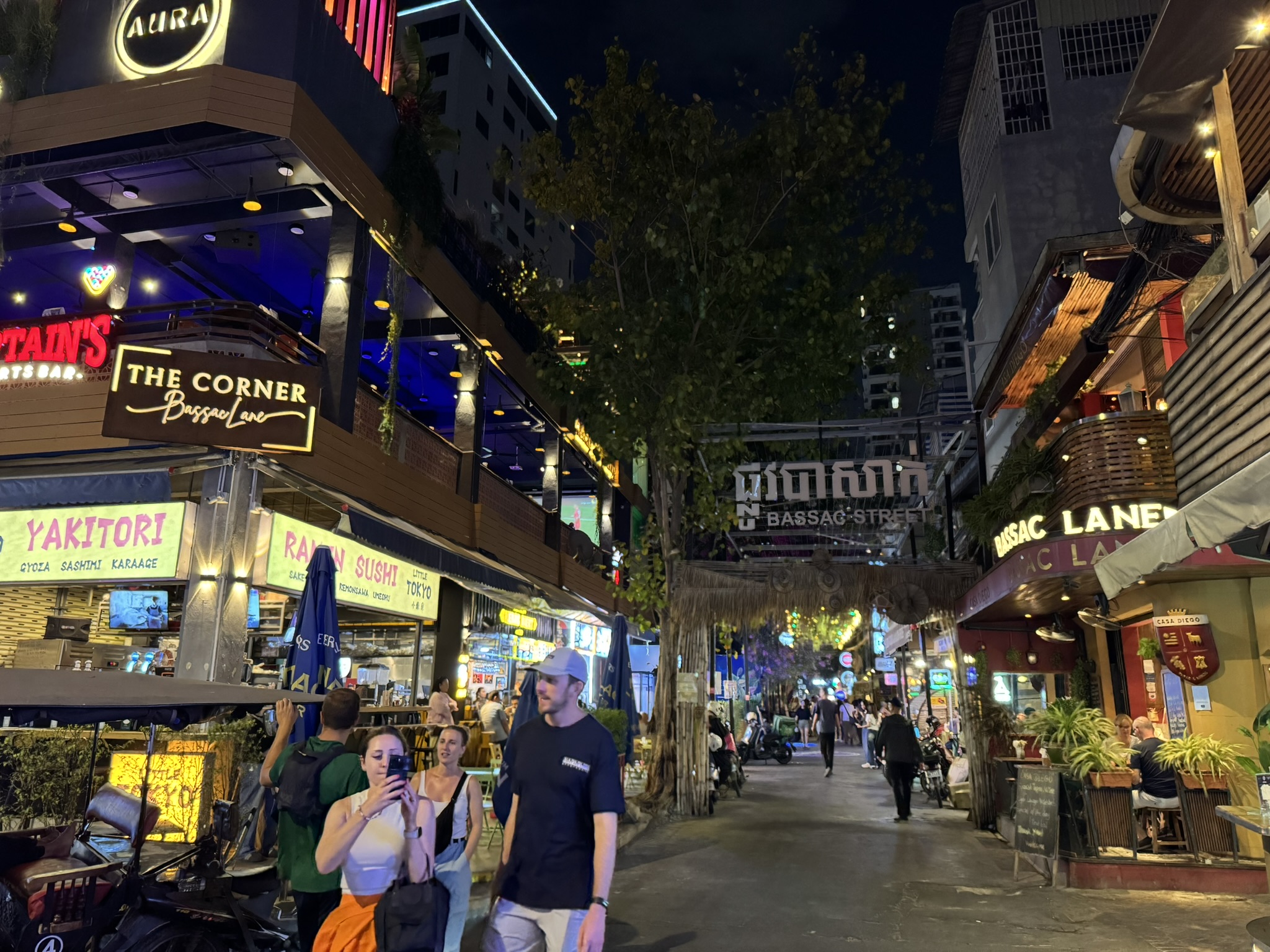
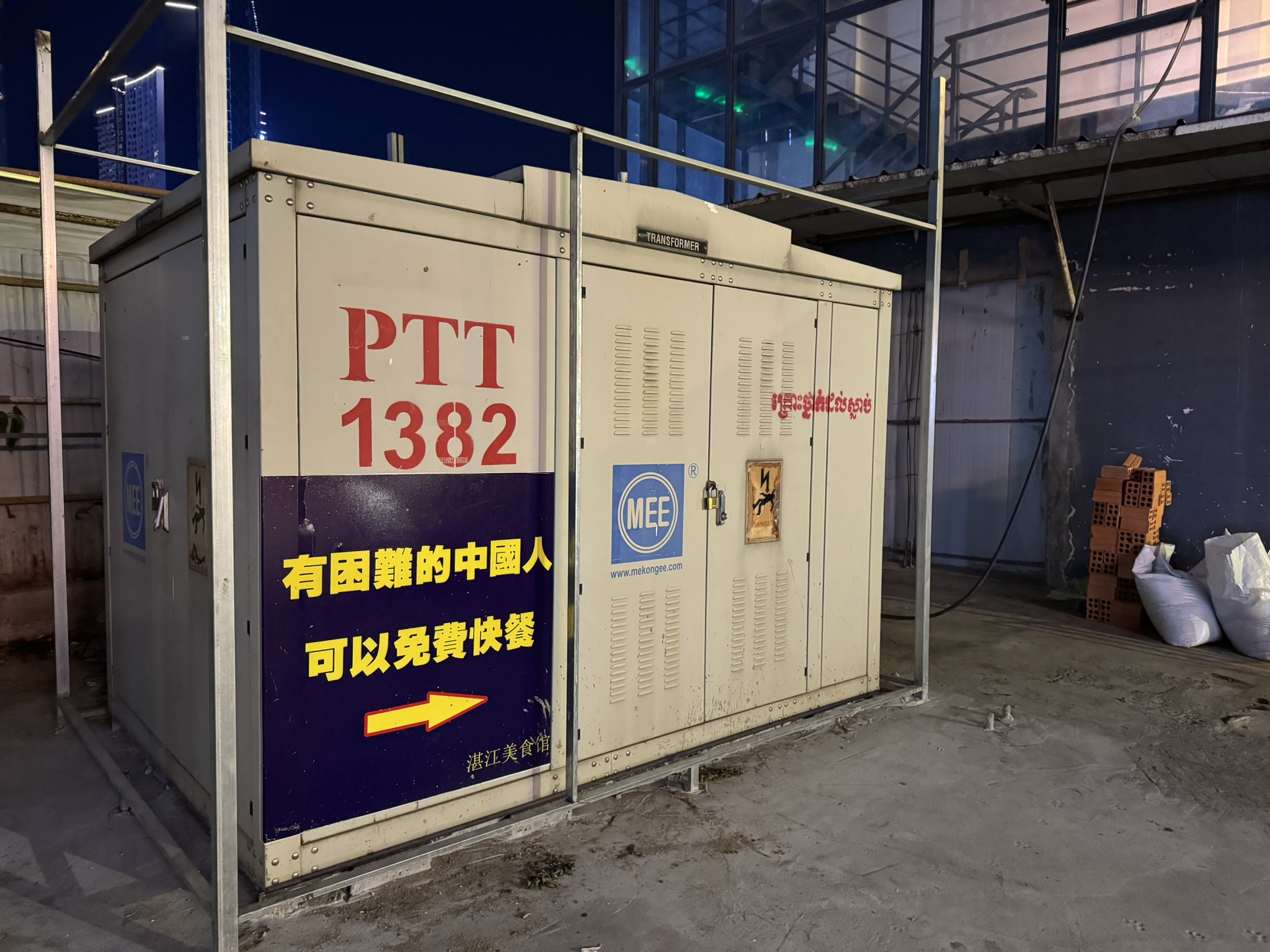
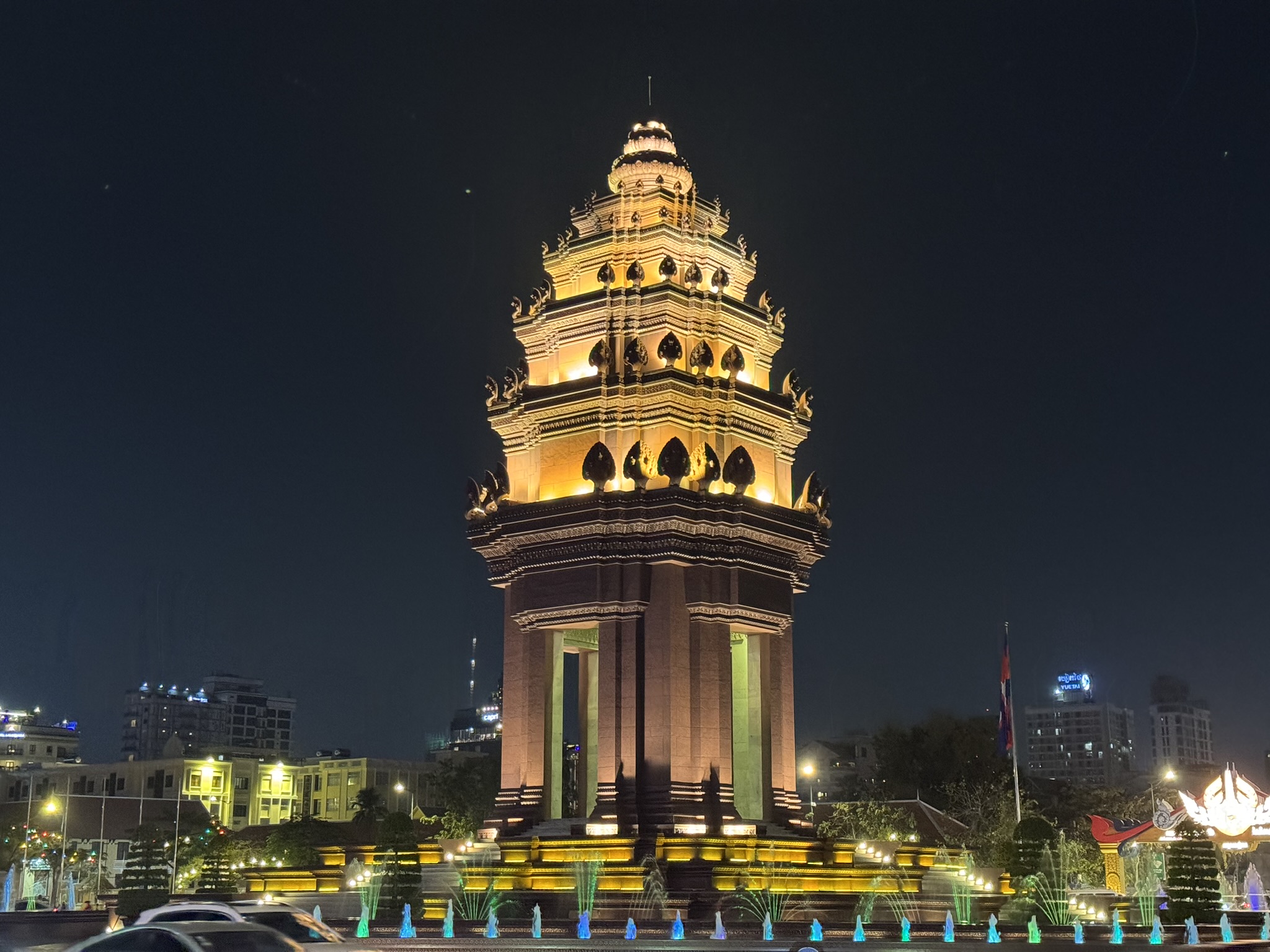
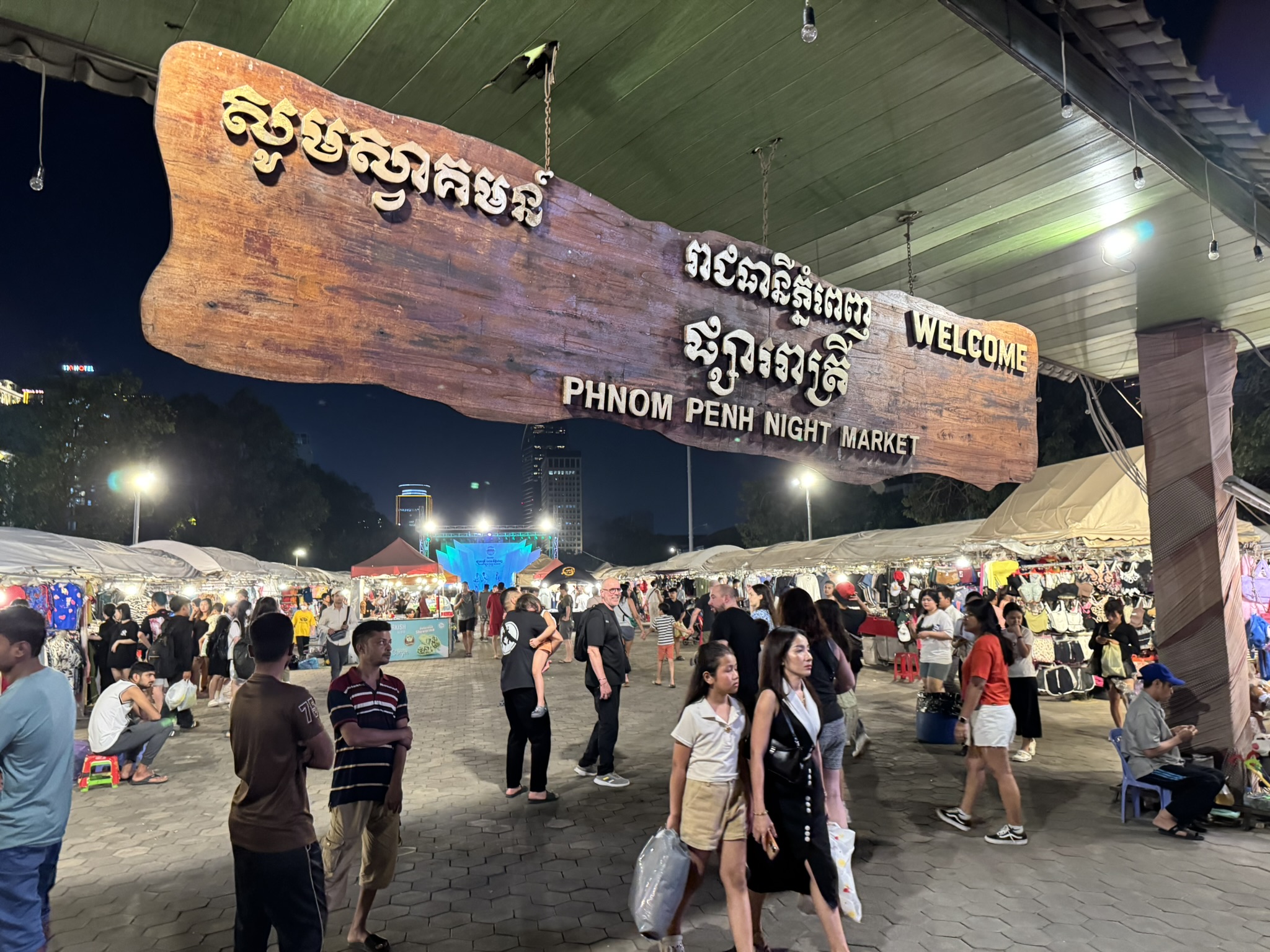
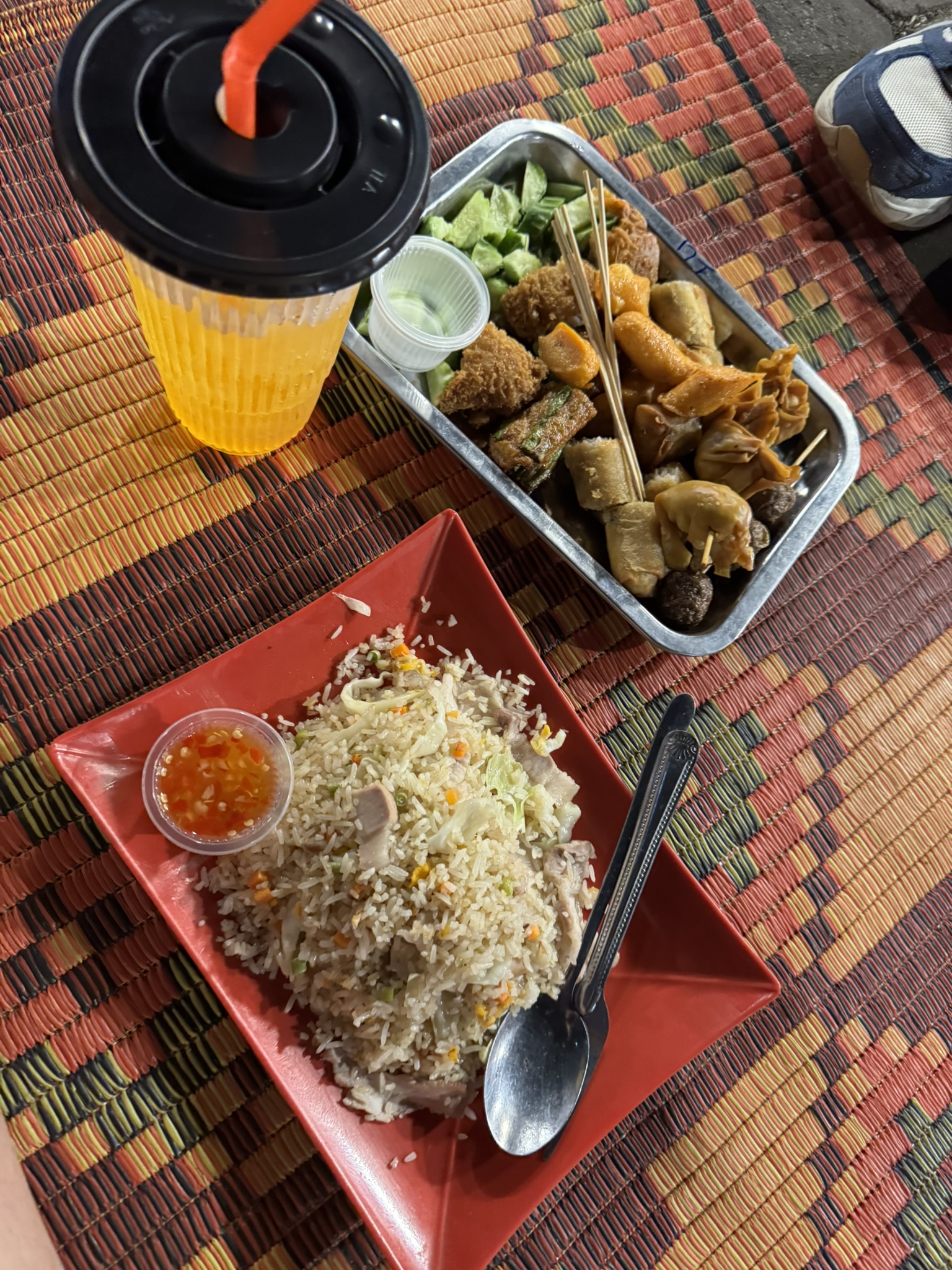
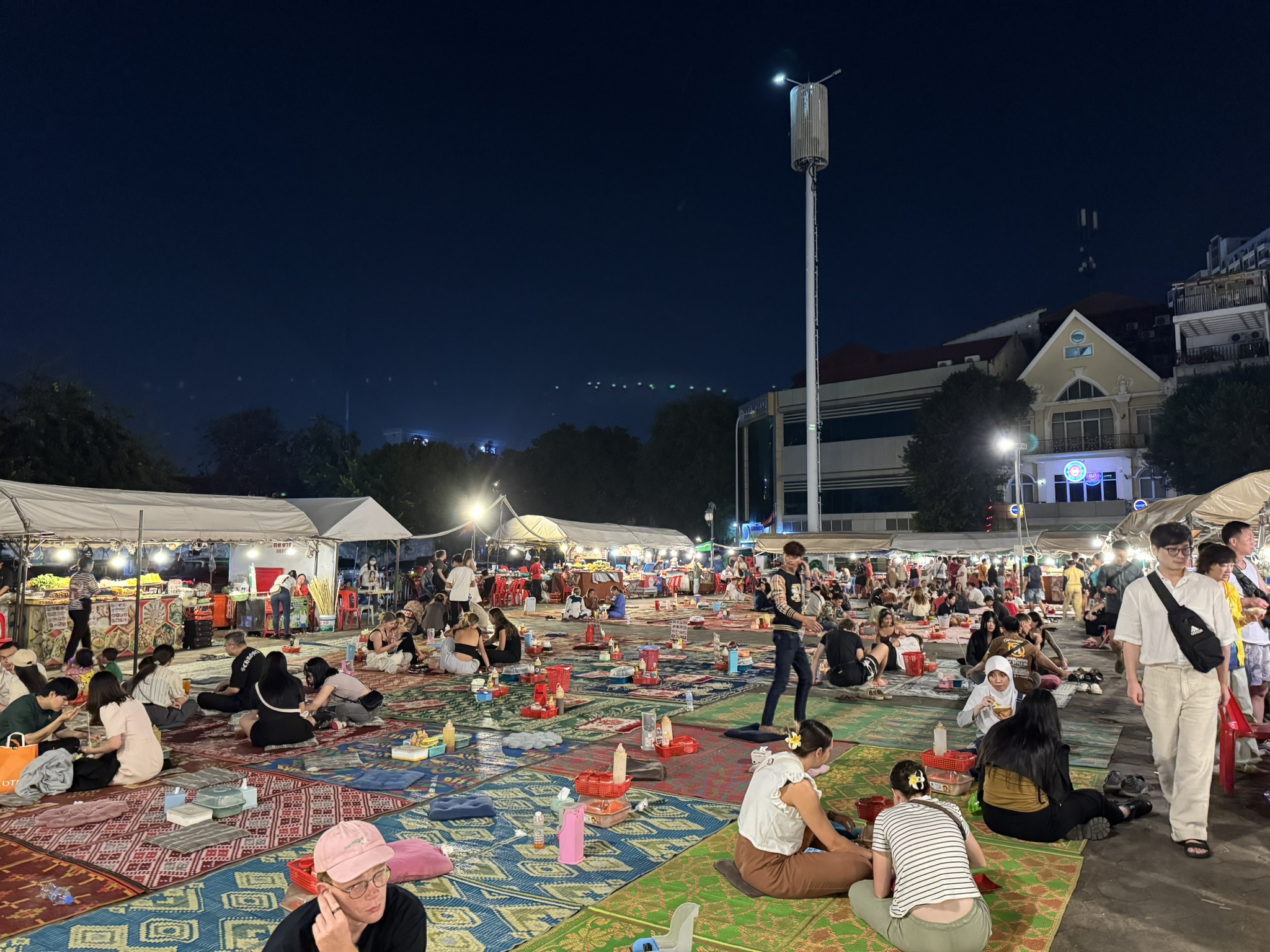
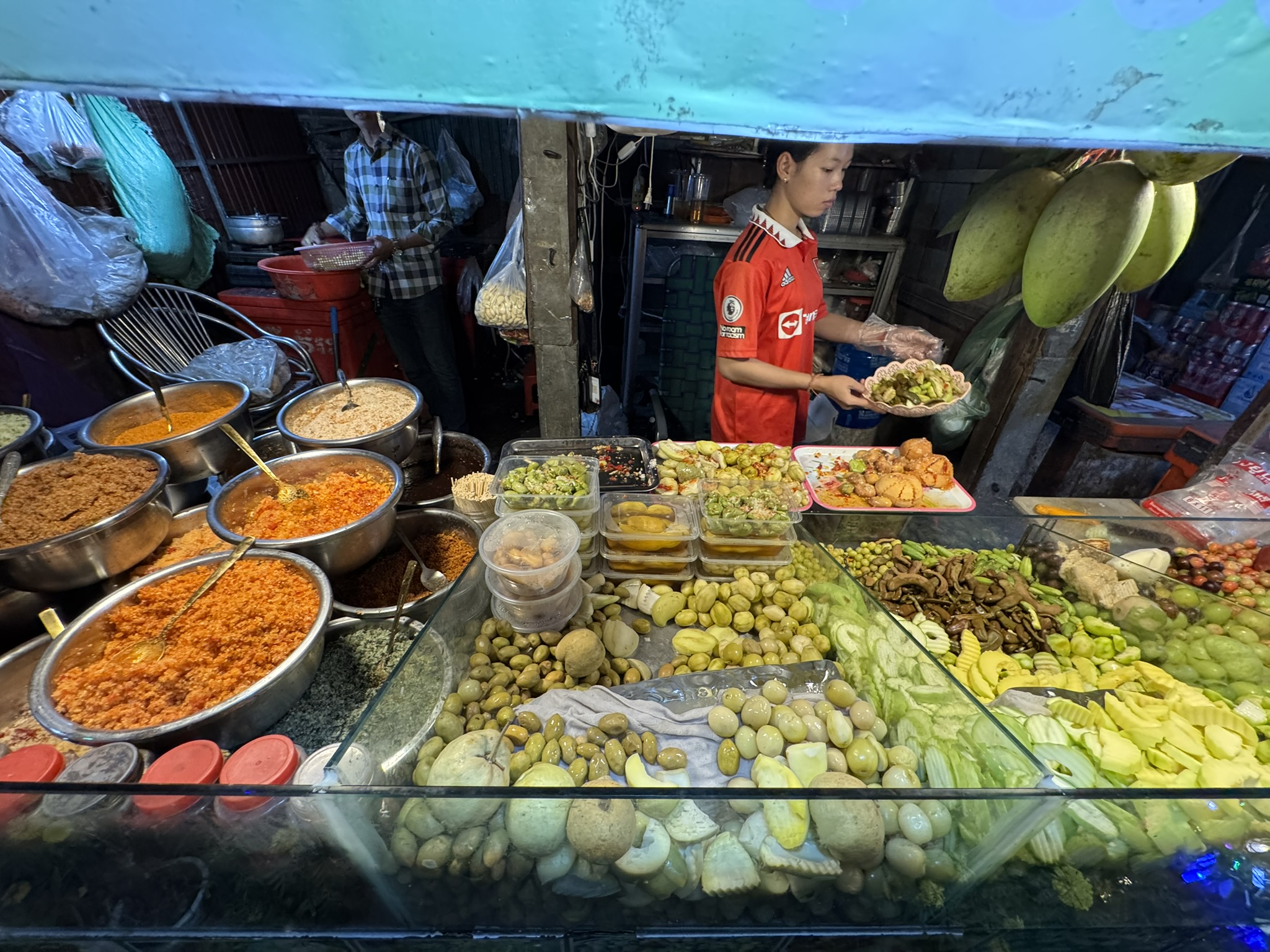
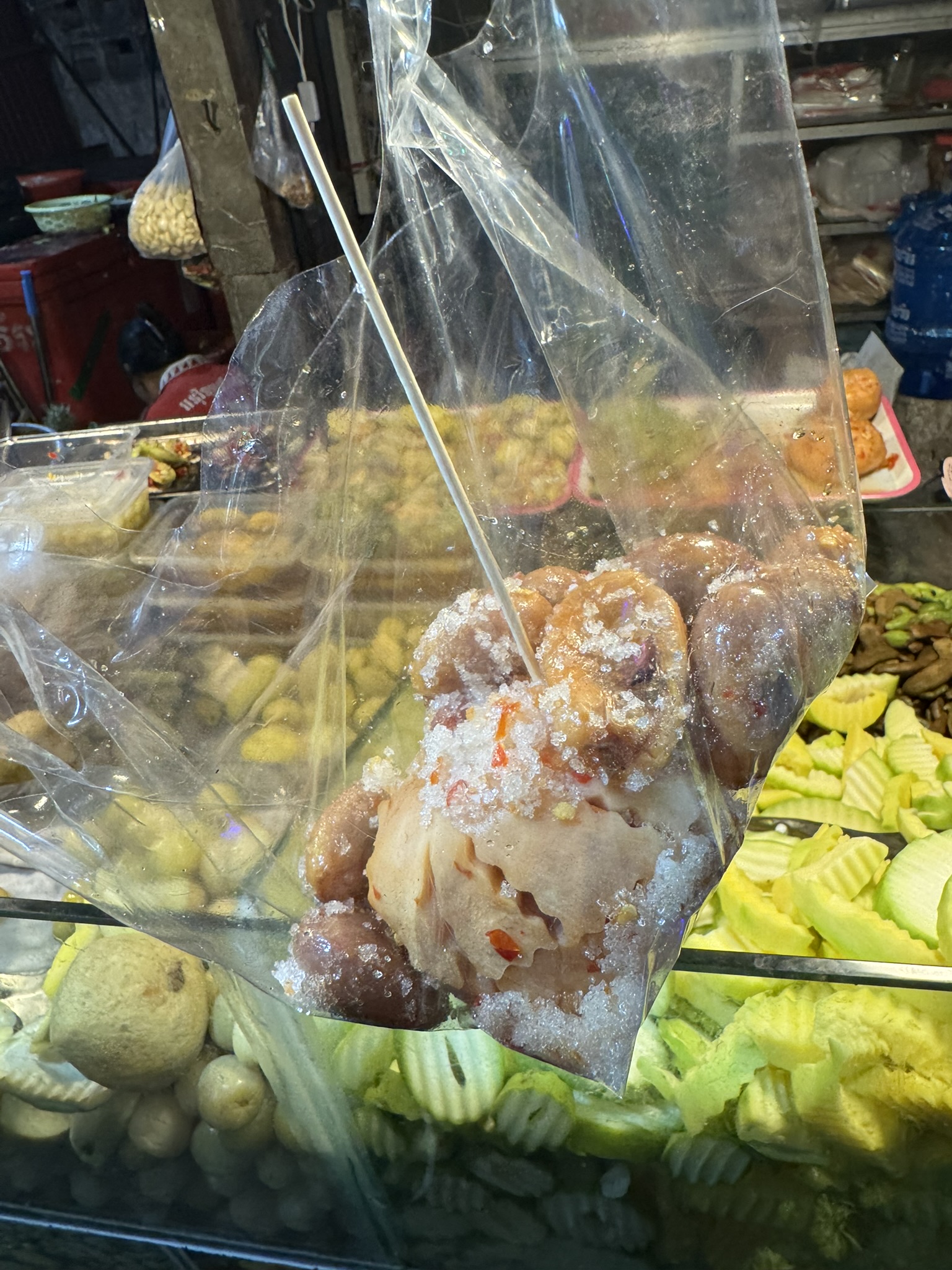
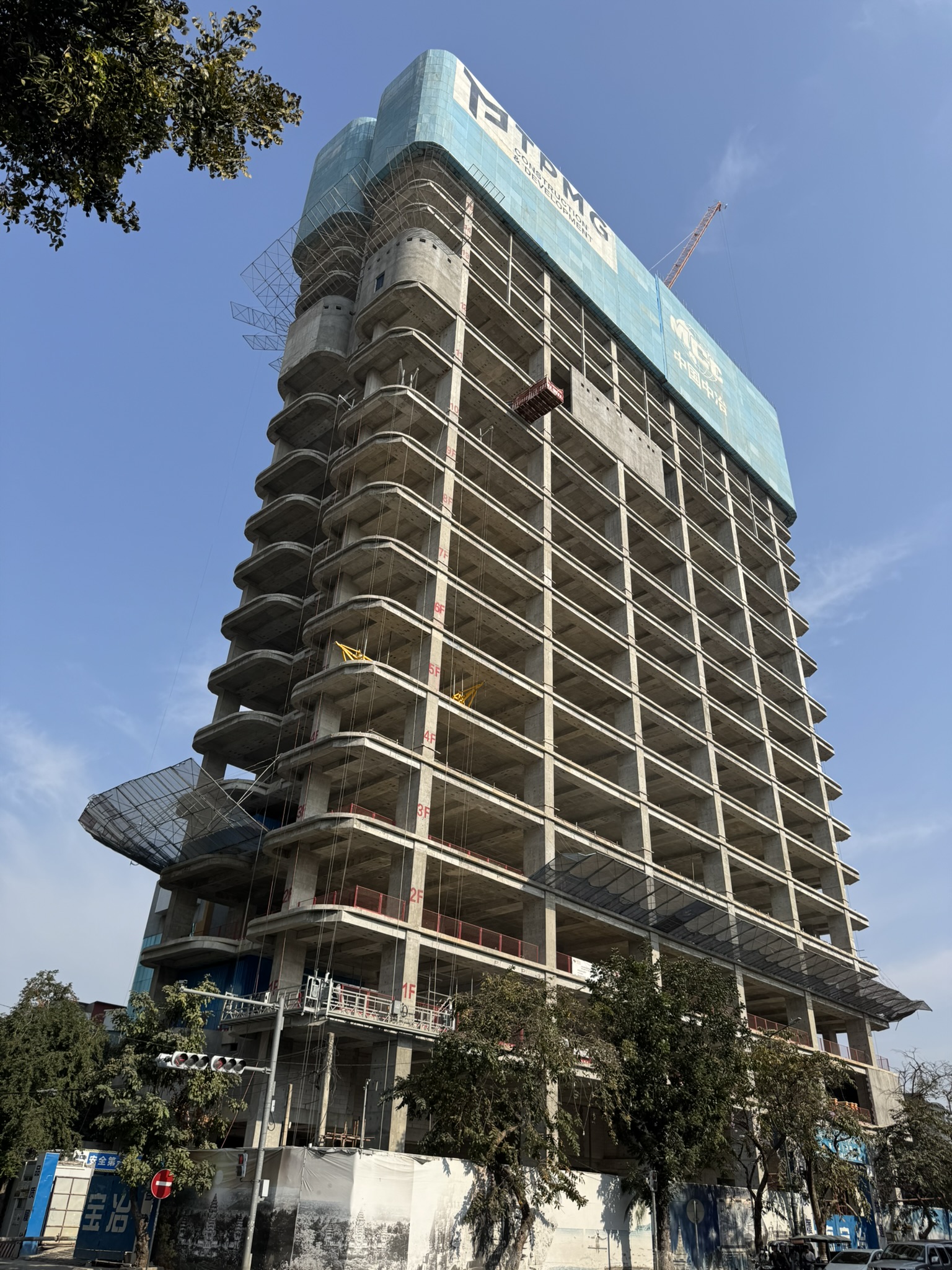
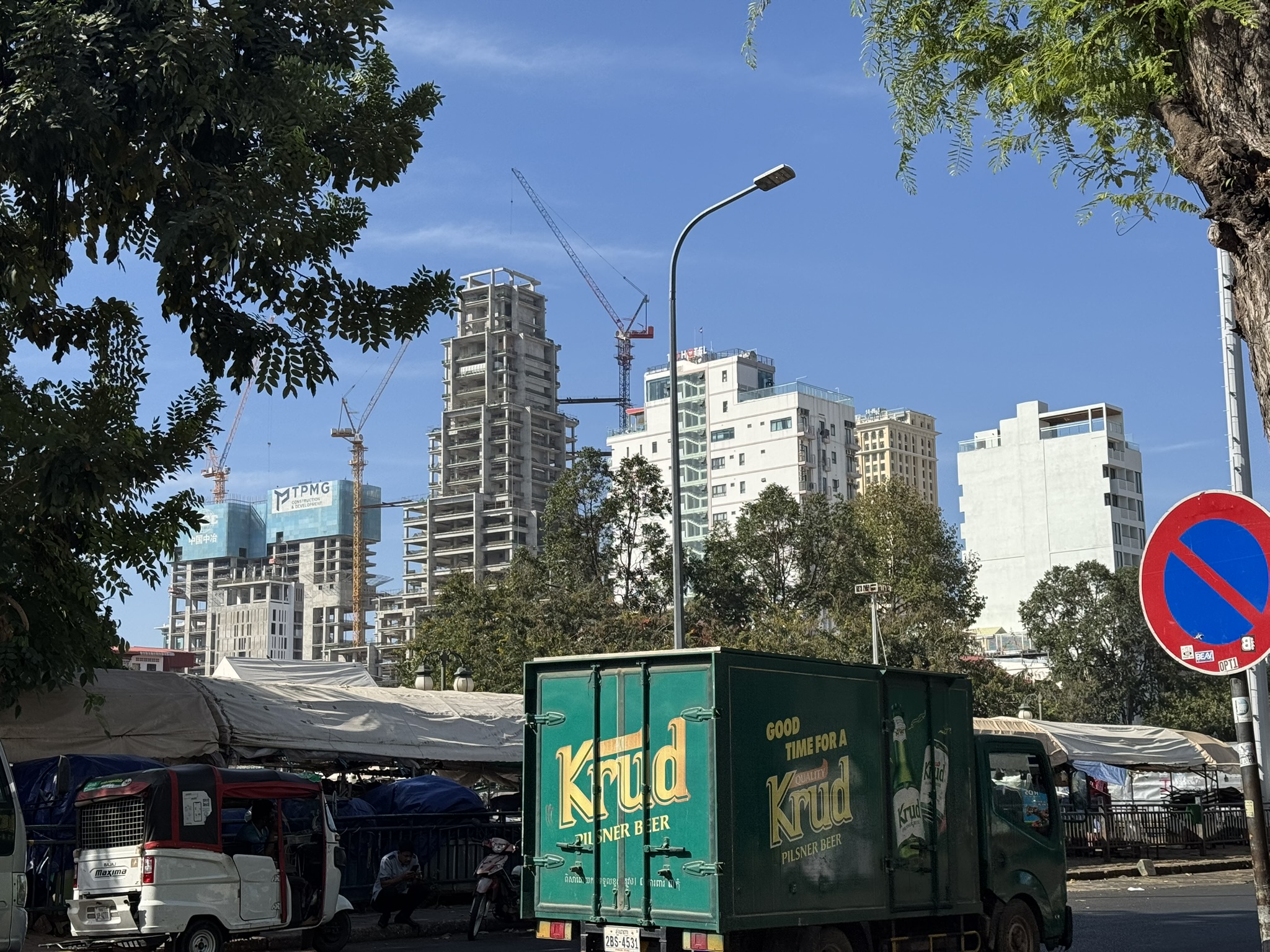
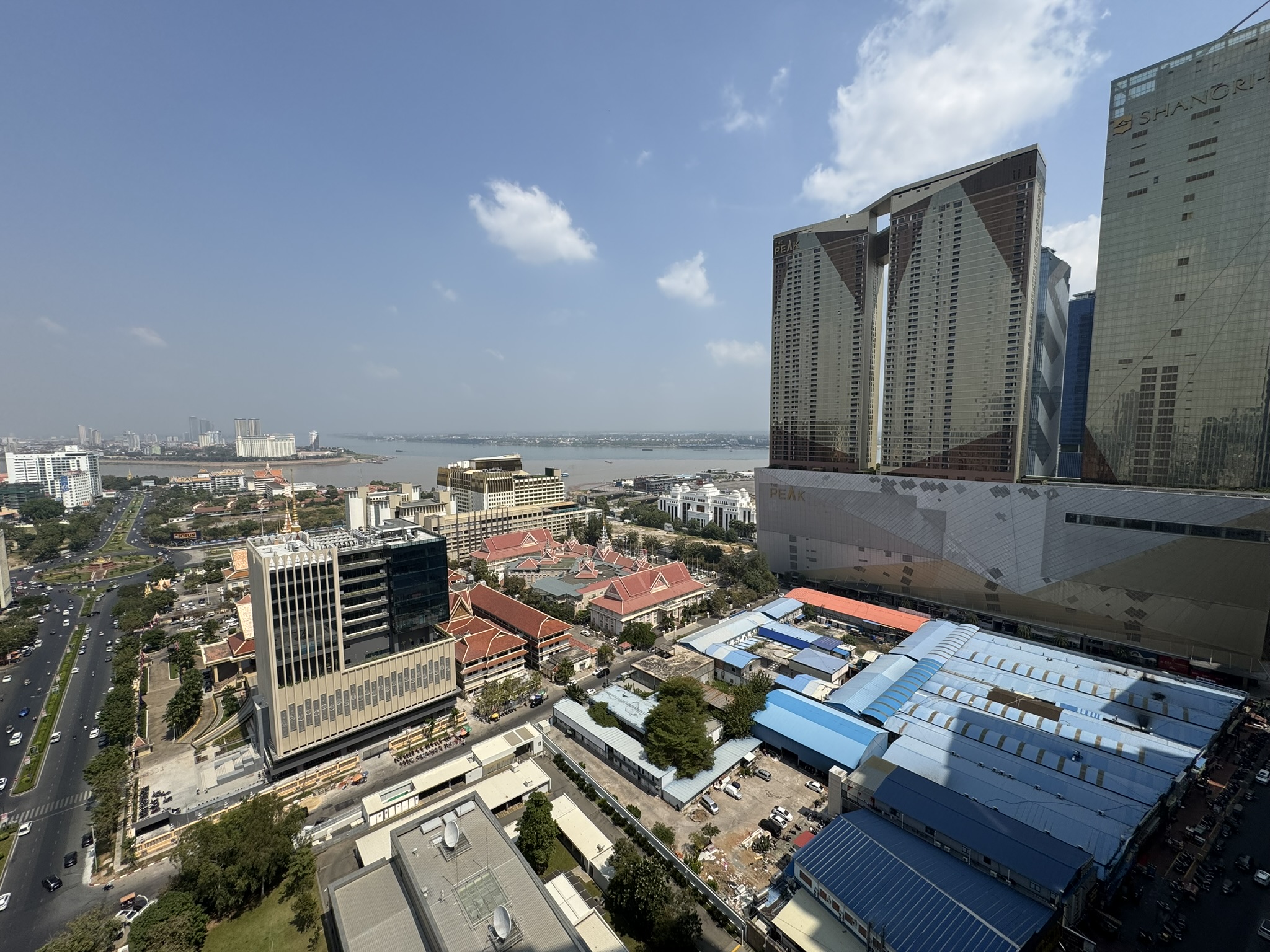
Phnom Penh was a city of contrasts. Buddhist temples, genocide memorials, and Chinese skyscrapers jutted out in all directions, forming a jagged shell of civilization around the city. Moving like a stream of ants along the cracks on its surface were its people.
Was it as grotesque and striking as the news made it out to be? It went far beyond what I had pictured.
What the news will never show you, though, are the ordinary people. They are the ones threading their way through this chaotic, wrecked reality, opening their stalls at dawn, haggling in the markets, laughing or arguing over plastic tables by the roadside, making the most of their lives in a country they’ve been left with.
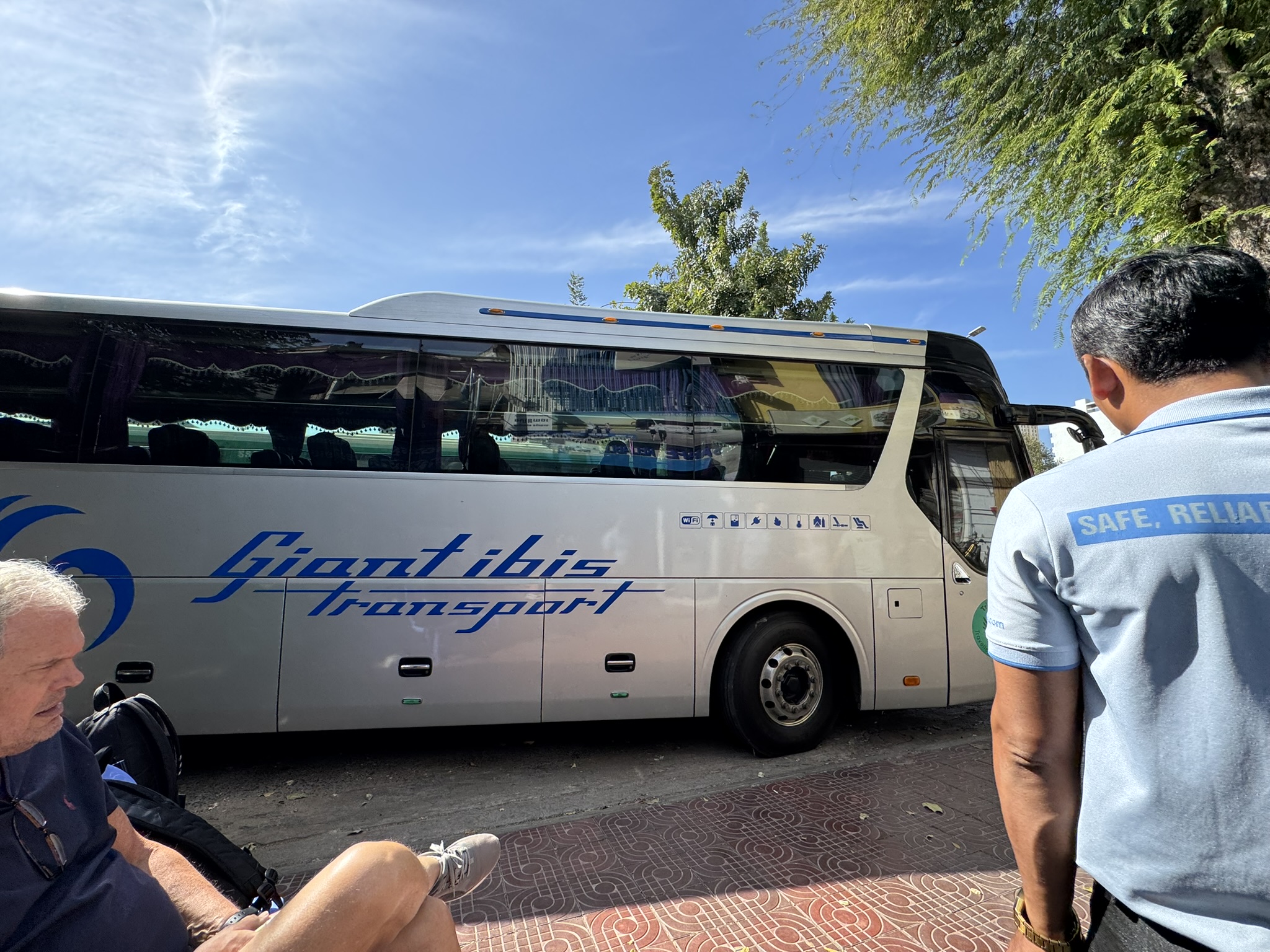
Camera: iPhone

You must be logged in to post a comment.